Endoscopy Suite WAGD Exhaust Fort Lauderdale: Preventing Pump Failure
Medical Testing SolutionsNovember 14, 20269 min read
Share
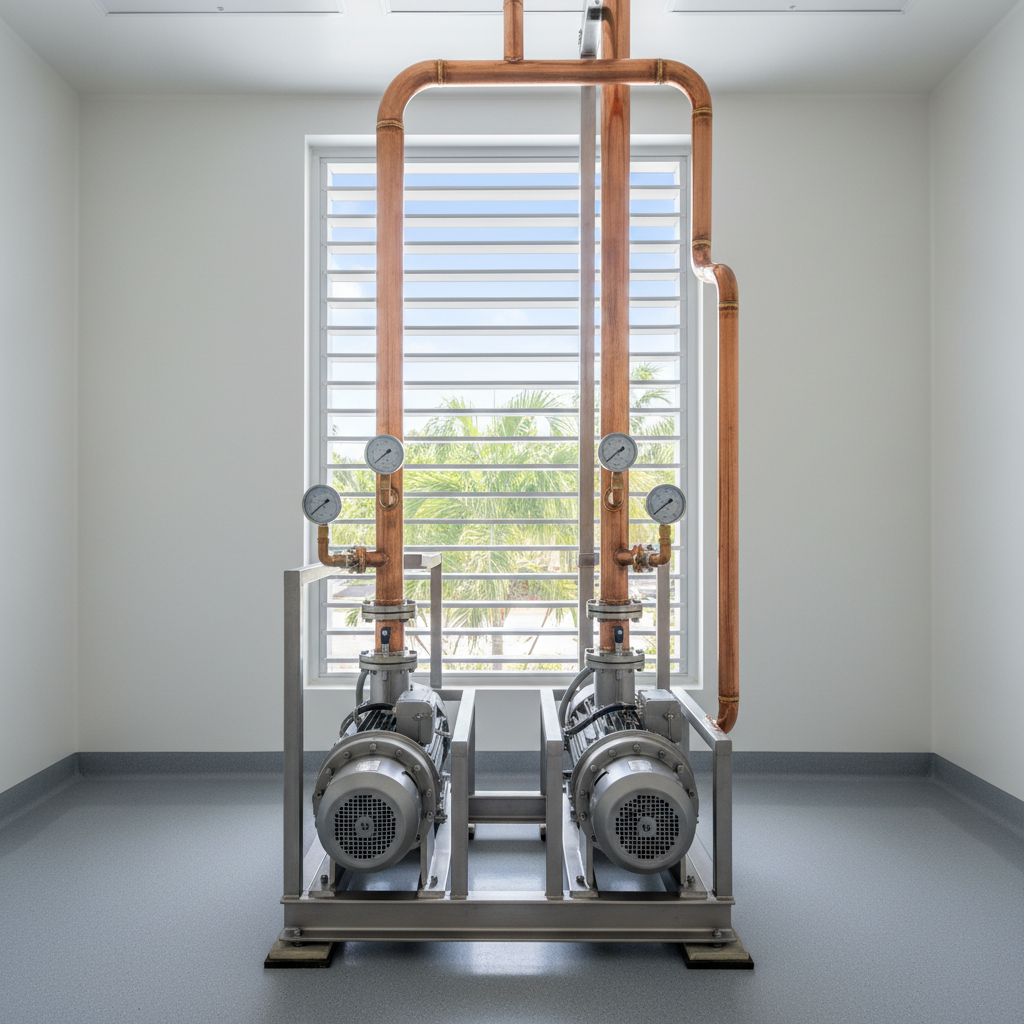
When we pull the sight glass off a triplex rotary vane vacuum pump in a high-volume GI center and find milky, solvent-thinned oil smelling faintly of cherry-flavored simethicone and sevoflurane, the root cause is almost always in the procedure rooms. Clinical staff in busy GI centers frequently connect anesthesia scavenging hoses and high-volume endoscopic suction canisters to the same vacuum drop. Over months of back-to-back colonoscopies and upper endoscopies, aerosolized bowel preparation fluids, enzymatic scope cleaners, and halogenated anesthetic vapors bypass full collection traps and travel straight down the copper main into the mechanical room.
Properly managing endoscopy suite WAGD exhaust Fort Lauderdale facilities rely on requires separating or engineering your source equipment to handle both chemical solvents and high-humidity biological aerosols. In South Florida, where high ambient heat and 80% relative humidity already push mechanical room temperatures toward the upper limits of equipment ratings, dumping unmonitored waste anesthetic gas disposal (WAGD) streams into standard clinical vacuum pumps triggers thermal overload trips, dissolved shaft seals, and sudden loss of vacuum during procedures.
Why Endoscopy Suites Destroy Standard Medical Vacuum Pumps
Outpatient endoscopy centers and hospital GI departments run at a pace that general operating rooms rarely match. A single four-room ambulatory surgery center (ASC) in Broward County can turn over 40 to 50 cases by mid-afternoon. While propofol intravenous sedation dominates routine screening colonoscopies, complex therapeutic procedures like ERCPs, pediatric endoscopies, and difficult airway cases still utilize inhaled halogenated agents such as sevoflurane or nitrous oxide.
When a facility uses a shared medical-surgical vacuum system to handle both endoscopic suction and WAGD, two destructive streams merge in the sub-main piping. First, aerosolized polyethylene glycol, simethicone anti-foaming agents, and peracetic acid or enzymatic detergent residues from bedside scope pre-cleaning get pulled past worn hydrophobic filters in wall suction regulators. Second, waste anesthetic gases mixed with oxygen enter the same pipeline through the anesthesia machine scavenger interface.
Once that mixture hits an oil-sealed rotary vane or claw pump, the halogenated hydrocarbon vapors dissolve directly into the hydrocarbon or synthetic lubricating oil. The oil loses viscosity, breaking down the hydrodynamic film protecting the bearings and rotor vanes. Simultaneously, moisture and carbohydrate residues from gut prep fluids emulsify in the crankcase, blocking oil coolers and driving pump operating temperatures above 220°F until the thermal overload relay trips the motor offline.
NFPA 99 Code Requirements for Combined vs. Dedicated WAGD
NFPA 99, Health Care Facilities Code, strictly regulates how facilities capture and exhaust waste anesthetic gases to protect both clinical personnel and central mechanical equipment. Under NFPA 99 Section 5.1.3.8, a facility can produce WAGD through a dedicated producer (such as a claw pump or regenerative blower used only for scavenging) or by merging WAGD into the medical-surgical vacuum system, provided specific engineering safeguards are met.
If your endoscopy suite combines WAGD with medical-surgical vacuum, NFPA 99 Section 5.1.3.8.1.2 mandates that the total concentration of oxidizers (oxygen and nitrous oxide) must be maintained below levels that could support combustion or degrade pump lubricants when mixed with hydrocarbon oils. If your anesthesia delivery uses high-flow oxygen alongside volatile agents, standard hydrocarbon pump oil is prohibited; the central vacuum producer must use inert, oxygen-compatible lubricants such as PFPE (perfluoropolyether) or operate as an oil-less system.
Furthermore, NFPA 99 Section 5.1.3.7.6 specifies strict rules for how vacuum and WAGD exhaust terminate outside the building:
Exhaust terminals must be located at least 25 feet from any door, window, air intake, or other building opening.
The exhaust pipe must terminate at least 10 feet above grade to prevent staff or pedestrians from walking through concentrated anesthetic and biohazard plumes.
Exhaust piping must turn downward and be fitted with a corrosion-resistant screen (1/4-inch mesh or non-corroding material) to stop birds and tropical insects from nesting inside the line.
Low points in the exhaust main must include valved drains to purge condensed moisture before it creates backpressure against the vacuum pumps.
Dual or multiplex exhaust manifolds must prevent exhaust gas from blowing back through an idle or lag pump under maintenance.
Why this matters for compliance: During annual Joint Commission (TJC) surveys and Florida Agency for Health Care Administration (AHCA) licensure inspections, surveyors trace the physical exhaust routing from the mechanical room to the roof. If an endoscopy renovation tied WAGD outlets into an older vacuum pump containing standard mineral oil, or if the rooftop exhaust sits within 25 feet of an HVAC fresh-air intake, the facility faces an Immediate Threat to Life (ITL) or Condition-level deficiency.
To verify your vacuum and scavenging infrastructure meets current code before your next survey, schedule annual medical gas inspections with our ASSE 6030 verifiers.
Comparing Vacuum and WAGD Producer Technologies for GI Suites
Selecting the right central source equipment determines whether your engineering team spends weekends changing fouled pump oil or running a predictable maintenance schedule. Different pump architectures react differently to the moisture, solvents, and oxidizers generated in an endoscopy environment.
Producer Architecture
Tolerance to Solvents & Gut Prep Moisture
Oxygen / Oxidizer Compatibility (NFPA 99)
Thermal Load in South FL Mechanical Rooms
Best Application in GI / Endoscopy
Oil-Sealed Rotary Vane
Low; vapors dissolve into oil and moisture emulsifies lubricant
Requires expensive inert (PFPE) oil if used for combined WAGD
High; fouled oil coolers rapidly cause thermal overload trips
Standard medical vacuum only (when WAGD is on a separate producer)
Dry Rotary Claw
Moderate; internal coating can peel if exposed to harsh cleaners
Safe for combined WAGD; zero oil in the compression chamber
High; runs hot naturally and requires dedicated room cooling
Combined med-surg vacuum and WAGD with bacterial/liquid traps
Safe for combined WAGD; PTFE-coated screws resist oxidation
Moderate; frequently liquid-cooled or equipped with high-flow fans
High-volume hospital GI departments (e.g., 8+ procedure rooms)
Dedicated WAGD Blower
High; handles dry gas only when paired with passive/active scavengers
Intrinsically safe for oxygen/N2O mixtures; oil-less operation
Low; minimal heat rejection compared to deep-vacuum pumps
Dedicated WAGD piping separate from clinical suction
Controlling Thermal Overload and Exhaust Backpressure in South Florida
Operating medical gas equipment in Fort Lauderdale presents environmental challenges you will not find in northern climates. Mechanical rooms in coastal Broward County facilities frequently pull makeup air that is 92°F with a dew point above 75°F. When a dry claw or rotary vane vacuum pump works against exhaust backpressure, discharge air temperatures climb rapidly.
In endoscopy suites, two factors compound this thermal stress: clogged exhaust drains and undersized exhaust manifolds. Warm, moisture-laden air evacuated from suction canisters cools slightly as it travels up vertical exhaust risers toward the roof, condensing into liquid water. If the exhaust drip leg at the base of the riser is never drained, or if contractors omitted the drain during build-out, water pools in the horizontal runs. This water column creates artificial backpressure on the pump discharge port. Every extra PSI of exhaust backpressure forces the vacuum motor to draw higher amperage, tripping the starter overload right in the middle of morning procedures.
Hospital networks across the region, including Broward Health, Holy Cross Health, Cleveland Clinic Florida, and Baptist Health South Florida, combat this by pairing quarterly exhaust drain blowdowns with infrared thermography of vacuum pump heads and motor starters. Medical Testing Solutions helps local facility directors retrofit high-capacity coalescing exhaust filters and automated condensate drains, while also supplying replacement bacterial filters, vacuum regulators, and WAG chemical vapor monitoring badges to verify room air stays below NIOSH exposure limits.
AHCA Compliance, TJC Surveys, and Post-Hurricane Re-Verification
Every ambulatory surgery center and acute care hospital in Florida operates under the regulatory oversight of the Florida Agency for Health Care Administration (AHCA) per Chapter 59A of the Florida Administrative Code. Whether you are opening a new four-room GI center off Cypress Creek Road or upgrading a central vacuum plant in downtown Fort Lauderdale, all medical gas and WAGD piping modifications must undergo ASSE 6030 medical gas verification before patient use. Your verifier's documentation must directly support AHCA Office of Plans and Construction (OPC) Form 3110 sign-off, demonstrating standing pressure tests, cross-connection tests, purge tests, and source equipment alarm verification.
Beyond new construction, The Joint Commission requires documented annual testing of all medical gas and vacuum warning systems, source valves, and outlet flow/vacuum performance under NFPA 99 Chapter 5. If your endoscopy suite uses dynamic WAGD interfaces, each terminal inlet must draw at least 45 L/min during verification without starving adjacent medical-surgical vacuum inlets below 12 inches Hg.
South Florida facilities must also plan for severe weather recovery. Under NFPA 99 Section 5.1.12, any medical gas or vacuum system that experiences a loss of source pressure, flooding, or physical breach during a hurricane requires formal re-verification before returning to clinical service. High winds regularly tear rooftop WAGD exhaust goosenecks loose or drive rainwater down improperly screened exhaust stacks, flooding vacuum receiver tanks. Because Medical Testing Solutions is headquartered locally in Fort Lauderdale, our ASSE 6010 installers and 6030 verifiers mobilize immediately after storm passage to clear flooded receivers, rebuild damaged rooftop exhaust terminals, and certify systems so your facility can resume patient care without waiting days for out-of-state contractors.
Why Local Fort Lauderdale Engineering Support Cuts Compliance Costs
Hiring an out-of-state medical gas testing firm to service an endoscopy center in South Florida inflates your compliance budget with airline tickets, rental cars, hotel rooms, and daily per-diem charges. Medical Testing Solutions is headquartered at 501 East Las Olas Blvd, Ste 300, Fort Lauderdale, FL 33301. Because our credentialed technicians live and work right here in the tri-county corridor, we charge zero travel fees, zero lodging markups, and zero per-diem anywhere in the state. Most facilities save 10% to 25% compared to out-of-state ASSE 6030 verifiers while getting faster turnaround on AHCA-ready compliance binders.
Call our Fort Lauderdale office at (754) 315-1078 for same-day dispatch in South Florida, or request a quote online to schedule your endoscopy suite WAGD exhaust inspection, vacuum pump maintenance, or ASSE 6030 verification.
Frequently Asked Questions
Yes, under NFPA 99 Section 5.1.3.8, WAGD can be merged into the medical-surgical vacuum system, provided the vacuum pumps are compatible with high oxygen and oxidizer concentrations. If the system uses oil-sealed pumps, they must use inert, oxygen-compatible lubricants (such as PFPE) rather than standard hydrocarbon oil, or the facility must utilize oil-less claw or dry screw technology.
Aerosolized bowel prep solutions (like polyethylene glycol and simethicone), enzymatic scope cleaners, and volatile anesthetics frequently bypass overfilled suction traps. When these vapours enter an oil-sealed vacuum pump, solvents thin the lubricant and moisture emulsifies the oil, clogging oil coolers and causing the motor to trip on high temperature, especially in warm South Florida mechanical rooms.
NFPA 99 Section 5.1.3.7.6 requires medical vacuum and WAGD exhaust terminals to be located at least 25 feet away from any door, window, air intake, or building opening, and at least 10 feet above ground level. The termination must point downward, include a corrosion-resistant screen to block pests, and feature a valved drain at the lowest point of the exhaust piping.
Yes. For new construction, renovations, or equipment replacements in Florida hospitals and ambulatory surgery centers, the Florida Agency for Health Care Administration (AHCA) requires ASSE 6030 verification reports that satisfy OPC Form 3110 and Chapter 59A of the Florida Administrative Code before the suite can treat patients.
Because Medical Testing Solutions is headquartered at 501 E Las Olas Blvd in Fort Lauderdale, we eliminate all airfare, hotel lodging, and per-diem expenses for Florida healthcare facilities. Clients across Broward, Miami-Dade, and Palm Beach counties typically save 10% to 25% compared to out-of-state verifiers while receiving same-day emergency dispatch.
Request a quote for your facility
Talk with Medical Testing Solutions about your next inspection, repair or equipment request.