Your Definitive Guide to Zone Valve Box Rules in NFPA 99
Medical Testing SolutionsJune 19, 20267 min read
Share
Medical gas zone valve boxes are a critical life safety component in any healthcare facility. While they may seem like simple panels on a wall, they play a vital role in patient care, emergency response, and facility maintenance. A properly installed and labeled zone valve box allows staff to selectively shut down the flow of medical gases to a specific area, or "zone," without affecting the entire building. This is essential for maintenance, repairs, or in the event of an emergency like a fire or a pipeline breach.
Understanding the complex codes and standards governing these components is non-negotiable for hospital facility managers, plumbers, and medical gas system designers. This guide provides a definitive overview of zone valve boxes, diving deep into the National Fire Protection Association (NFPA) 99 requirements for placement, labeling, and monitoring. We will also cover the crucial role of ASSE 6030 verification in ensuring your facility is safe, compliant, and ready for an inspection.
What is a Medical Gas Zone Valve Box?
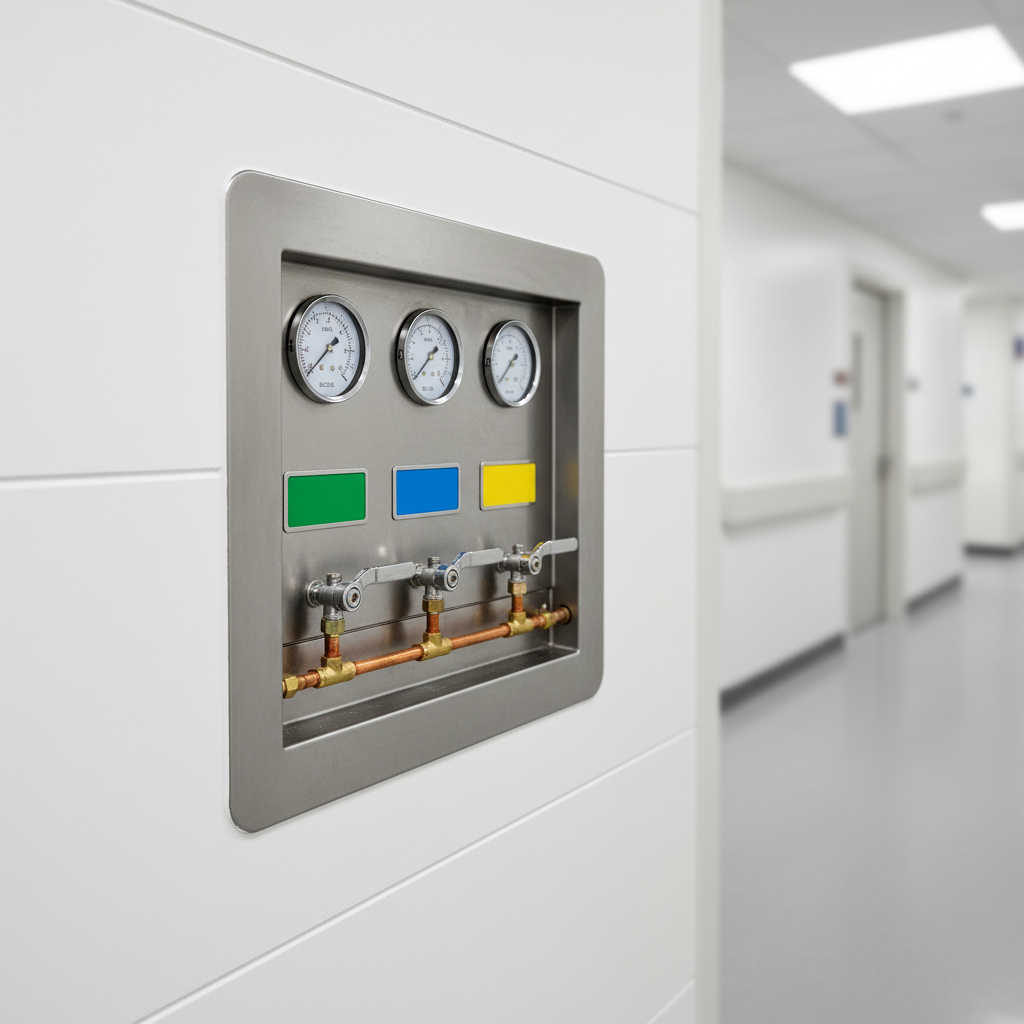
A zone valve box (ZVB) is a recessed or surface-mounted steel enclosure that houses one or more ball-type valves. Each valve controls the flow of a specific medical gas (e.g., Oxygen, Medical Air, Vacuum) to a defined area of a healthcare facility. The box provides immediate access to these valves and includes pressure gauges to display the line pressure for each gas within that zone.
Core Components
Valves: Typically brass or bronze three-piece, ball-type valves that can be closed with a quarter-turn. They are designed to be "full port," meaning they do not restrict the flow of gas when open.
Gauges: Each gas line has a dedicated pressure or vacuum gauge to provide a real-time reading of the line pressure downstream of the valve. This is the first line of defense for detecting pressure issues within the zone.
Box/Enclosure: A sturdy steel box, typically 16-gauge, with a pull-out or hinged window for access. The window is usually clear to allow for constant visual monitoring of the gauges.
Gas-Specific Hardware: To prevent accidental cross-connection, each valve is connected to the pipeline using gas-specific brazing extensions compliant with NFPA 99.
NFPA 99 Zone Valve Placement: Where Are They Required?
NFPA 99, Health Care Facilities Code, is the primary standard governing the placement of zone valve boxes. The fundamental rule (NFPA 99, 5.1.4.8) is that a zone valve must be installed to control the flow of medical gas to each defined patient care area. The valve must be located immediately outside the zone it controls, in a visible and accessible location.
The code specifically mandates zone valves for the following critical areas:
Anesthetizing Locations: Each operating room, hybrid OR, and procedure room requires its own set of zone valves.
Critical Care Areas: Intensive Care Units (ICUs), Coronary Care Units (CCUs), and other critical care units must have their own zone controls.
Emergency Departments: Each distinct resuscitation or trauma area.
Post-Anesthesia Care Units (PACUs): Each recovery bay or area where patients recover from anesthesia.
Patient Room Wings: For facilities with large medical/surgical wings, zone valves are required for each block of rooms.
Why this matters for compliance: The "immediately outside the zone" rule is strictly enforced by inspectors. The intent is that in an emergency, a nurse or staff member can quickly exit the room and shut off the gas without having to search for the valve box down a hallway or in a different wing. Accessibility is key for patient safety.
Comparison of Zone Valve Box Configurations
Zone valve boxes are not one-size-fits-all. They are configured based on the number of gases supplied to a zone and the construction of the wall where they will be located.
Feature
Recessed/Concealed Box
Surface-Mounted Box
Installation
Installed flush with the wall. Requires cutting into the wall assembly.
Mounted directly onto the surface of the wall.
Aesthetics
Provides a cleaner, less obtrusive look.
More utilitarian in appearance; protrudes from the wall.
Best For
New construction or major renovations.
Renovations or areas with existing infrastructure (e.g., concrete walls) where cutting is impractical.
Valves
Can accommodate single or multiple valves (up to 7 is common).
Can also accommodate multiple valves.
Considerations
Requires careful planning of wall depth and framing.
Can be an obstruction in tight corridors.
Critical NFPA 99 Labeling Requirements
Proper labeling is arguably as important as the valve itself. In an emergency, staff must be able to identify the correct valve to shut off without hesitation. NFPA 99, 5.1.11.2, outlines strict labeling requirements:
Gas Identification: The zone valve box must be clearly and permanently labeled with the names and/or chemical symbols of the medical gases it controls.
Area of Control: The labeling must identify the specific rooms or areas served by the valves in that box. For example, "OXYGEN - Operating Room 3" or "MEDICAL AIR - ICU Rooms 10-15".
Shut-Off Warning: A warning label must be present stating that the valves should only be closed in emergencies or for maintenance and that the appropriate personnel must be notified.
A failure to meet these labeling standards is a common citation during facility inspections and a significant safety risk. If your facility needs a compliance assessment, Medical Testing Solutions provides annual medical gas inspections to identify and correct these issues.
Monitoring and Alarms: Integrating with Facility Systems
While the gauges on the front of the zone valve box provide local pressure readings, NFPA 99 requires that these zones also be monitored by the facility's master alarm system. This is accomplished through pressure switches or sensors installed in the pipeline within the zone valve box.
If the pressure in a zone's pipeline deviates from the normal operating range (either high or low), the sensor sends a signal to the master alarm panel, alerting facility staff to a potential problem. This remote monitoring is essential for detecting leaks or failures before they become critical.
The Role of ASSE 6030 Verification for Zone Valve Boxes
Installation is only part of the process. Before a new or modified medical gas system can be used for patient care, it must be inspected and certified by a qualified individual. This process is known as verification, and it must be performed by an individual holding an ASSE 6030 credential.
An ASSE 6030 verifier performs a series of critical tests on each zone valve box, including:
Valve Operation: Confirming the valve opens and closes correctly and holds pressure without leaking.
Labeling Accuracy: Ensuring the label on the box correctly identifies the rooms it serves. This is often done by shutting the valve and confirming that only the intended outlets cease to flow gas.
Gauge Accuracy: Checking that the pressure gauges are reading correctly.
Alarm Function: Testing the pressure sensors to confirm they correctly trigger the master alarm panel when pressures are outside the normal range.
This independent, third-party verification is the final step in ensuring the system is safe and compliant. Medical Testing Solutions offers comprehensive medical gas verification services performed by our team of ASSE 6030 certified technicians.
Installation and Maintenance Best Practices
Proper installation is crucial for the long-term reliability of a zone valve box. All medical gas system installation must be performed by technicians holding an ASSE 6010 credential, who are trained in the specific procedures and brazing techniques required. If you are planning a renovation or new construction, trust our certified team for your medical gas installation.
Ongoing maintenance is also essential. As part of a facility's preventive maintenance program, zone valve boxes should be visually inspected regularly, and the gauges should be checked for accuracy. Any issues, such as stuck valves or inaccurate gauges, should be addressed immediately by a qualified service provider.
Conclusion: Your Partner in Medical Gas Compliance
Zone valve boxes are a foundational element of a safe and compliant medical gas pipeline system. Adhering to the strict placement, labeling, and monitoring requirements of NFPA 99 is not optional, it is essential for patient safety and avoiding costly deficiencies. From initial installation by ASSE 6010 technicians to final certification by an ASSE 6030 verifier, every step must be handled with precision and expertise.
If you have questions about your facility's zone valves or need to schedule an inspection or verification, contact the experts at Medical Testing Solutions. Our certified team is ready to ensure your facility is safe, compliant, and prepared for any situation.
Ready to ensure your facility is compliant? Request a quote online or call us today at +1 (754) 315-1078.
'''
Frequently Asked Questions
The number of zone valve boxes depends entirely on the facility's layout and the number of distinct patient care areas as defined by NFPA 99. Each operating room, ICU, and distinct patient wing requires its own zone valve assembly for the gases supplied to that area.
A source valve is located at the primary source of the medical gas (e.g., the oxygen bulk tank or medical air compressor) and controls the entire facility's supply. A zone valve is located downstream in the pipeline and controls only a specific, smaller area or "zone."
No. Installation of any medical gas pipeline component, including zone valve boxes, must be performed by a qualified ASSE 6010 certified installer. This ensures proper brazing techniques, testing, and compliance with NFPA 99 codes to guarantee patient safety.
While NFPA 99 doesn't specify a mandatory calibration interval, industry best practice, and most facility maintenance schedules, call for gauges to be checked for accuracy annually. They should be replaced or calibrated if they are not within the manufacturer's stated accuracy.
If a valve fails verification or an annual inspection (e.g., it leaks, doesn't close fully, or is improperly labeled), it must be repaired or replaced immediately by a certified technician. The system cannot be considered compliant until the deficiency is corrected and re-verified.
Request a quote for your facility
Talk with Medical Testing Solutions about your next inspection, repair or equipment request.