Who Installs Medical Gas Piping & Who Is Legally Allowed To? A Definitive Guide
When it comes to healthcare facility infrastructure, few systems are as critical as the medical gas piping network. These lines deliver life-sustaining gases like oxygen, medical air, and nitrous oxide to patient care areas. A faulty installation isn't just a maintenance headache; it's a profound risk to patient safety. This raises a crucial question for hospital administrators and facility managers: who is actually qualified and legally allowed to install medical gas piping? This guide will provide a definitive answer, explaining the essential certifications, governing codes, and the steps to selecting a qualified contractor to ensure your facility's safety and compliance.
The Gold Standard: ASSE 6010 Certified Medical Gas Systems Installers
The primary answer to "who can install medical gas piping" is a professional holding an ASSE 6010 certification. The American Society of Sanitary Engineering (ASSE) Series 6000 provides a national standard for medical gas professionals. The ASSE 6010 credential, specifically for "Medical Gas Systems Installers," is the benchmark for competency.
To earn this certification, an individual must typically have a minimum amount of documented, practical experience in the installation of plumbing or mechanical piping systems. They must then complete a rigorous 32-hour training course and pass a final written examination. This process ensures the installer is proficient in every aspect of the job, including:
- Understanding the complexities of NFPA 99, Health Care Facilities Code.
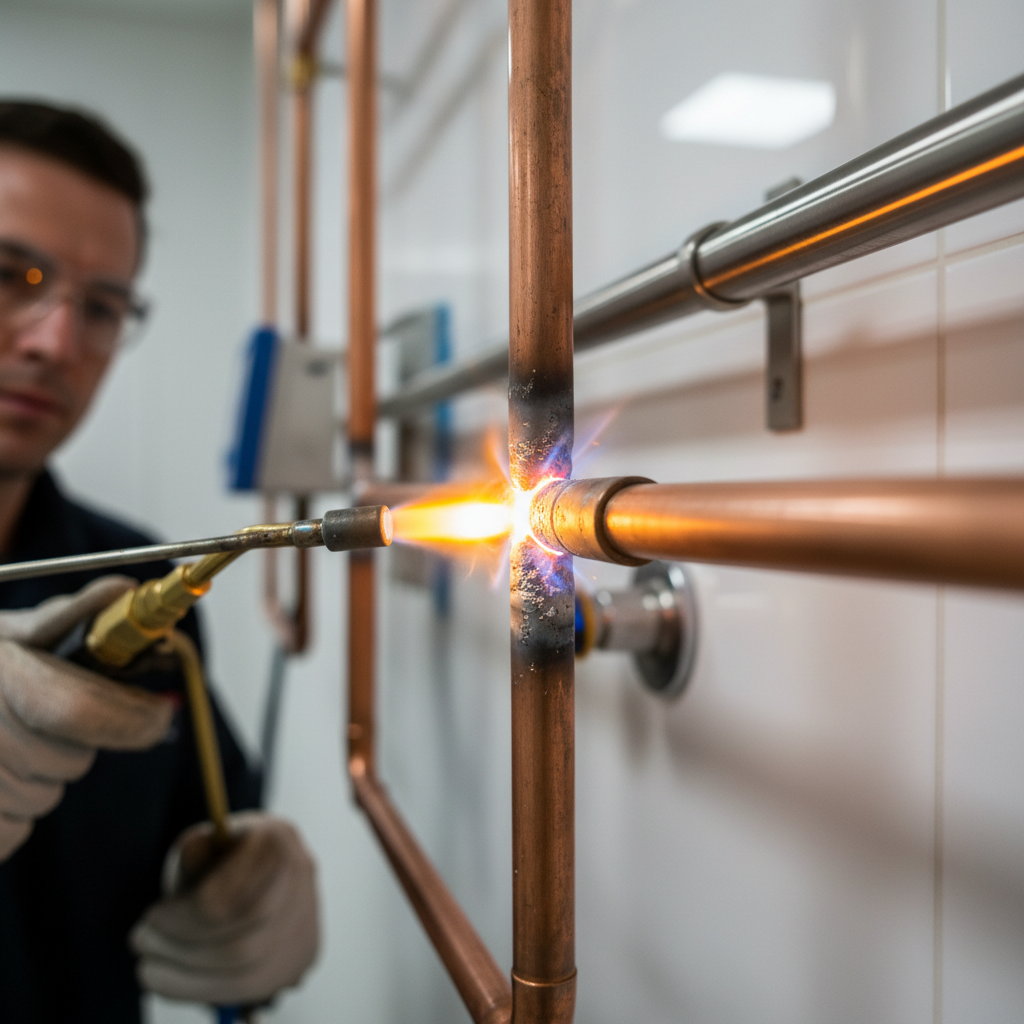
- Properly brazing copper tubing to create leak-proof joints, a critical skill detailed in the code.
- System and component installation requirements for sources, piping, and outlets/inlets.
- The procedures for initial pressure testing and standing tests to ensure system integrity before it's put into service.
Why This Matters for Compliance: NFPA 99 explicitly requires that installers of medical gas and vacuum systems be certified to the ASSE 6010 standard. Uncertified individuals performing this work places your facility in direct violation of code and puts patients at risk. Employing certified professionals is non-negotiable for legal and safe operation.
NFPA 99: The Rulebook for Medical Gas Installation
While ASSE 6010 certifies the person, the National Fire Protection Association (NFPA) 99, Health Care Facilities Code, dictates the process. This code is the foundational text for the design, installation, performance, and testing of medical gas systems in U.S. healthcare facilities. It's adopted into law in most states.
For installers, several chapters are paramount:
- Chapter 5: Gas and Vacuum Systems: This is the core of medical gas requirements, detailing everything from source equipment (manifolds, air compressors) to the patient-use station outlets. It specifies material requirements (like Type K/L copper tubing), brazing procedures, and labeling mandates.
- Chapter 13: Security Management: Outlines requirements to protect the system from intentional or unintentional damage.
An ASSE 6010 certified installer doesn't just know how to braze a pipe; they understand why it must be done in a specific way according to NFPA 99 to prevent contamination, ensure proper flow rates, and maintain system integrity.
Plumbers vs. Pipefitters vs. HVAC Techs: Who Has the Right Credentials?
A common point of confusion is whether a standard licensed plumber, pipefitter, or HVAC technician can install medical gas lines. The answer is no, not without the specific ASSE 6010 certification.
While these trades share overlapping skills (like working with piping), medical gas installation is a highly specialized field with unique requirements not found in commercial or residential work.
| Credential | Standard Scope | Qualified for Medical Gas? | Key Differentiator |
|---|---|---|---|
| Licensed Plumber | Potable water, drainage, waste, and vent systems. | Only if they also hold ASSE 6010 certification. | Lacks training in brazing for oxygen service, cross-connection control, and NFPA 99 specifics. |
| Pipefitter / Steamfitter | High-pressure piping for steam, chemicals, or industrial processes. | Only if they also hold ASSE 6010 certification. | While skilled in high-pressure systems, they are not trained in the specific cleanliness and material requirements for medical gases. |
| HVAC Technician | Heating, ventilation, and air conditioning systems, often involving refrigerant lines. | Only if they also hold ASSE 6010 certification. | Brazing techniques for refrigerant lines differ significantly from the nitrogen-purged brazing required for medical gas piping. |
At Medical Testing Solutions, our team consists of professionals who hold the requisite ASSE 6010 certification, ensuring every installation we perform is fully compliant and executed to the highest safety standards.