Ask a tech who spends every afternoon at the induction table how they feel by 4 p.m. Headache. Foggy. A little nauseated. It's easy to write off as a long day. Often, it's waste anesthetic gas, one of the few occupational hazards in a veterinary hospital that's both serious and almost completely preventable.
Veterinary
Compliance
The Waste Anesthetic Gas Risk Hiding in Your Veterinary Practice
Medical Testing SolutionsJune 23, 20262 min read
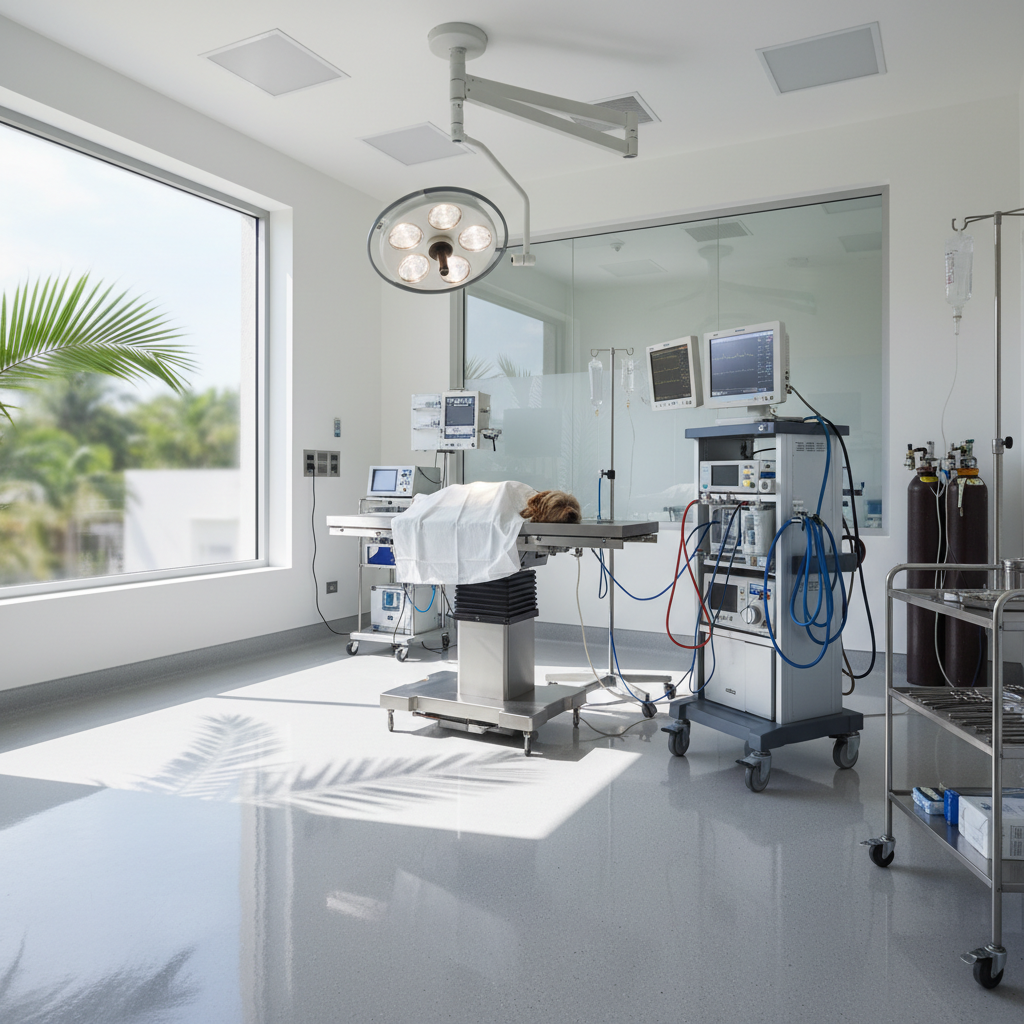
What "waste anesthetic gas" actually is
Every patient under inhalant anesthesia exhales the agent they're breathing, isoflurane, sevoflurane, sometimes nitrous oxide. Add what escapes from a loose mask, an induction chamber being opened, a leaking circuit, or a patient recovering in an open cage, and your treatment area fills with low concentrations of anesthetic gas that your team breathes for the length of every shift.
Why veterinary practices leak more than hospitals
Human surgical suites are engineered around closed, intubated, well-scavenged delivery. Veterinary medicine isn't always so tidy:
- Mask and chamber inductions are routine in vets and are major emission sources, there's no seal on a fractious cat in a box.
- Smaller, older buildings often weren't designed with the ventilation a surgical area really needs.
- Scavenging is frequently an afterthought, undersized, partially connected, or "passive" in a way that doesn't actually move gas.
The result is that the people most exposed to waste anesthetic gas often work in general practice, not the OR.
What the exposure actually does
This is where honest matters more than scary. The research on chronic low-level exposure points to real concerns, headaches, fatigue, and impaired concentration in the short term, with longer-term questions that have led occupational-health bodies to recommend keeping exposure low. NIOSH recommends holding waste anesthetic gas exposure down during administration rather than treating "you can't smell it" as safe. You don't need a dramatic reading of the data to justify fixing a leaky scavenging line, the cost of fixing it is trivial next to a staff-health claim or the turnover of a tech who's tired of feeling sick at work.
What actually reduces it
- A scavenging system that's correctly sized, fully connected, and tested, not just present
- Leak control at masks, circuits, and connections
- Sound induction and recovery practice that limits open off-gassing
- Periodic verification, so a system that drifts out of spec gets caught
None of that is exotic. The reason it doesn't happen is that waste anesthetic gas is invisible and the systems that control it have no obvious patient-facing effect, so they go untested until someone measures them.
If your scavenging has never been formally checked, that's the single highest-value thing you can do for your team's day-to-day wellbeing. It's a short test, and it's the difference between a staff that feels fine at 4 p.m. and one that doesn't.
Frequently Asked Questions
NIOSH recommends a ceiling of 2 ppm for halogenated agents (isoflurane, sevoflurane) when used alone, and 25 ppm time-weighted average for nitrous oxide. OSHA enforces these under the General Duty Clause for vet practices.
Use an active scavenging system vented outdoors, leak-test anesthesia machines and breathing circuits before every case, fit endotracheal tubes properly, avoid mask/chamber inductions where possible, and have the WAGD/scavenging line inspected annually. [Request a WAG inspection](/request-quote).
It is not legally required by NFPA 99, but OSHA, state vet boards and your malpractice carrier all expect documented anesthesia/WAG safety. A third-party ASSE 6020/6040 inspection produces that documentation.
Request a quote for your facility
Talk with Medical Testing Solutions about your next inspection, repair or equipment request.