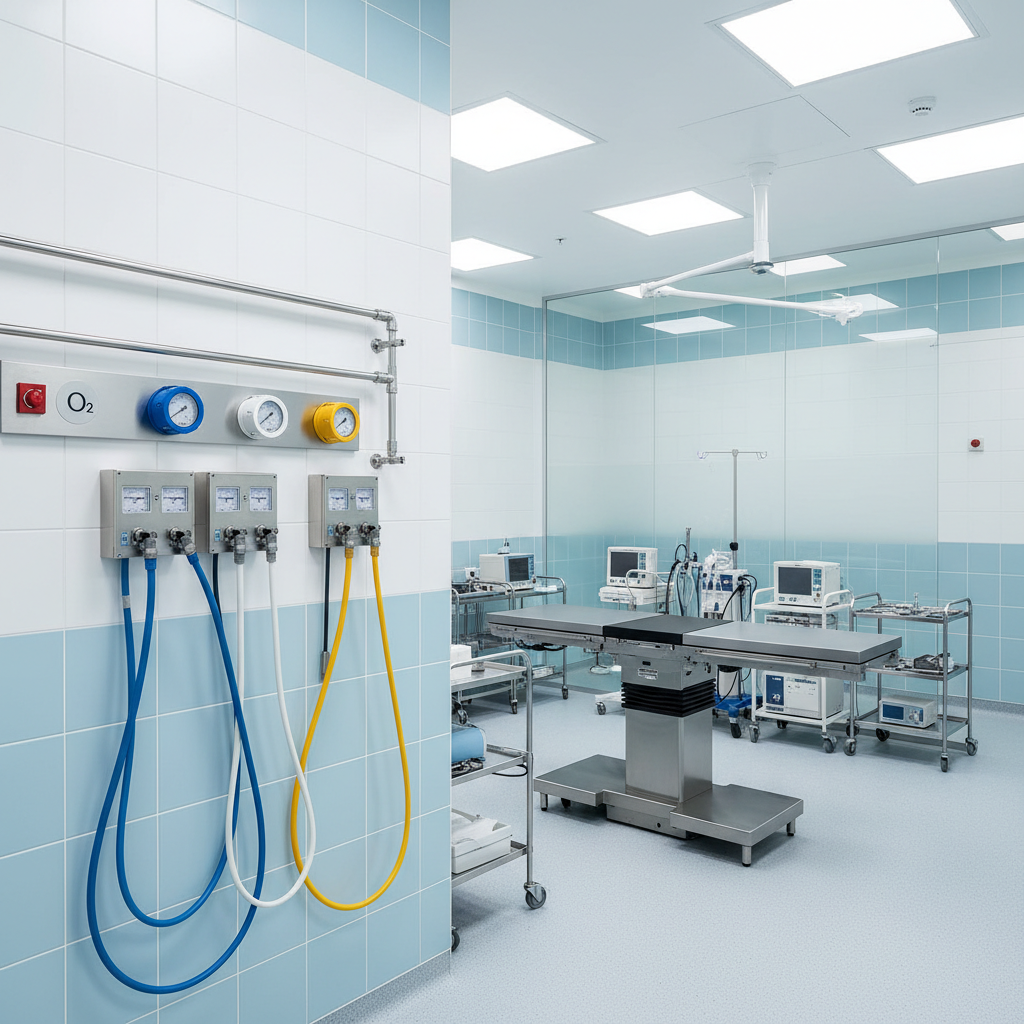
Veterinary Medical Gas Systems: An Introduction for Virginia Beach Clinics
For any veterinary hospital, surgical suite, or animal care facility, a properly installed and maintained medical gas system is not just a utility, it's the lifeblood of your practice. These complex systems deliver critical gases like oxygen (O2) and nitrous oxide (N2O), and safely remove waste anesthetic gas (WAG) and provide surgical suction. This guide provides a definitive overview of veterinary medical gas installation for clinic owners and facility managers in Virginia Beach, VA. We will explore the critical codes and standards, system components, installation process, and the importance of partnering with ASSE-certified professionals to ensure the safety of your patients and staff.
Understanding the Core Components of a Veterinary Gas System
A compliant veterinary medical gas system is more than just pipes and outlets. It's an integrated network of sources, pipelines, and delivery points, each governed by strict regulations.
Oxygen (O2) Supply
Oxygen is typically supplied from high-pressure cylinders or a centralized bulk tank. For most veterinary clinics, a manifold of H-cylinders is common. Key components include:
- Manifold: A rack that connects multiple cylinders, ensuring a continuous supply.
- Pressure Regulators: Devices that reduce the high pressure from the cylinders (around 2200 psi) to a usable line pressure (typically 50-55 psi).
- Automatic Changeover: A crucial device that automatically switches from the primary bank of cylinders to the secondary bank when the pressure drops, preventing an interruption in service.
Nitrous Oxide (N2O) System
Similar to oxygen, N2O is supplied via high-pressure cylinders and a manifold system. It is used for its anesthetic and analgesic properties. Proper installation is critical to prevent leaks, which can pose an occupational hazard.
Medical Vacuum & Suction
Veterinary surgical procedures require reliable suction for fluid removal. A medical vacuum system typically consists of:
- Vacuum Pump(s): The heart of the system, creating the negative pressure.
- Receiver Tank: A tank that helps maintain a consistent vacuum level in the pipeline.
- Piping Network: A dedicated pipeline running from the pump to the outlets in the surgical and treatment areas.
Waste Anesthetic Gas Disposal (WAGD) / Scavenging
Properly scavenging waste anesthetic gases is a major safety and compliance concern. A WAGD system actively removes exhaled gases from the anesthesia circuit and vents them safely outside the building. This is essential to protect your staff from the long-term health risks of exposure. For more details on staff safety, consider WAG monitoring.
Why this matters for compliance: The Occupational Safety and Health Administration (OSHA) requires employers to protect workers from hazards, including exposure to waste anesthetic gases. A properly installed WAGD system is a primary engineering control to meet this requirement.
The Gold Standard: NFPA 99 and ASSE 6000 Series Compliance
Adhering to established codes is non-negotiable for medical gas installation. The National Fire Protection Association (NFPA) 99, "Health Care Facilities Code," is the foundational document governing these systems. While some assume it only applies to human healthcare, its principles are the benchmark for veterinary facility safety.
Key NFPA 99 Requirements
- System Categorization: NFPA 99 categorizes systems based on risk. Most veterinary surgical applications fall under Category 1 or 2, demanding the highest level of safety and reliability.
- Piping: Requires seamless copper tubing (Type K or L) that is cleaned for oxygen service. All joints must be brazed by a qualified installer.
- Alarms: Central and area alarms are required to provide audible and visual warnings of system failures, such as high/low pressure or a changeover to the secondary gas supply.
ASSE 6000 Series Personnel Qualifications
Simply following the codebook isn't enough; the work must be performed by qualified individuals. The American Society of Sanitary Engineering (ASSE) 6000 series provides credentials for this purpose:
- ASSE 6010 Certified Installers: The credential for individuals who physically install the system. They are trained in proper brazing techniques, component handling, and code requirements.
- ASSE 6030 Certified Verifiers: After installation is complete, a third-party ASSE 6030 verifier must conduct a thorough inspection and series of tests to confirm the system is compliant and safe before it is used on patients. This is a critical step known as medical gas verification.
Medical Testing Solutions provides ASSE 6010 certified medical gas installation and ASSE 6030 verification services across Virginia Beach and beyond.
| Standard/Code | Focus Area | Key Requirement for Veterinary Clinics |
|---|---|---|
| NFPA 99 | System Design & Safety | Specifies pipe materials (Type K/L copper), brazing, and alarm requirements. |
| ASSE 6010 | Personnel Qualification | Requires installers to be certified in the proper techniques for pipeline installation. |
| ASSE 6030 | System Verification | Requires a certified third-party to test and verify the system before patient use. |
| CGA | Gas Handling | Provides standards for cylinder connections, regulators, and safe handling of compressed gases. |