Veterinary Medical Gas Installation in Sarasota, FL: A Complete Guide
Medical Testing SolutionsJune 20, 20266 min read
Share
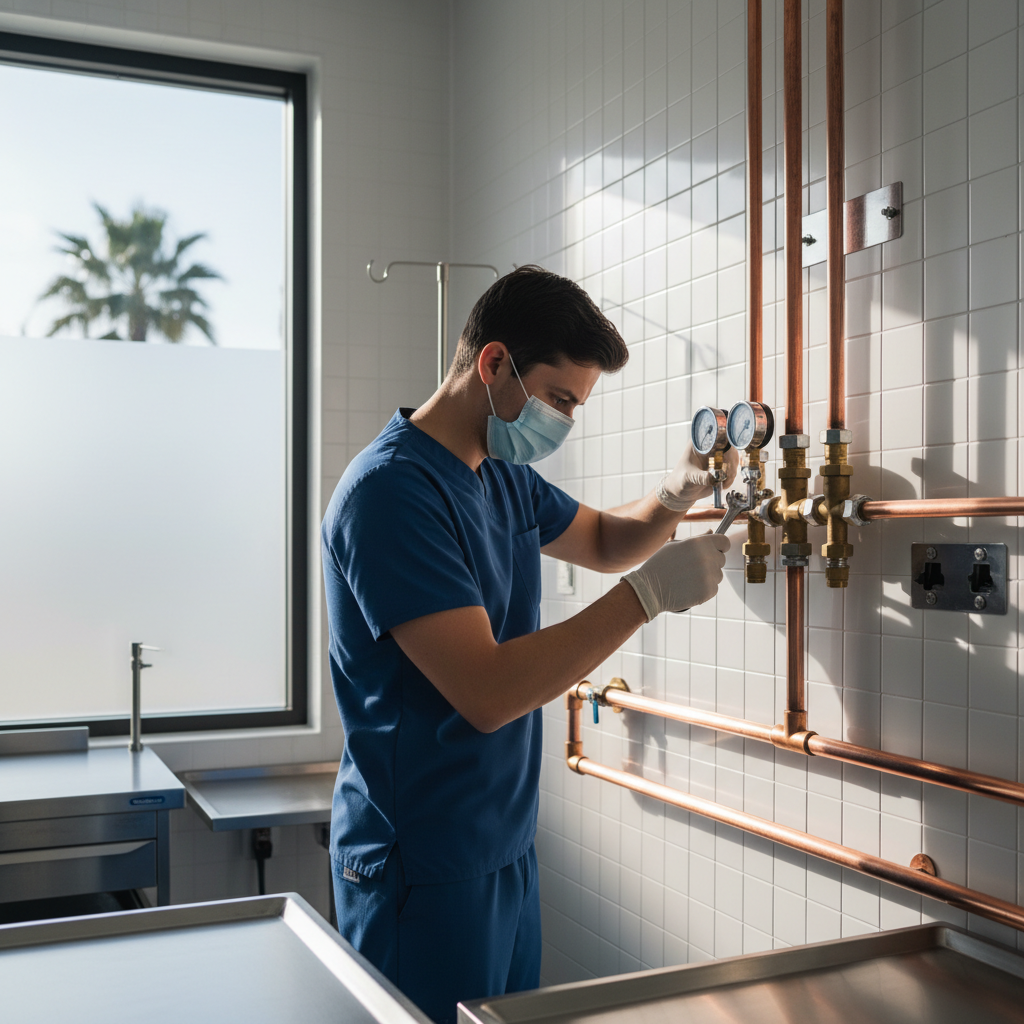
For veterinary hospitals and clinics in Sarasota, Florida, a properly designed and installed medical gas system is not a luxury, it's the lifeblood of the surgical suite. The safe, reliable delivery of oxygen, nitrous oxide, and medical vacuum, along with the proper removal of waste anesthetic gases (WAGD), is fundamental to patient safety, staff health, and regulatory compliance. This comprehensive guide covers the essentials of veterinary medical gas installation, from understanding the core components and navigating Florida's specific codes to the significant cost advantages of partnering with a local, certified expert.
Whether you are building a new animal hospital, renovating an existing practice, or upgrading an outdated system, this article will walk you through the critical steps to ensure your facility's gas systems are safe, efficient, and fully compliant with both veterinary standards and Florida state law.
Why Compliant Medical Gas Systems Are Critical in Veterinary Medicine
A compliant medical gas system does more than just deliver anesthesia. It's a critical safety system that protects everyone in your facility.
Patient Safety: Precise and uninterrupted flow of oxygen and anesthetic agents is paramount during surgical procedures. A system failure can have immediate and tragic consequences.
Staff Safety: Chronic exposure to waste anesthetic gases like isoflurane or sevoflurane can lead to serious long-term health issues for veterinarians and technicians. An effective WAGD (scavenging) system, properly installed and vented, is essential and required by code.
Regulatory Compliance: In Florida, veterinary facilities must adhere to strict standards, primarily outlined in NFPA 99, the Health Care Facilities Code. Non-compliance can jeopardize your facility's licensure and expose you to liability.
Why this matters for compliance: The American Veterinary Medical Association (AVMA) Guidelines for Anesthesia harmonize with NFPA standards. Adherence isn't just about following rules; it's about upholding the highest standard of care for your patients and providing a safe workplace for your team.
Core Components of a Veterinary Medical Gas System
A complete veterinary medical gas system is a network of components working in concert. Understanding each part is key to planning a successful installation.
Medical Gas Source Equipment
This is the starting point of your system. The choice depends on your clinic's size, caseload, and budget.
High-Pressure Cylinders: Often seen as H or K-tanks, these are common for smaller practices with lower gas consumption.
Manifold Systems: A central bank of cylinders that automatically switches from a primary to a reserve bank, ensuring an uninterrupted supply. This is the next step up for growing practices and a requirement for certain facility types under NFPA 99.
Oxygen Concentrators: For oxygen supply, these devices generate USP 93% oxygen from ambient air, offering long-term cost savings and eliminating the logistics of cylinder delivery. They must be compliant with NFPA 99 regulations for medical use.
The Pipeline Distribution Network
This is the infrastructure that carries the gas from the source to the operating rooms. These pipelines must be constructed from seamless, medical-grade copper tubing (Type K or L), cleaned for oxygen service, and brazed by a certified technician.
Station Outlets and Inlets
These are the connection points in the surgical and treatment rooms. They are gas-specific, using keyed "Diameter Index Safety System" (DISS) or quick-connect fittings to prevent accidental cross-connection. Each outlet is color-coded for instant identification (e.g., Green for Oxygen, Blue for Nitrous Oxide, White for Vacuum).
Alarm Systems
The eyes and ears of your gas system. NFPA 99 requires both master alarms (in a location under continuous surveillance) and area alarms (at the point of use) to provide immediate audible and visual warnings of pressure changes, supply depletion, or system failures.
Navigating Florida's Regulatory Landscape: NFPA 99, AHCA, and TJC
As a Florida-based company, Medical Testing Solutions understands the state's unique regulatory environment. Our headquarters are located at 501 East Las Olas Blvd, Ste 300, Fort Lauderdale, FL 33301, giving us an unmatched understanding of local requirements.
NFPA 99: This is the foundational code for all medical gas systems in the United States, and it is fully adopted and enforced in Florida. It dictates everything from piping materials and installation procedures to testing and maintenance.
Florida Agency for Health Care Administration (AHCA): AHCA is the chief regulatory body for healthcare facilities in the state. Verification and testing reports, such as those performed by MTS, must satisfy the requirements of AHCA OPS Form 3110 and Chapter 59A of the Florida Administrative Code.
The Joint Commission (TJC): For veterinary hospitals that are TJC-accredited (often larger specialty or university centers like those in the UF Health or BayCare systems), annual inspections and stringent documentation are required to maintain accreditation, directly referencing NFPA 99 standards.
The ASSE 6010 Installation Process: Step-by-Step
A compliant installation is a formal, documented process performed by certified professionals.
Design & Engineering: The system is designed based on your facility's needs, number of operating rooms, and gas requirements.
Sourcing Materials: All components, from copper piping to alarms and outlets, must be medical-grade and cleaned for oxygen service.
Installation by ASSE 6010 Personnel: An ASSE 6010 Certified Installer performs the physical installation, including the critical brazing process. This certification ensures the installer is qualified to build systems to NFPA 99 standards.
Verification by ASSE 6030 Verifier: Before any patient use, the entire system must be tested and verified by a third-party ASSE 6030 Medical Gas Verifier. This crucial step, which MTS provides, confirms component and system-level performance, purity, and safety.
Cost-Saving Advantages for Sarasota Veterinary Practices
Choosing a Florida-based installer offers a significant financial advantage. Out-of-state companies must pass on their overhead costs to you. As a local Florida company, Medical Testing Solutions eliminates these expenses entirely.
This typically saves our Florida clients 10–25% on total project costs.
Factor
MTS (Sarasota Project)
Out-of-State Competitor
Travel Fees
$0
Yes
Technician Lodging
$0
Yes
Per-Diem / Meals
$0
Yes
Mobilization Time
Same-day or next-day
2-5 business days
Estimated Savings
10-25%
$0
By partnering with a local expert, you're not just getting better value; you're getting faster service from technicians who live and work in the same regulatory environment you do. Explore our services across the state on our /florida/ hub page.
Special Considerations for Florida: Hurricanes and Climate
Florida's weather poses unique challenges. NFPA 99 (Section 5.1.12) mandates that a medical gas system must be re-verified after any event that causes a loss of pressure at the source equipment or a breach in the system. Hurricanes are a prime example.
After a major storm, you must have your system inspected and re-verified before it can be safely returned to service. Our Fort Lauderdale-based crews can mobilize quickly to Sarasota and across South Florida, ensuring you can resume operations safely and swiftly. This rapid response is something out-of-state firms cannot match. Prompt post-storm service is something we regularly provide to major hospital systems like Baptist Health and Cleveland Clinic Florida, and we extend that same level of urgency to our veterinary partners.
Get a Compliant Installation for Your Sarasota Practice
Don't leave the safety of your patients and staff to chance. Ensure your veterinary facility is built for safety, reliability, and compliance from the start. The team at Medical Testing Solutions has been installing and verifying veterinary medical gas systems across Florida for years.
Ready to ensure your Sarasota veterinary facility is safe and compliant? Call our Fort Lauderdale office today at +1 (754) 315-1078 or request a no-obligation quote online to discuss your project with an ASSE-certified specialist.
'''
Frequently Asked Questions
The most common setup includes Oxygen (O2) for patient life support, Nitrous Oxide (N2O) for analgesia, Medical Vacuum for aspiration, and a Waste Anesthetic Gas Disposal (WAGD) or scavenging system to safely remove exhaled anesthetic gases and protect staff.
Yes, NFPA 99 is the adopted standard for medical gas systems in Florida and is enforced by the Florida Agency for Health Care Administration (AHCA). Compliance is essential for the licensure, safety, and insurability of your practice.
According to NFPA 99, all brazing procedures must be performed by individuals certified to the ASSE 6010 standard for Medical Gas Systems Installers. Medical Testing Solutions employs a team of ASSE 6010 certified installers across Florida.
Costs vary depending on the size of the facility and scope of the system. However, by choosing a Florida-based company like Medical Testing Solutions, you automatically avoid travel, lodging, and per-diem fees, which often saves our clients 10–25% compared to out-of-state competitors.
Installation (governed by ASSE 6010) is the physical construction of the pipeline system. Verification (governed by ASSE 6030) is the final, independent testing of the *entire system* by a different, unbiased party to ensure it is pure, non-crossed, and functioning correctly before it can be used for patient care.
Yes. NFPA 99 section 5.1.12 requires system re-verification if the pipeline has been breached or if pressure was lost at the source, both of which are common during a major hurricane. Our Florida crews can be dispatched from our South Florida office in West Palm Beach or Fort Lauderdale for rapid post-storm inspections.
Request a quote for your facility
Talk with Medical Testing Solutions about your next inspection, repair or equipment request.