Designing and installing a medical gas system for a veterinary practice is a critical undertaking that directly impacts patient safety, staff well-being, and regulatory compliance. For clinics in Rock Hill, South Carolina, a properly installed system, delivering oxygen (O2), nitrous oxide (N2O), and providing medical vacuum and waste anesthetic gas disposal (WAGD), is the bedrock of modern surgical and dental procedures. This guide provides a definitive overview of the components, codes, and processes involved in a veterinary medical gas installation, ensuring your facility meets the stringent standards set by the AVMA, NFPA 99, and ASSE.
Medical Gas Service
Compliance & Standards
Veterinary
Veterinary Medical Gas Installation in Rock Hill SC: A Complete Guide
Medical Testing SolutionsAugust 25, 20266 min read
What is a Veterinary Medical Gas System?
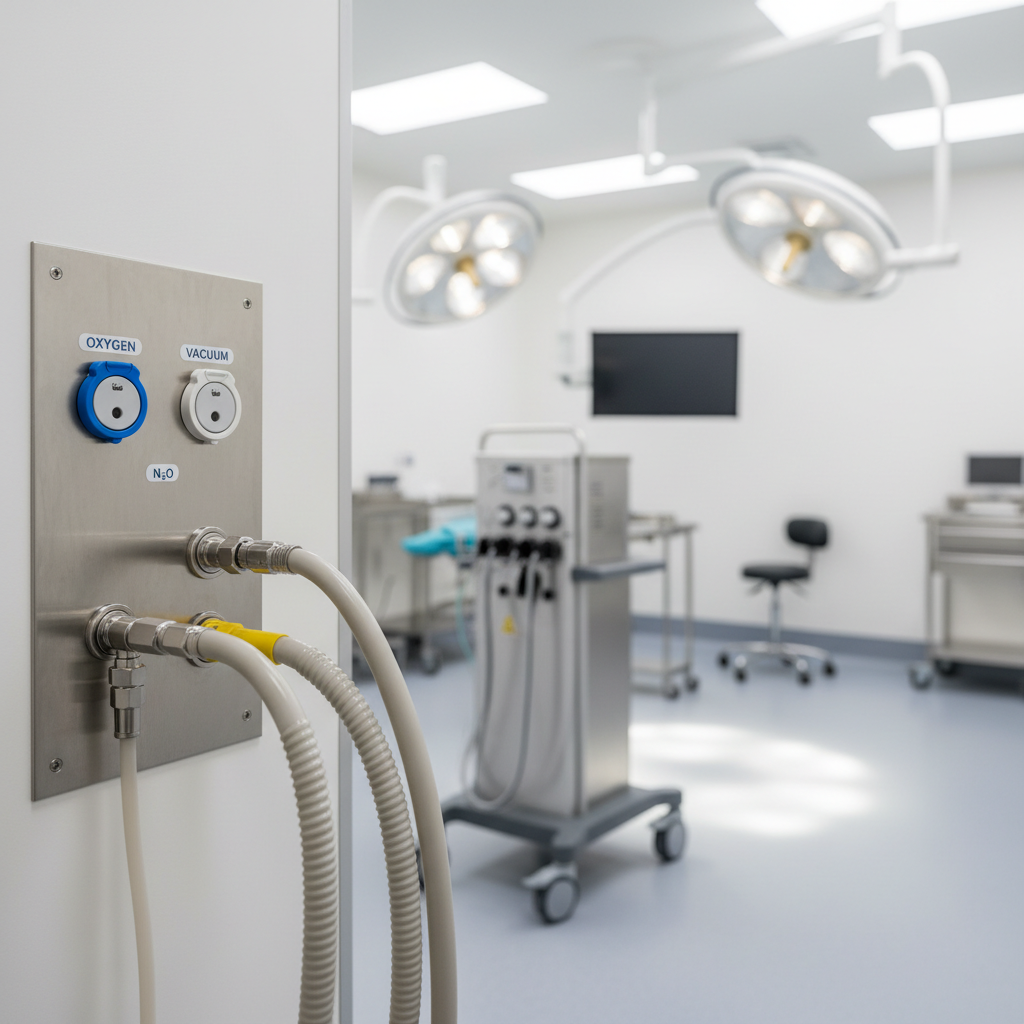
A veterinary medical gas system is a centralized network of pipes, manifolds, and outlets designed to deliver specific medical gases from a central supply to points of use, such as operating rooms, dental suites, and recovery areas. Unlike a simple oxygen tank on a cart, these complex systems are an integral part of the building's infrastructure. They are life-support systems requiring meticulous design, professional installation by certified technicians, and regular maintenance.
Core Components:
- Source Equipment: This is the heart of the system. It includes high-pressure cylinders arranged on a manifold, bulk liquid oxygen tanks, or medical air compressors.
- Piping Distribution Network: A network of medical-grade, cleaned, and brazed copper piping that transports the gases from the source to the outlets.
- In-Line Valves: Zone and in-line valves are placed throughout the piping network to isolate specific areas for maintenance or emergencies without shutting down the entire facility.
- Alarms: Master and area alarm panels are required by NFPA 99 to provide audible and visual warnings of system failures, pressure drops, or changeovers.
- Terminal Outlets: Gas-specific outlets (e.g., DISS, quick-connect) are installed in patient care areas, allowing for the quick and safe connection of anesthesia machines and flowmeters.
- Scavenging Systems: A dedicated Waste Anesthetic Gas Disposal (WAGD) or vacuum system to safely remove exhaled anesthetic gases from the surgical environment.
Key Gas Systems for Veterinary Practices
Veterinary clinics typically require a combination of positive pressure gas systems and negative pressure vacuum/scavenging systems. The specific needs depend on the services offered, from routine dental cleanings to complex orthopedic surgeries.
Oxygen (O2)
The most critical life-support gas, oxygen is used for patient resuscitation and as a carrier gas for inhaled anesthetics. Supply sources range from small H-cylinders for low-volume users to large liquid oxygen (VGL) systems for hospitals.
Nitrous Oxide (N2O)
Used as an analgesic and anesthetic agent, particularly in dental procedures. N2O is typically supplied via high-pressure cylinders connected to a manifold system. It requires dedicated scavenging to prevent occupational exposure.
Medical Vacuum
A medical vacuum system is essential for aspirating fluids and debris during surgery. It is powered by a dedicated vacuum pump, separate from any general-purpose janitorial vacuum, and must maintain specific pressure levels and airflow.
Waste Anesthetic Gas Disposal (WAGD)
Perhaps one of the most critical safety components, a WAGD system protects your staff from the chronic health effects of exposure to waste anesthetic gases. NFPA 99 mandates a dedicated scavenging system for any location where inhalant anesthetics are administered.
Why this matters for compliance: The Occupational Safety and Health Administration (OSHA) sets permissible exposure limits (PELs) for anesthetic gases. An active WAGD system is a primary engineering control required to maintain a safe work environment and comply with OSHA standards. Regular WAG chemical vapor monitoring is essential to verify its effectiveness.
The Installation Process: An ASSE 6010 Certified Approach
A compliant veterinary medical gas installation is far more than just running copper pipes. It's a specialized trade governed by strict codes. The entire process must be overseen and performed by individuals holding an ASSE 6010 Medical Gas Systems Installer certification.
- Step 1: Design & Sizing: The system must be designed by a qualified professional to ensure proper pipe sizing for adequate flow rates and pressures at every outlet, even during peak demand.
- Step 2: Material Handling: All piping and components must be medical-grade, arriving on-site cleaned, capped, and sealed to prevent contamination.
- Step 3: Brazing: An ASSE 6010 certified installer uses a specific brazing technique with a continuous nitrogen purge inside the pipes. This prevents oxidation and the formation of harmful carbonized flakes inside the system.
- Step 4: Initial Pressure Testing: After installation, the system undergoes an initial pressure test to check the integrity of every joint.
- Step 5: Verification & Certification: This is the final, crucial step. An independent, third-party ASSE 6030 Medical Gas Verifier must test the entire system. This includes verifying gas concentration, checking for cross-connections, testing alarm functionality, and confirming flow rates. Medical Testing Solutions provides this essential third-party verification.
| Standard | Title / Relevance | Who It Affects |
|---|---|---|
| NFPA 99 | Health Care Facilities Code | The primary code governing the design, installation, and maintenance of medical gas systems in the U.S. |
| ASSE 6010 | Professional Qualification Standard for Medical Gas Systems Installers | The required certification for any individual physically installing the piping network. |
| ASSE 6030 | Professional Qualification Standard for Medical Gas Systems Verifiers | The required certification for the third-party inspector who certifies the system is safe for patient use. |
| AVMA | Guidelines for Anesthesia | Provides best practices for the safe and effective use of anesthetic agents and equipment in veterinary medicine. |
Finding a Qualified Installer in Rock Hill, SC
When selecting a company for your veterinary medical gas installation, it is imperative to verify their credentials. Do not entrust this life-support system to a standard residential or commercial plumber.
Questions to Ask a Potential Installer:
- Are your technicians ASSE 6010 certified? Ask to see their current certifications.
- Can you provide references from other veterinary or human healthcare facilities?
- Who will perform the final ASSE 6030 verification? To avoid conflicts of interest, the verification should be done by a different company than the installer, or at least a verifiably independent person within the same company.
- Do you provide a complete documentation package? This should include the installer's certifications, piping diagrams, and the final verification report.
Medical Testing Solutions (MTS) provides comprehensive services, including ASSE 6010 certified installations, ongoing medical gas maintenance services, and ASSE 6030 verification across South Carolina.
Post-Installation: Maintenance and Annual Inspections
A medical gas system is not a "set it and forget it" utility. NFPA 99 requires regular maintenance and annual inspections to ensure continued safety and performance. An annual inspection, performed by an ASSE 6040 certified technician, checks for system integrity, tests alarms, verifies pressures, and ensures outlets are functioning correctly. This proactive approach prevents unexpected failures and ensures you are always ready for a surprise inspection from state or veterinary boards.
Get a Compliant Installation for Your Rock Hill Practice
Ensuring your veterinary clinic’s medical gas system is installed correctly is a non-negotiable investment in patient safety and staff protection. From design to final verification, every step must adhere to strict national standards.
Don't leave your compliance to chance. Contact the certified experts at Medical Testing Solutions today for a comprehensive consultation and quote for your Rock Hill veterinary medical gas installation. Call us at +1 (754) 315-1078 or request a quote online to get started.
Frequently Asked Questions
No. All medical gas piping must be Type K or L (ACR), cleaned for oxygen service, and clearly labeled. It must be installed using a specific brazing process with a nitrogen purge to prevent internal oxidation, which could otherwise be catastrophic in an oxygen-rich environment.
After the initial ASSE 6030 verification, your system requires annual medical gas inspections by an ASSE 6040 certified technician. This is a specific requirement under the latest editions of NFPA 99.
An ASSE 6010 Installer is certified to physically build and braze the piping system. An ASSE 6030 Verifier is a certified third-party inspector who conducts a battery of tests to ensure the system is safe, pure, and correctly installed before it can be used for patient care.
While portable tanks are suitable for very low-volume or emergency backup use, any practice performing regular surgery or sedation benefits from a centralized system. Centralized systems provide a more reliable, cost-effective, and safer gas supply, and are essential for meeting modern standards of care and staff safety (WAGD).
NFPA 99 has specific requirements for gas storage areas. They must be clean, dry, well-ventilated, and secured. Full and empty cylinders must be segregated and properly restrained. The room must also have specific fire-resistance ratings depending on the quantity of gas stored.
Yes, Medical Testing Solutions is a leading provider of veterinary medical gas installation, verification, and maintenance services for Rock Hill and throughout the Carolinas. Our technicians are ASSE 6010, 6030, and 6040 certified to ensure your system is compliant and safe.
Request a quote for your facility
Talk with Medical Testing Solutions about your next inspection, repair or equipment request.