Skip to content
    New: Medical Gas Outlet Retrofit & Rebuild Matrix — cross-reference legacy Chemetron, Ohio Diamond, Puritan-Bennett & more →
    ASSE Certified 24/7
    Medical Gas Service
    Compliance & Standards
    Veterinary

    Veterinary Medical Gas Installation in Raleigh, NC: A Complete Guide

    Medical Testing SolutionsAugust 22, 20267 min read
    Share
    Veterinary Medical Gas Installation in Raleigh, NC: A Complete Guide

    Veterinary Medical Gas Systems: An Introduction for Raleigh Clinicians

    Properly installed and maintained medical gas systems are a cornerstone of modern veterinary medicine, essential for delivering anesthesia, oxygen therapy, and surgical support. For a veterinary clinic in Raleigh, NC, a correctly designed system isn't just about functionality, it's a critical matter of patient safety, staff protection, and regulatory compliance. An improper installation can lead to catastrophic failures, anesthetic gas exposure, and significant legal liability. This guide will walk you through the essential components, design considerations, and regulatory standards, including NFPA 99, that govern veterinary medical gas installation. You will learn the key differences between system types, the importance of professional certification, and how to ensure your practice meets the highest standards of safety and care.

    Core Components of a Veterinary Medical Gas System

    A compliant veterinary gas system is more than just pipes and outlets. It's an integrated network comprising a central supply source, a distribution network, and terminal equipment. Each component must be specified and installed correctly to ensure gas purity, pressure, and flow are maintained from the source to the patient.

    Central Supply Systems: The Heart of Your Clinic

    The central supply is where your medical gases originate. For most veterinary practices, this involves cylinders of compressed gas or liquid oxygen containers.

    • Oxygen (O2): The most common setup involves high-pressure cylinders (H-tanks) connected to a manifold. An automatic changeover manifold is critical, ensuring an uninterrupted gas supply by switching from the primary bank to a reserve bank when pressure drops. For high-volume practices, a bulk liquid oxygen (LOX) tank may be more economical.
    • Nitrous Oxide (N2O): Similar to oxygen, N2O is supplied via cylinders connected to a manifold system. Due to its anesthetic properties, secure storage and leak prevention are paramount.
    • Medical Air: While some facilities use high-pressure cylinder banks, many opt for a dedicated medical air compressor. This system must be designed to deliver clean, dry air free of contaminants, meeting stringent purity standards.

    Distribution Network: The Arteries of the System

    The distribution network consists of specially prepared, cleaned, and brazed copper piping that transports the gas from the central supply to various points of use throughout the facility. All piping must be Type K or L copper, cleaned for oxygen service, and installed by an ASSE 6010 certified technician. This is a crucial step that ensures no contaminants are introduced into the system. The entire network is pressure-tested and verified to guarantee its integrity.

    Terminal Units and Alarms

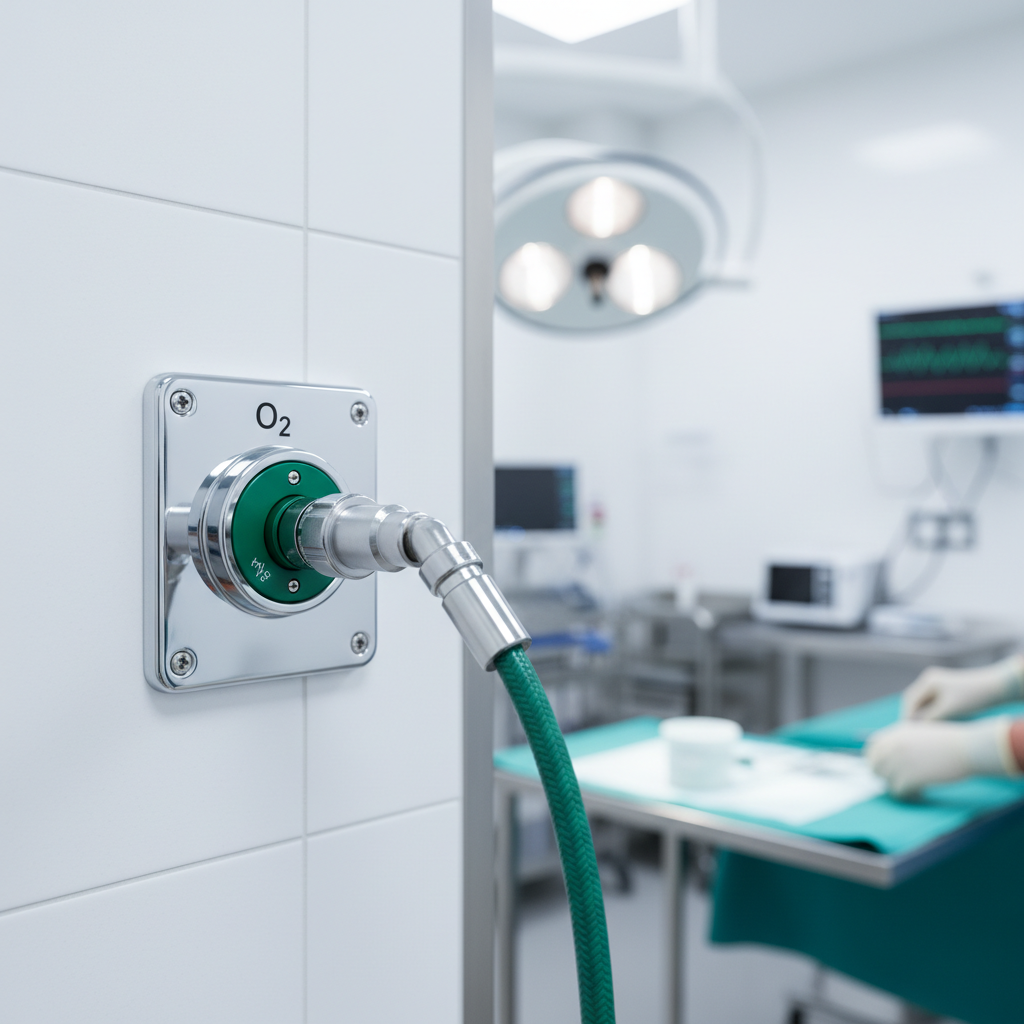
    Terminal units are the outlets in surgical suites and treatment areas where equipment is connected. These are gas-specific, using a unique pin-indexing system (DISS - Diameter Index Safety System) to prevent accidental cross-connection of gases. Furthermore, a robust alarm system is required by NFPA 99 to provide audible and visual warnings of pressure fluctuations or system failures. These alarms are the nervous system of your gas supply, providing immediate alerts to potential issues. For expert guidance on system design and equipment, explore our veterinary anesthesia equipment.

    NFPA 99: The Standard for Health Care Facilities

    The National Fire Protection Association's standard, NFPA 99, Health Care Facilities Code, is the definitive guide for medical gas systems in both human and animal health care. While originally written for human hospitals, its principles are the accepted standard for veterinary facilities to ensure safety.

    Why this matters for compliance: Adherence to NFPA 99 is not optional. It is the recognized industry standard for safety and is often incorporated into local building codes and enforced by fire marshals. Non-compliance can result in failed inspections, operational shutdowns, and, most importantly, unacceptable risks to patients and staff.

    Key NFPA 99 Requirements for Veterinary Installations:

    • Piping: Must be rigid copper (Type L or K) and brazed by a certified ASSE 6010 installer.
    • Valves: Zone valves must be installed to isolate specific areas (e.g., a surgical suite) for maintenance or in an emergency without shutting down the entire facility.
    • Alarms: Master and area alarms are required to monitor gas pressure and system status.
    • Verification: Before a new or modified system is put into service, it must be thoroughly tested and verified by a qualified ASSE 6030 Certified Medical Gas Verifier. This is a non-negotiable step to confirm gas purity, pressure, flow, and rule out cross-connections. Medical Testing Solutions provides comprehensive medical gas verification services to ensure your system is safe and compliant from day one.

    Anesthetic Gas Scavenging (WAGD) Systems

    Waste Anesthetic Gas Disposal (WAGD) is just as important as the gas delivery system. A WAGD system actively removes exhaled anesthetic gases from the operating environment, protecting your staff from the long-term health risks of exposure. These systems must be carefully designed to provide adequate suction without affecting the patient's breathing circuit. Regular WAG chemical vapor monitoring is essential to ensure the system is functioning effectively and keeping your team safe.

    The Installation Process: What to Expect

    A professional veterinary medical gas installation follows a strict protocol to ensure quality and compliance. The process requires a team of certified experts who understand the unique demands of a veterinary environment.

    Step-by-Step Installation Overview:

    1. Design and Planning: A certified specialist from a firm like Medical Testing Solutions will assess your Raleigh clinic’s needs, considering the number of operating rooms, procedure types, and future growth plans to design a compliant and efficient system.
    2. Pipe Installation: ASSE 6010 certified installers run the degreased copper piping from the source to the designated outlet locations. All joints are brazed with a nitrogen purge to prevent internal oxidation, which could contaminate the gas stream.
    3. Component Installation: Manifolds, alarms, zone valve boxes, and terminal outlets are installed and connected to the piping network.
    4. Initial Pressure Testing: The system is pressurized with nitrogen to test for leaks and ensure the integrity of all joints and connections.
    5. ASSE 6030 Verification: This is the final and most critical phase. An independent, ASSE 6030 certified verifier performs a battery of tests to confirm:
      • No cross-connections exist.
      • The correct gas is flowing from each outlet.
      • Gas purity meets USP standards.
      • System pressures and flows are correct.
      • Alarms function as intended.

    Only after passing this rigorous verification can the system be certified for patient use. For a deeper dive into the installation process, see our page on medical gas installation.

    Choosing a Qualified Installer in Raleigh, NC

    Selecting the right partner for your medical gas installation is a decision that directly impacts safety and compliance. Not all plumbing or mechanical contractors are qualified to perform this specialized work.

    Installer Qualification Checklist

    CredentialWhy It's EssentialQuestions to Ask
    ASSE 6010 CertificationThe industry standard for installers. Guarantees they are trained in the specific procedures for brazing, purging, and handling medical gas piping."Are all technicians who will be working on my project ASSE 6010 certified?"
    Experience with Vet ClinicsVeterinary facilities have different needs and workflows than human hospitals. Experience ensures the design is practical for your practice."Can you provide references from other veterinary clinics in the Raleigh area?"
    Offers ASSE 6030 VerificationWhile installation and verification must be done by different individuals, a company that offers both services (like Medical Testing Solutions) understands the entire compliance lifecycle."Do you provide ASSE 6030 verification services post-installation?"
    Comprehensive ServiceLook for a partner who can also provide ongoing annual inspections and maintenance to keep your system compliant for years to come."What kind of preventative maintenance and repair services do you offer?"

    Get a Compliant Installation for Your Raleigh Practice

    Ensuring your veterinary clinic’s medical gas system is properly designed, installed, and certified is one of the most important investments you can make in patient and staff safety. The standards set by NFPA 99 and ASSE are not suggestions; they are the framework for a safe and compliant practice. The team at Medical Testing Solutions has decades of experience providing ASSE-certified medical gas installation, verification, and maintenance services for veterinary facilities throughout North Carolina.

    Don't leave the safety of your patients and staff to chance. Contact our certified specialists today for a comprehensive consultation and quote for your Raleigh-area practice. Call us at +1 (754) 315-1078 or request a quote online to get started.


    Frequently Asked Questions

    After the initial ASSE 6030 verification, NFPA 99 recommends that all medical gas systems be inspected annually by a qualified ASSE 6040 Certified Medical Gas Maintenance Technician. This ensures continued safety and compliance.

    No. You must use seamless copper tubing (Type K or L) that has been cleaned for oxygen service. All joining must be done via brazing with a nitrogen purge by an ASSE 6010 certified individual.

    Installation is the physical assembly of the system, performed by an ASSE 6010 certified technician. Verification is the final testing and certification of the system, which must be performed by a separate, independent ASSE 6030 certified verifier to ensure an unbiased assessment.

    Yes. Even if you only use a few cylinders, an automatic changeover manifold is a critical safety feature. It ensures that your gas supply does not run out unexpectedly during a procedure, automatically switching to a reserve cylinder.

    The risks are severe and include delivering the wrong gas to a patient, contamination of the gas stream, leaks causing fire hazards (with oxygen), and chronic health issues for staff due to waste anesthetic gas exposure. It also poses significant legal and financial liability.

    This article is provided for educational purposes and reflects industry standards as of publication. Always verify against current NFPA 99, CGA, and AHJ requirements. Medical Testing Solutions is ASSE-certified and ready to help — contact us for facility-specific guidance.

    Request a quote for your facility

    Talk with Medical Testing Solutions about your next inspection, repair or equipment request.

    Get a quote in 1 business day

    I agree to receive text messages from Medical Testing Solutions, L.L.C. at the phone number provided, including informational and marketing messages. Consent is not a condition of purchase. Message frequency varies. Message & data rates may apply. Reply STOP to opt out or HELP for help. See our Privacy Policy and Messaging Terms.

    Prefer to talk? Call (754) 315-1078

    Related articles