Veterinary Medical Gas Installation in Owensboro, KY: A Complete Guide for Modern Clinics
Properly installed and maintained medical gas systems are a critical component of patient safety and clinical efficacy in any veterinary practice. For clinics in Owensboro, Kentucky, understanding the nuances of oxygen, nitrous oxide, medical vacuum, and waste anesthetic gas disposal (WAGD) systems is not just about functionality, it's a matter of compliance with national standards and ensuring the well-being of both animal patients and veterinary staff. This guide provides a definitive overview of the components, standards, and processes involved in a veterinary medical gas installation, equipping you with the knowledge to plan a new build or facility upgrade with confidence.
From source equipment to the outlets in your operating rooms, every part of the system must adhere to strict guidelines. We will explore the critical requirements set forth by the National Fire Protection Association (NFPA) and the American Veterinary Medical Association (AVMA), outline the key system components, and detail the installation and verification process performed by ASSE-certified professionals.
Core Components of a Veterinary Medical Gas System
A compliant veterinary gas system is more than just pipes and outlets. It's an integrated network comprising source equipment, distribution piping, and terminal units. Each component must be specified and installed correctly to ensure safety and reliability.
- Source Equipment: This is the heart of your system.
- Oxygen (O2): Typically supplied by high-pressure cylinders on a manifold or a bulk liquid tank. NFPA 99 requires a primary supply and a secondary reserve supply to ensure uninterrupted service.
- Nitrous Oxide (N2O): Similar to oxygen, supplied via high-pressure cylinders on a manifold system.
- Medical Vacuum: A dedicated mechanical pump system designed to maintain constant negative pressure for suctioning and aspiration procedures. It must include redundant pumps to ensure continuous operation if one fails.
- Waste Anesthetic Gas Disposal (WAGD): Also known as scavenging, this system safely removes exhaled anesthetic gases from the surgical environment, protecting your staff from occupational exposure. It must be a dedicated system, separate from the medical vacuum.
- Distribution Piping: Medical-grade, cleaned, and brazed copper piping (Type L or K) is the standard for distributing gases from the source to the point of use. All medical gas installation work must be performed by a credentialed ASSE 6010 installer.
- Alarms and Monitoring: Master and area alarm panels are required by NFPA 99 to provide audible and visual warnings of system failures, pressure changes, or low reserves. Regular monitoring is crucial for proactive maintenance.
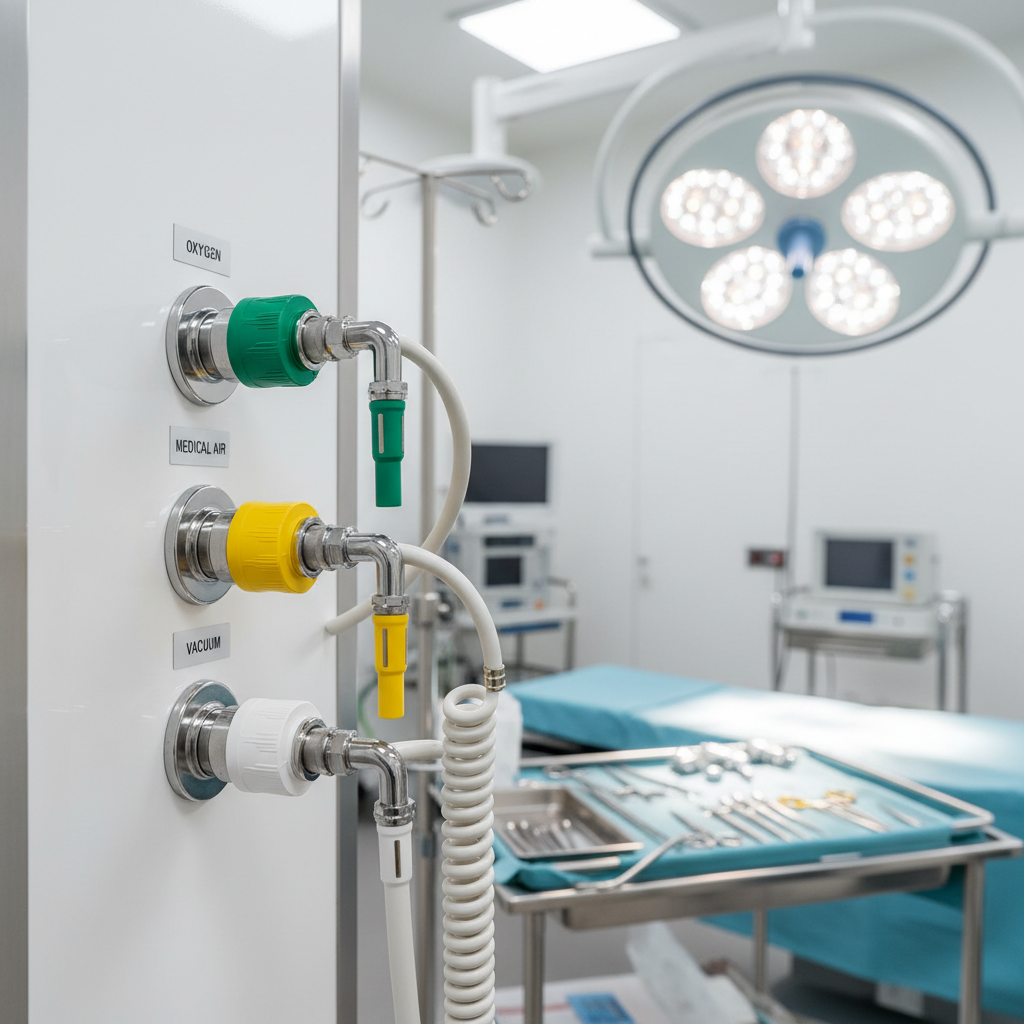
- Terminal Units: These are the gas-specific outlets (e.g., DISS, quick-connect) in your surgical suites and treatment areas where anesthesia machines and other equipment are connected.
Why this matters for compliance: NFPA 99 (Health Care Facilities Code) is the primary standard governing these systems. While written for human healthcare, its principles are the accepted best practice in veterinary medicine to ensure safety. Failure to comply can pose significant risks and liability issues.
NFPA 99 vs. AVMA Guidelines: A Comparison
While NFPA 99 provides the foundational code for the installation itself, the AVMA offers guidelines specific to anesthetic equipment and procedures in veterinary medicine. A compliant facility considers both.
| Standard | Focus Area | Key Requirements for Installation |
|---|---|---|
| NFPA 99 | Gas System Safety & Installation | - Piped systems installed by ASSE 6010 certified technicians. - Brazing with nitrogen purge. - System verification by an ASSE 6030 verifier. - Specific requirements for manifolds, alarms, and pipe labeling. |
| AVMA | Anesthetic Practice & Workplace Safety | - Recommendations for scavenging systems to limit staff exposure to waste gases. - Guidelines for equipment maintenance and proper use. - Emphasis on leak testing anesthesia machines before each use. |
Understanding both sets of standards is crucial for a comprehensive approach to safety. At Medical Testing Solutions, our certified technicians ensure every installation meets these rigorous requirements, from initial design to final verification.
The Installation Process: From Design to Verification
A successful veterinary medical gas installation in Owensboro follows a structured, multi-phase process managed by certified professionals.
- Design and Planning: The process begins with a detailed assessment of your clinic's needs. How many operating rooms? What types of procedures will be performed? This determines the sizing of the source equipment and the layout of the piping.
- Piping Installation: An ASSE 6010 certified installer runs the medical-grade copper piping from the source equipment location to the designated outlet points. All joints are brazed using a continuous nitrogen purge to prevent internal oxidation, which could otherwise introduce contaminants into the gas stream.
- Source Equipment and Outlet Installation: The manifolds, pumps, and alarms are installed. Terminal outlets are fitted in the walls or ceiling, specific to each gas to prevent cross-connection.
- Initial Piping Tests: Before the walls are closed, the installer performs an initial pressure test to check for leaks in the piping network.
- Final System Verification: This is the most critical step. After the installation is complete, a third-party ASSE 6030 Certified Medical Gas Verifier must test the entire system. This is not optional. The verifier from a company like Medical Testing Solutions will conduct a series of tests, including:
- Verifying correct gas concentration and purity at each outlet.
- Confirming no cross-connections exist.
- Testing all alarm functions.
- Ensuring proper pressure and flow at each terminal.
Upon successful completion, the verifier provides a formal report, certifying the system is safe for patient use. This medical gas certification is your proof of compliance.
Scavenging Systems: Protecting Your Staff
Waste Anesthetic Gas (WAG) exposure is a serious occupational hazard in veterinary medicine. An active WAGD or scavenging system is essential for staff safety and is a key part of any modern installation. It actively captures exhaled gases from the anesthesia machine and vents them safely outside the building. This is distinct from your medical vacuum system and requires its own dedicated pump and piping. Regular WAG chemical vapor monitoring is also recommended to ensure the system remains effective over time.
Choosing a Certified Partner in Owensboro, KY
When it comes to life-support systems, expertise is non-negotiable. It is critical to partner with a company that employs ASSE 6010 Certified Installers for the installation and provides ASSE 6030 Certified Verifiers for the final testing. Medical Testing Solutions has a long history of providing compliant veterinary anesthesia equipment and installation services throughout Kentucky. Our team ensures your system is designed for your specific needs, installed correctly the first time, and fully verified to meet all applicable codes.