Veterinary Medical Gas Installation in Norfolk VA: A Complete Guide
Medical Testing SolutionsAugust 20, 20267 min read
Share
Principal, Medical Testing Solutions
Properly installed and maintained medical gas systems are a cornerstone of veterinary surgical safety. For veterinary practices in Norfolk, Virginia, ensuring these systems comply with national standards isn't just best practice, it's a requirement for ensuring the safety of your patients and staff. This guide explains the critical components of veterinary medical gas installation, from initial design and equipment selection to final verification and certification, all within the framework of NFPA 99 and ASSE 6000 series standards.
You will learn what separates a compliant installation from a hazardous one, the specific gas systems required for a modern surgical suite, and how to partner with certified professionals to guarantee a safe and reliable setup for years to come.
Why Compliant Gas Systems are Non-Negotiable in Veterinary Medicine
While human hospitals have long been held to stringent standards, the veterinary field is increasingly adopting similar regulations for medical gas and vacuum systems. The American Veterinary Medical Association (AVMA) guidelines for anesthesia reference the National Fire Protection Association (NFPA) 99, Health Care Facilities Code, as the primary standard. This code outlines the foundational requirements for the installation, inspection, and maintenance of medical gas systems to minimize fire, explosion, and patient risks.
A properly installed system, verified by an ASSE 6030 Certified Verifier, ensures that:
Gas purity is maintained: Medical grade gases are delivered from the source to the patient without contamination.
Correct gas is delivered: Cross-connection of pipelines is prevented, eliminating the risk of administering the wrong gas.
Pressure and flow are stable: Anesthetic delivery is consistent and reliable during procedures.
Staff are protected:Waste Anesthetic Gas Disposal (WAGD) systems effectively capture and remove anesthetic gases like nitrous oxide and isoflurane, protecting your team from chronic exposure.
Why This Matters for Compliance: NFPA 99 is not just a suggestion; it's the industry standard referenced in legal and insurance contexts. A non-compliant installation can lead to failed inspections, project delays, and significant liability. Medical Testing Solutions ensures every installation meets or exceeds these codes.
Core Components of a Veterinary Medical Gas System
A complete veterinary gas system is more than just pipes in the wall. It comprises three main parts: the source, the distribution network, and the terminal equipment. For a typical small animal hospital in Norfolk, this includes systems for Oxygen (O2), Nitrous Oxide (N2O), and a vacuum/WAGD system.
1. Source Equipment
This is the "heart" of your gas system. The type and size depend on your clinic's caseload and physical space.
Oxygen (O2): The most common source is high-pressure cylinders (H or K type) connected to a manifold. The manifold automatically switches from the primary bank to a reserve bank when pressure drops, ensuring an uninterrupted supply. Larger facilities might use a liquid oxygen vessel (VIE).
Nitrous Oxide (N2O): Almost always supplied via high-pressure cylinders connected to a manifold, similar to oxygen.
Medical Air: While less common in vet med than in human hospitals, some larger referral centers may use a dedicated medical air compressor and dryer system. Most clinics simply use bottled air or O2 for ventilation.
Vacuum System: A dedicated medical vacuum pump (or pumps, for duplex systems) creates the suction needed for aspiration and WAGD. These must be specifically designed for medical use.
2. The Distribution Pipeline
This is the network of copper piping that carries the gases from the source to the operating rooms and treatment areas.
Piping: All pipeline distribution systems must be constructed of seamless Type K or L copper tubing (ASTM B819), cleaned for oxygen service.
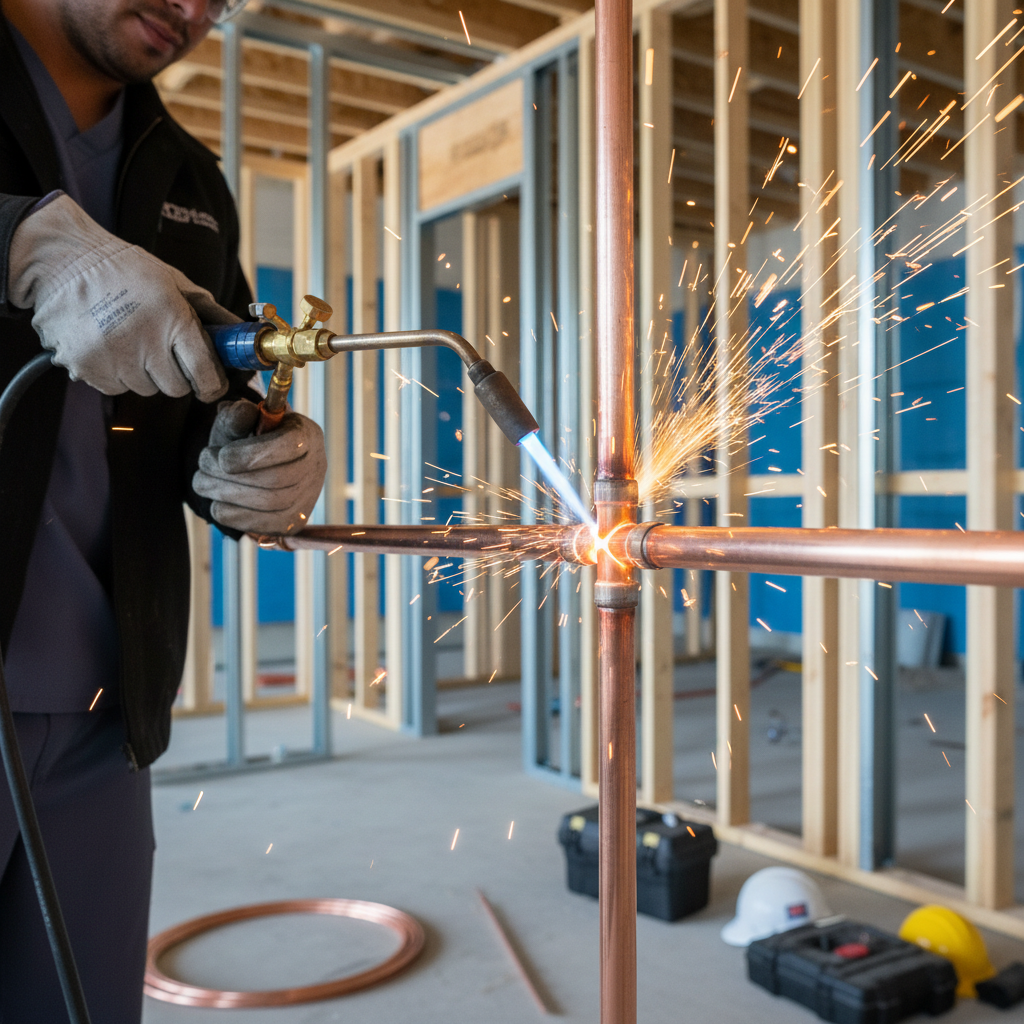
Brazing: All joints must be brazed using a nitrogen purge. This critical step prevents the formation of copper oxides inside the pipe, which could flake off and contaminate the gas stream or damage downstream equipment.
Zone Valves: Ball valves placed in accessible locations allow segments of the clinic to be isolated for maintenance or in an emergency without shutting down the entire facility. These are a key part of a compliant medical gas installation.
Alarms: Master and area alarms are required to provide audible and visual warnings of pressure changes or equipment failure.
3. Terminal Equipment
This is where the gas is delivered and used.
Outlets: Wall or ceiling-mounted outlets are gas-specific, using a unique pin index system (DISS) to prevent accidental cross-connection.
Anesthesia Machines: Connect to O2 and N2O outlets and the WAGD system.
WAGD: Waste Anesthetic Gas Disposal (scavenging) systems are critical. An active WAGD system uses the vacuum source to draw waste gas away from the anesthesia machine. This is a crucial component for WAGD and chemical vapor monitoring.
The Installation and Verification Process (ASSE 6010 & 6030)
A compliant veterinary medical gas installation follows a strict, multi-phase process managed by certified professionals.
Design & Planning: Involve a certified expert early. Medical Testing Solutions works with your architects and builders to ensure the system design is efficient, compliant, and meets your clinical needs.
Installation (ASSE 6010): The physical installation of the pipes, source equipment, and alarms is performed by an ASSE 6010 Certified Installer. This individual is trained in proper brazing techniques, piping requirements, and system assembly according to NFPA 99.
Verification (ASSE 6030): This is the final, critical step before the system is put into use. An independent, third-party ASSE 6030 Certified Verifier performs a series of tests to ensure safety and compliance. This is not a "self-check." A medical gas verification is a formal process that includes:
Checking for cross-connections
Verifying gas identity at each outlet
Testing for system purity and particulates
Confirming alarm functionality
Ensuring correct pressures and flow rates
Only after the system passes this rigorous verification can it be certified and turned over to the facility for patient use.
NFPA 99 vs. AVMA Guidelines: A Comparison
While the AVMA provides guidance, NFPA 99 provides the detailed technical code. Understanding the relationship is key for a compliant installation.
Aspect
AVMA Guidelines
NFPA 99, Health Care Facilities Code
MTS Approach
Scope
General recommendations for anesthesia equipment and safety.
Detailed, mandatory standards for medical gas system design, installation, testing, and maintenance.
We build to NFPA 99 standards as the primary source of truth, ensuring AVMA guidelines are inherently met.
Gas Source
Recommends reliable O2 source with backup.
Specifies requirements for manifolds, alarms, and automatic changeover systems.
All our installations include NFPA 99 compliant manifold systems for uninterrupted supply.
WAGD
Stresses the importance of scavenging to limit staff exposure.
Outlines requirements for dedicated WAGD inlets and vacuum pump capacity.
We design and install active WAGD systems correctly sized for your facility, protecting your staff.
Testing
Recommends periodic checks of anesthesia machines.
Requires full system verification by an ASSE 6030 Verifier upon installation and after modifications.
Medical Testing Solutions provides ASSE 6030 verification for all new installations, guaranteeing compliance from day one.
Your Partner for Compliant Veterinary Gas Systems in Norfolk, VA
Choosing the right partner for your medical gas installation is one of the most important decisions you'll make for your veterinary practice. It directly impacts patient safety, staff well-being, and your legal and financial liability. The team at Medical Testing Solutions holds the highest certifications in the industry, including ASSE 6010 for installation and ASSE 6030 for verification.
We provide end-to-end services, from design consultation to installation and long-term maintenance. If you are building, renovating, or upgrading a veterinary facility in the Norfolk area, ensure your medical gas systems are built for safety and compliance.
Ready to discuss your project? Contact Medical Testing Solutions today for a no-obligation quote or call us at +1 (754) 315-1078 to speak with a certified specialist.
Frequently Asked Questions
For a typical 1-2 operating room veterinary clinic, the installation process can take 3-7 days, depending on the complexity and coordination with other construction trades. The final verification adds another day.
For new builds, installation is coordinated with construction. For existing clinics, work can often be phased or scheduled after hours to minimize disruption. We work with you to create a plan that keeps your practice running.
The most dangerous mistakes include using incorrect materials (e.g., plumbing solder instead of brazing), not purging with nitrogen during brazing, and failing to have the system professionally verified by a certified third party. These errors can lead to system contamination or catastrophic failure.
No. NFPA 99 requires that installations are performed by individuals with an ASSE 6010 credential. A standard plumber does not have the specific training or certification for brazing, purging, and handling medical gas systems. This is a crucial safety requirement.
After the initial installation and verification, it's critical to have annual medical gas inspections performed to ensure ongoing safety, test for leaks, and verify component function. This proactive approach prevents emergencies.
Request a quote for your facility
Talk with Medical Testing Solutions about your next inspection, repair or equipment request.