Veterinary Medical Gas Installation in Newport News, VA: A Comprehensive Guide for Clinic Owners and Builders
For veterinary practices in Newport News, VA, a properly installed medical gas system is not just a utility, it's the lifeblood of your surgical suite and a cornerstone of patient safety. Ensuring that your oxygen (O2), nitrous oxide (N2O), medical vacuum, and waste anesthetic gas disposal (WAGD) systems are designed and installed correctly is a complex process governed by stringent codes. A compliant installation ensures the safety of your staff and animal patients, avoids costly rework, and guarantees your facility can pass mandatory certifications.
This guide provides a definitive overview of the veterinary medical gas installation process. We will walk through the critical design considerations, outline the installation steps, explain the certification requirements, and detail the specific codes you must follow. Whether you are building a new clinic, renovating an existing one, or upgrading your systems, this article will equip you with the knowledge to partner effectively with certified installers and ensure your project's success.
Why Professional Installation is Non-Negotiable
Medical gas systems are life-support systems. Improper installation can lead to catastrophic failures, including leaks, cross-connections, contamination, or insufficient pressure and flow. These issues can compromise patient outcomes during surgery, pose significant fire risks (especially with oxygen), and expose staff to hazardous waste anesthetic gases. For these reasons, all medical gas work must be performed by individuals holding current ASSE 6010 Certified Installer credentials. Medical Testing Solutions provides ASSE 6010 certified installation services to ensure your system is safe, reliable, and fully compliant from day one.
Core Components of a Veterinary Medical Gas System
A veterinary medical gas system comprises several key subsystems, each with its own set of components and regulatory demands.
1. Gas Source and Supply Manifold
This is the heart of your system. For most veterinary clinics, the source consists of high-pressure cylinders of oxygen and nitrous oxide.
- Oxygen (O2): Typically supplied from H-cylinders, connected to an automatic changeover manifold. This ensures a continuous, uninterrupted supply. The manifold automatically switches from the primary "in-use" bank to the secondary "reserve" bank when pressure drops, triggering an alarm to alert staff that a cylinder change is needed.
- Nitrous Oxide (N2O): Supplied and managed similarly to oxygen, with its own dedicated manifold.
- Manifold Room: The source equipment must be located in a dedicated, well-ventilated room that meets specific NFPA 99 requirements for construction and signage.
2. Medical Vacuum System
Surgical vacuum is critical for aspiration. A compliant system includes:
- Vacuum Pump(s): Typically a duplex system with two pumps to ensure redundancy.
- Receiver Tank: Stores vacuum to buffer the system against sudden demand changes.
- Control Panel: Manages pump operation and provides alarm notifications.
3. Waste Anesthetic Gas Disposal (WAGD) System
A dedicated WAGD or scavenging system is required to safely capture and remove waste anesthetic gases from the operating room, protecting staff from long-term exposure. These systems must be designed to match the specific anesthesia machines in use and are typically separate from the medical vacuum system.
4. Piping Distribution Network
The arteries of the system, this network of copper piping delivers the gases from the source to the point of use. All piping must be medical-grade, cleaned for oxygen service, and installed using a specific brazing process (with nitrogen purge) to prevent internal oxidation and contamination. This is a critical step that only an ASSE 6010 Certified installer is qualified to perform.
5. Alarms and Monitoring
NFPA 99 mandates a robust alarm system to provide immediate audible and visual warnings of system malfunctions. This includes:
- Master Alarms: Located in an area of continuous surveillance, they monitor the source equipment (e.g., manifold changeover, low vacuum).
- Area Alarms: Installed in critical care areas (like the surgical suite), they monitor the pressure of each gas being delivered to that specific room.
The Installation Process: From Design to Certification
A successful installation follows a structured, code-compliant process.
- Step 1: System Design & Sizing: The system must be properly sized based on the number of operating rooms, terminal outlets, and the types of procedures performed. This determines pipe sizes, source equipment capacity, and ensures adequate flow and pressure.
- Step 2: Pipe Installation & Brazing: Certified installers run the medical-grade copper piping from the source to the designated terminal locations. Every joint must be brazed according to strict procedures.
- Step 3: Initial Pressure Testing: After installation, the piping is filled with high-pressure nitrogen to check for leaks.
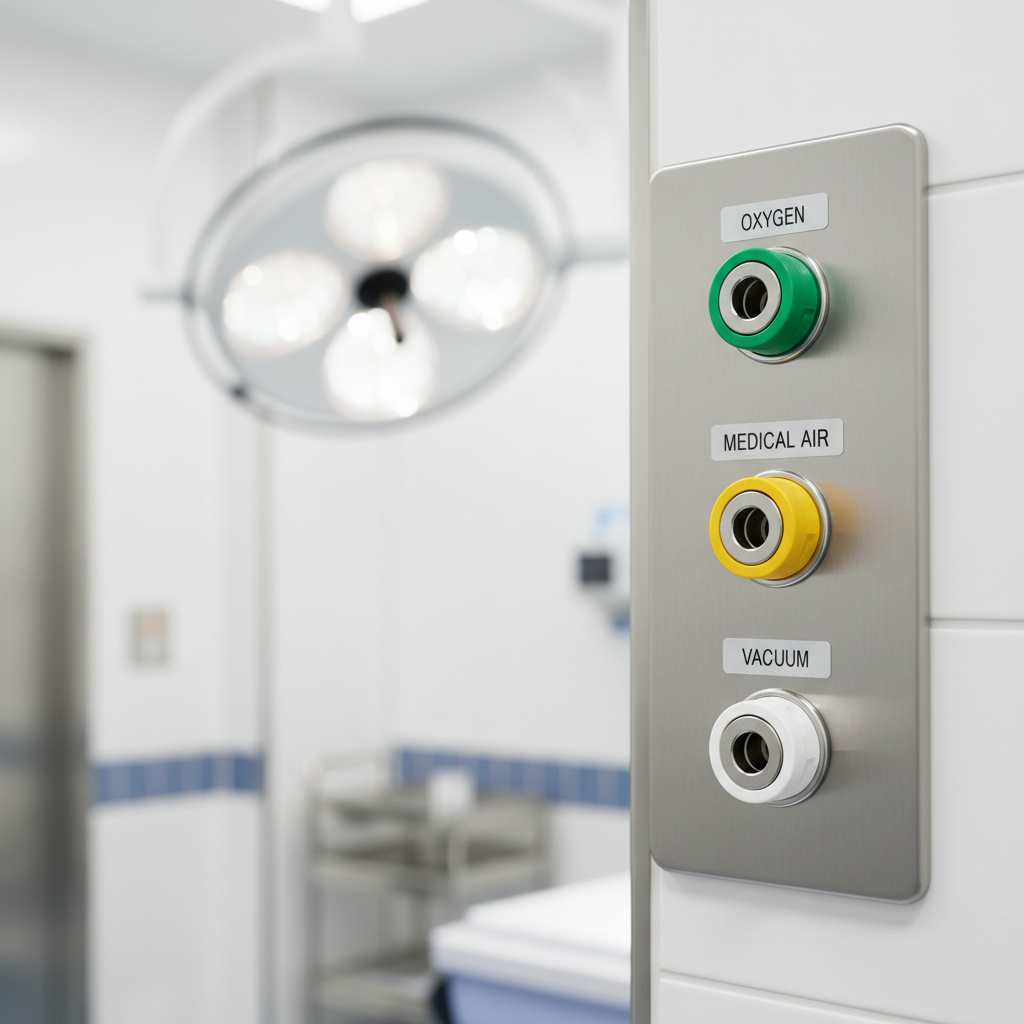
- Step 4: Outlet & Component Installation: Terminal outlets (e.g., DISS-indexed O2, N2O, Vac, and WAGD outlets), zone valve boxes, and alarm panels are installed.
- Step 5: System Verification (ASSE 6030): This is the final, crucial step before the system can be used. A third-party ASSE 6030 Certified Verifier performs a battery of tests to confirm the system is safe and code-compliant. This is not optional; it's required by law. Medical Testing Solutions offers comprehensive medical gas verification services to certify new installations.
Why this matters for compliance: NFPA 99-2021, Chapter 5, explicitly requires that all new, added to, or altered medical gas systems be verified by a party other than the installer to ensure system integrity and safety. This independent check is your ultimate assurance of compliance.