Veterinary Medical Gas Installation Miami FL: A Guide for Animal Hospitals
Medical Testing SolutionsJune 20, 20267 min read
Share
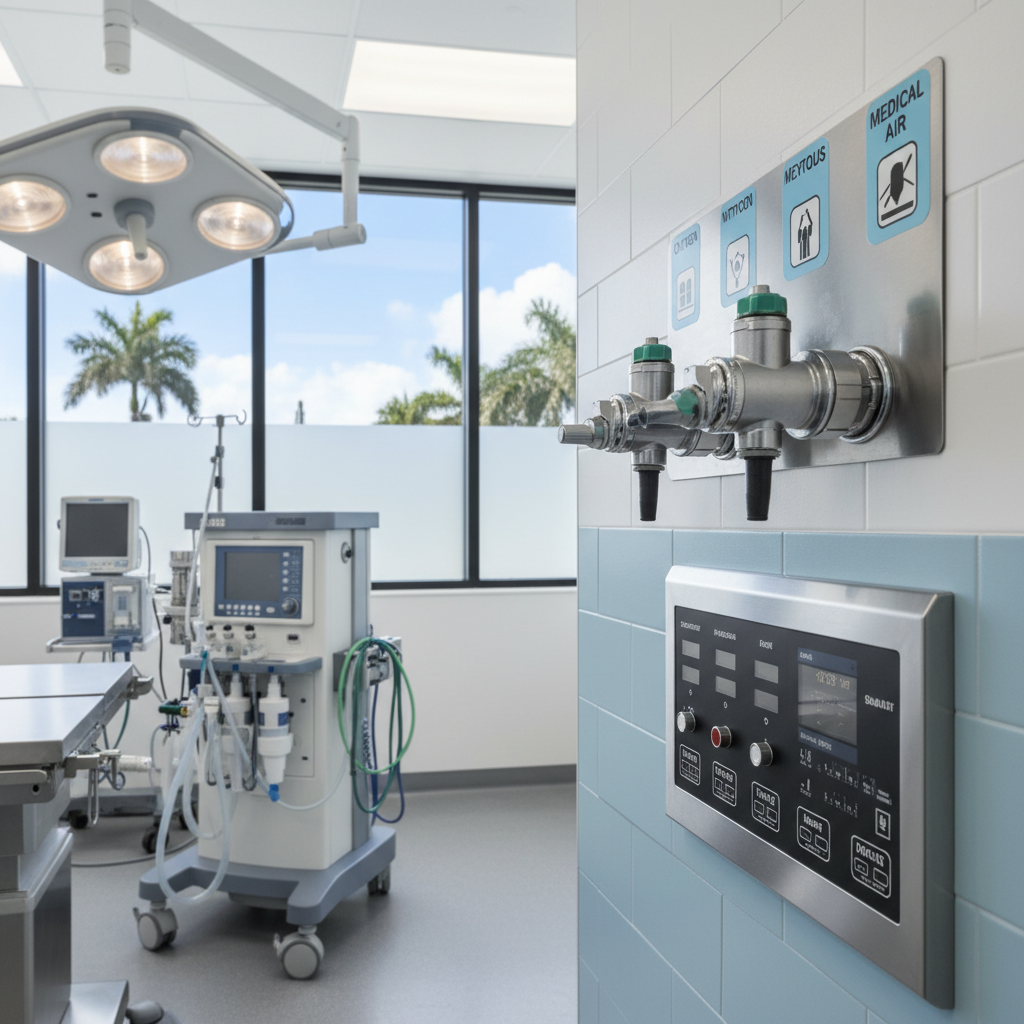
Proper medical gas installation isn't just for human hospitals. For veterinary clinics and animal hospitals in Miami, a correctly installed and certified medical gas system is the lifeblood of the surgical suite. It ensures patient safety during procedures, protects staff from anesthetic gas exposure, and guarantees compliance with state and national regulations. An improperly installed system can lead to catastrophic equipment failure, surgical delays, and significant legal liability.
This guide provides a definitive overview of veterinary medical gas installation for Miami, Florida facilities. We will explore the specific gases used, the critical regulations you must follow (NFPA, ASSE, AHCA), the installation and verification process, and the significant cost and safety advantages of using a local, certified provider like Medical Testing Solutions.
The Critical Role of Compliant Gas Systems in Veterinary Medicine
A modern veterinary practice relies on a suite of medical gases to provide safe and effective anesthesia and respiratory support. These aren't just amenities; they are fundamental components of the standard of care as defined by the American Veterinary Medical Association (AVMA).
What Gases Are We Talking About?
Oxygen (O2): The most fundamental medical gas, used for patient life support, resuscitation, and as the carrier gas for inhaled anesthetics.
Nitrous Oxide (N2O): Used as an analgesic and anesthetic agent, often in combination with other gases.
Medical Vacuum: Crucial for aspirating fluids from the surgical site and for Waste Anesthetic Gas Disposal (WAGD) systems.
Waste Anesthetic Gas Disposal (WAGD) / Scavenging: A critical system that actively removes exhaled anesthetic gases from the operating room, protecting veterinarians and technicians from chronic exposure-related health risks.
Navigating the Regulatory Maze: Florida & National Standards
Compliance is non-negotiable. For a veterinary clinic in Miami, several layers of codes and standards apply, enforced by national bodies and state agencies. Failure to comply can result in fines, loss of accreditation, and denial of insurance claims.
Why This Matters for Compliance: Florida's Agency for Health Care Administration (AHCA) and The Joint Commission (TJC) require facilities to strictly adhere to NFPA 99. All verification and testing reports, such as AHCA OPS Form 3110, must document this compliance. Without proper documentation from a certified verifier, your facility is not compliant.
NFPA 99: The Cornerstone of Medical Gas Safety
NFPA 99, Health Care Facilities Code, is the foundational document for medical gas systems in the United States. While its title suggests human healthcare, its safety principles and technical requirements are the accepted standard for veterinary anesthesia equipment and gas delivery systems. It dictates everything from pipe material and sizing to alarm requirements and final system testing.
ASSE 6000 Series: The Credentials That Matter
NFPA 99 sets the standard, but the American Society of Sanitary Engineering (ASSE) 6000 series provides the standard for the people who work on the systems. For a compliant installation, you need two key professionals:
ASSE 6010 Certified Installer: The only individual qualified to physically install the piping, source equipment, and components.
ASSE 6030 Certified Verifier: A third-party inspector who performs a battery of detailed tests on the final system to ensure it is safe, pure, and ready for patient use. This is a mandatory step before the system can be turned on.
Florida Agency for Health Care Administration (AHCA)
For any healthcare facility in Florida, AHCA is the primary regulatory body ensuring patient safety. Their requirements, detailed in Chapter 59A of the Florida Administrative Code, incorporate NFPA 99 by reference. A medical gas verification by an ASSE 6030 professional is the only way to generate the reports needed to satisfy AHCA requirements.
Why Local Matters: The MTS Advantage for Miami Veterinary Clinics
While national companies may service Florida, choosing a locally-headquartered provider offers distinct advantages for your Miami-based practice.
Medical Testing Solutions is headquartered at 501 East Las Olas Blvd, Fort Lauderdale, FL 33301. Our physical presence in South Florida translates into direct benefits for our clients.
No Travel Fees: A Major Cost-Saving Factor
Out-of-state firms must pass on their costs for airfare, lodging, and technician per-diems. These expenses can inflate a project's final cost significantly. Because our ASSE-certified technicians are based right here in South Florida, we have NO travel fees, NO lodging costs, and NO per-diem charges for projects anywhere in Florida. Our clients in Miami, West Palm Beach, and across the state typically save 10-25% compared to using an out-of-state competitor.
Hurricane-Ready: Rapid Response When You Need It Most
South Florida is no stranger to hurricanes. NFPA 99 (5.1.12) requires system re-verification after any event that compromises the system, including storm damage or loss of source pressure. Our Fort Lauderdale office allows us to dispatch crews rapidly across South Florida post-storm to get your facility safely back online, a level of service out-of-state providers cannot match.
The Veterinary Medical Gas Installation Process
A compliant medical gas installation is a multi-step process that requires meticulous planning and execution by certified professionals.
System Design & Planning: The process begins with a thorough assessment of your clinic’s needs, including the number of operating rooms, types of procedures performed, and future growth plans. We design a system that is not only compliant but also efficient and scalable.
Installation by ASSE 6010 Certified Technicians: Our certified installers braze new piping, install source equipment like manifolds and vacuum pumps, and place zone valve boxes and terminal outlets. Every joint, valve, and connection is made according to the strict guidelines of NFPA 99.
Third-Party ASSE 6030 Verification: After installation is complete, an independent ASSE 6030 verifier conducts rigorous testing. This is not a "pass/fail" check; it's a comprehensive analysis of the entire system to ensure gas purity, correct pressure and flow, and proper function of all alarms and valves. The final report is your proof of compliance for AHCA and TJC.
Staff Training and Handover: We ensure your team understands the system's operation, including how to read alarms, an overview of the preventative maintenance schedule, and what to do in an emergency.
Common System Components in a Veterinary Setting
Understanding the key components can help you better communicate your needs during the design phase.
Component
Function & NFPA Requirement
Key Consideration for Vets
Gas Manifold
Automatically switches from the primary to the secondary cylinder bank, ensuring an uninterrupted gas supply. Must have alarms.
Sizing depends on your caseload and gas consumption. A properly sized system avoids frequent cylinder changes.
Master/Area Alarms
Provide audible and visual warnings for high/low pressure, or changeover conditions. Required by NFPA 99.
Alarms must be located in an area where they will be seen and heard 24/7.
Zone Valve Box
Allows specific areas of the clinic (e.g., a single OR) to be shut off for maintenance or in an emergency without disrupting the entire facility.
Critical for safely servicing equipment or responding to a fire without shutting down your entire clinic's gas supply.
Gas Outlets
Gas-specific keyed outlets (DISS) at the point of use. Prevents accidental cross-connection of gases.
Must match your anesthesia machine and flowmeter connections. Proper labeling is essential.
WAGD Outlets
The interface for the scavenging system that removes waste anesthetic gas from the breathing circuit.
Essential for staff safety and OSHA compliance. Must provide adequate negative pressure.
Your responsibility for the system doesn't end after the initial verification. Regular maintenance and inspections are required to ensure continued safety and compliance.
Annual Medical Gas Inspections: Florida regulations and TJC standards mandate annual testing of key system components, including alarms, outlets, and source pressure. This is a critical step in maintaining your facility's accreditation and safety.
Preventative Maintenance: A proactive maintenance plan for your vacuum pumps, compressors, and manifolds can prevent costly downtime and emergency repairs. Medical Testing Solutions offers comprehensive service plans tailored to the needs of busy veterinary practices across Florida.
Ready for a Compliant System? Contact Your Local Experts.
From the ground up, a veterinary medical gas system must be designed and installed with precision, expertise, and a deep understanding of Florida's unique regulatory environment. Medical Testing Solutions provides that expertise, with the added benefit of being a local South Florida company. We serve veterinary clinics, dental practices, and major hospital systems like Jackson Memorial and Baptist Health across the state.
For a fully compliant, safe, and cost-effective system, trust the ASSE-certified team that calls Florida home.
Get a free, no-obligation quote for your veterinary medical gas installation project. Call our Fort Lauderdale office today at +1 (754) 315-1078 or visit our contact page to send us a message. We offer same-day dispatch for service calls in the Miami metropolitan area.
Frequently Asked Questions
The most common are Oxygen (O2) for patient life support, Nitrous Oxide (N2O) for anesthesia, and medical-grade vacuum and WAGD/scavenging systems to remove exhaled anesthetic gases.
Only technicians holding an ASSE 6010 Medical Gas Systems Installer certification should perform the installation. The final system must be verified by an ASSE 6030 Verifier to meet NFPA 99 and Florida AHCA standards.
NFPA 99, Health Care Facilities Code, is the primary standard for medical gas systems. It is adopted by reference into Florida law and is the standard used by the American Veterinary Medical Association (AVMA) for safe veterinary facility design. All new installations and modifications must comply.
Per TJC and NFPA 99 guidelines, a full system verification is needed upon initial installation or modification. Annual inspections of key components like alarms, zone valves, and source equipment are required thereafter. MTS provides these [annual inspections](/medical-gas-testing-and-service/annual-medical-gas-inspections).
A local company like Medical Testing Solutions, headquartered in Fort Lauderdale, eliminates travel fees, lodging, and per-diem costs common with out-of-state firms. This can save you 10-25% on your project and ensures faster response times, especially for post-hurricane re-verifications.
Request a quote for your facility
Talk with Medical Testing Solutions about your next inspection, repair or equipment request.