Skip to content
    New: Medical Gas Outlet Retrofit & Rebuild Matrix — cross-reference legacy Chemetron, Ohio Diamond, Puritan-Bennett & more →
    ASSE Certified 24/7
    Medical Gas Service
    Compliance & Standards
    Veterinary

    Veterinary Medical Gas Installation in Greenville SC: A Guide

    Medical Testing SolutionsAugust 24, 20266 min read
    Share
    Veterinary Medical Gas Installation in Greenville SC: A Guide

    Veterinary Medical Gas Systems: An Overview for Greenville Practices

    For any veterinary hospital or surgical center in Greenville, South Carolina, a properly designed and installed medical gas system is not an amenity, it's the lifeblood of your practice. These complex systems deliver critical life-support gases like oxygen, manage anesthetic agents such as nitrous oxide, and safely remove surgical smoke and waste anesthetic gas (WAG). An improper installation poses significant risks to patient safety, staff health, and can lead to costly non-compliance with national standards.

    This guide provides a definitive overview of veterinary medical gas installation, tailored for practice owners and managers in the Greenville area. You will learn about the core components of a veterinary gas system, the key differences from human healthcare facilities, the critical standards from the National Fire Protection Association (NFPA) and American Veterinary Medical Association (AVMA) that govern installation, and the process for ensuring your system is certified and safe for use.

    Core Components of a Veterinary Medical Gas System

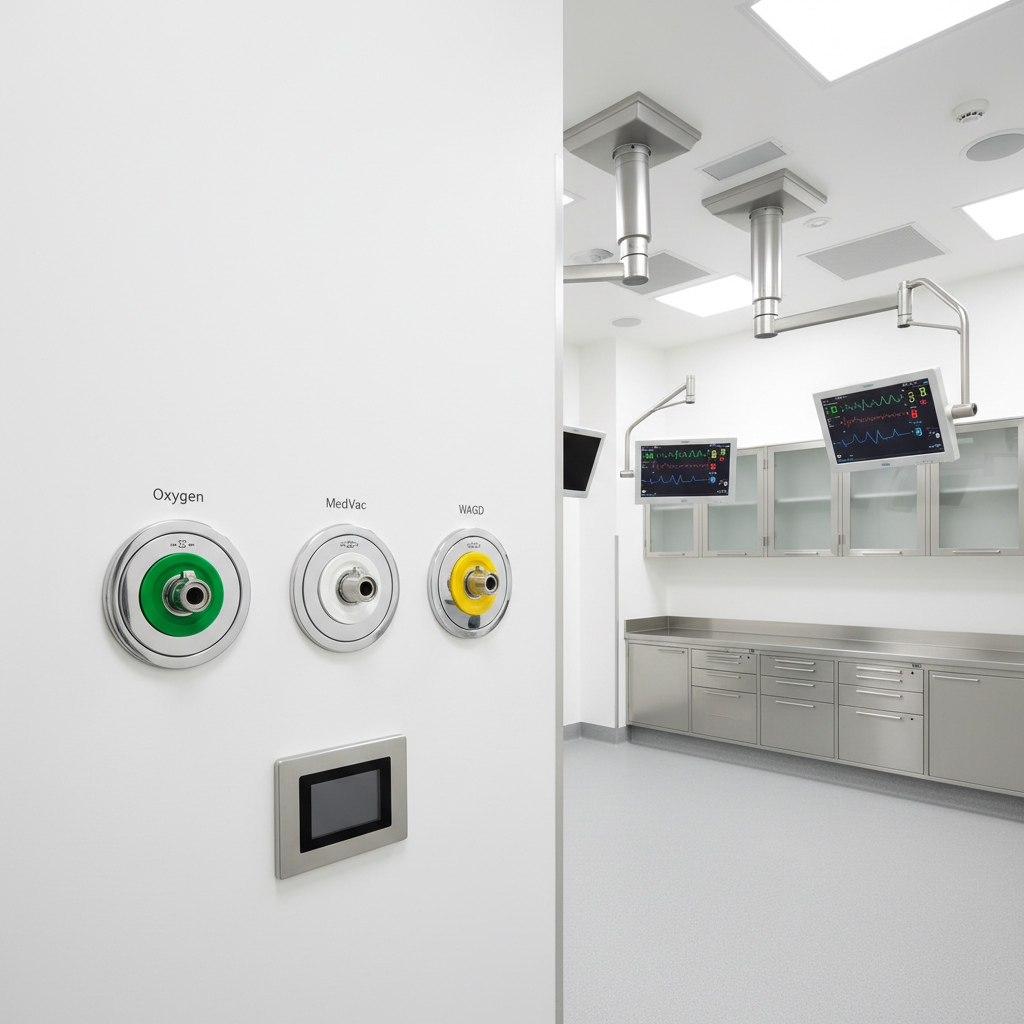
    A typical veterinary surgical setup includes several integrated gas and vacuum systems. While smaller clinics might use portable cylinders, a centralized, piped system is the standard for safety and efficiency in most hospitals.

    Medical Oxygen (O2)

    Oxygen is the most fundamental component, used for patient resuscitation and as a carrier gas for inhalant anesthetics. Systems can be supplied by high-pressure cylinders (H-tanks) manifolded together or, in very large facilities, a bulk liquid oxygen tank.

    • Manifolds: An automatic changeover manifold is essential. It ensures an uninterrupted gas supply by automatically switching from the primary bank of cylinders to the secondary bank when pressure drops.
    • Alarms: Master and area alarms are required to provide immediate visual and audible warnings of system failures or low pressure, as mandated by NFPA 99.

    Nitrous Oxide (N2O)

    Used for its analgesic and anesthetic properties, nitrous oxide is typically supplied via high-pressure cylinders connected to a manifold system, similar to oxygen. Proper ventilation and scavenging are paramount due to the occupational hazards of long-term exposure.

    Medical Vacuum

    Surgical vacuum systems are crucial for removing fluids and debris from the surgical site. A dedicated medical vacuum pump, designed for continuous operation, is the heart of this system.

    • Pump Type: Oil-less rotary vane or liquid ring pumps are common choices, known for their reliability.
    • Filtration & Drainage: The system must include filtration and a drip leg to collect and dispose of aspirated materials safely.

    Waste Anesthetic Gas Disposal (WAGD)

    Perhaps the most critical system for staff safety, the WAGD (or scavenging) system actively removes exhaled anesthetic gases from the operating room. NFPA 99 prohibits using the medical vacuum system for WAGD evacuation.

    • Producer: The WAGD producer must be a dedicated unit, sized appropriately for the number of anesthesia machines it serves.
    • Interfaces: Anesthetic machine breathing circuits connect to the WAGD system via special interfaces that prevent excessive suction on the patient's lungs.

    Why This Matters for Compliance: The Occupational Safety and Health Administration (OSHA) enforces exposure limits for waste anesthetic gases. A properly installed and maintained WAGD system, compliant with NFPA 99 standards, is your primary engineering control for protecting your staff from the health risks of chronic exposure.

    NFPA 99 vs. AVMA Guidelines: What Greenville Vets Need to Know

    While the NFPA 99, Health Care Facilities Code, is the primary standard for medical gas systems, its focus is on human healthcare. The AVMA provides guidelines that adapt these principles for veterinary settings. A key distinction is the risk category. Most veterinary facilities fall under NFPA 99 Category 2, which has less stringent requirements than a Category 1 human hospital but still demands a high level of safety and engineering control. Medical Testing Solutions can help you navigate the specific requirements for your practice.

    Standard BodyFocus AreaKey Requirement ExampleCategory (Typical Vet)
    NFPA 99System Design, Installation, TestingRequires specific pipe materials (ASTM B819 copper), labeling, and alarm functionality. Mandates third-party verification (ASSE 6030).Category 2 or 3
    AVMAPractice & Anesthesia GuidelinesRecommends appropriate scavenging systems and regular maintenance of anesthesia equipment.N/A
    CGAGas Cylinder SafetySpecifies standards for cylinder handling, storage, and valve connections (e.g., CGA V-1).N/A

    The Medical Gas Installation Process: Step-by-Step

    A compliant veterinary medical gas installation is a multi-stage process that requires certified professionals from start to finish.

    1. Design & Sizing: An ASSE 6010 certified professional calculates the required flow rates for your facility to correctly size the source equipment (pumps, manifolds) and pipe diameters.
    2. Piping Installation: All piping must be medical-grade Type K or L copper, cleaned for oxygen service, and brazed by an ASSE 6015 certified brazer. During this process, a continuous nitrogen purge is used to prevent internal oxidation.
    3. Source Equipment & Alarms: Manifolds, vacuum pumps, WAGD producers, and master alarm panels are installed and connected to the piping network.
    4. Outlet & Terminal Installation: Wall or ceiling-mounted outlets are installed in surgical and treatment areas. These are indexed by gas type (DISS connectors) to prevent cross-connection.
    5. Final Verification & Testing: Before the system can be used on patients, it must be inspected and certified by a neutral, third-party ASSE 6030 Certified Verifier. This is not optional. The verifier from a company like Medical Testing Solutions performs a battery of tests to confirm system purity, pressure, flow, and alarm function. Learn more about our medical gas verification services.

    Finding a Certified Installer in Greenville SC

    It is crucial to partner with a company that employs ASSE 6010 Certified Installers and can manage the entire process, from design to final verification. While many plumbing contractors can run copper pipe, only certified installers have the specific training required by NFPA 99 to build a safe and compliant medical gas system.

    When vetting potential installers, ask for:

    • Proof of current ASSE 6010 certification for the individual(s) performing the work.
    • A list of recent veterinary projects.
    • A clear plan for third-party ASSE 6030 verification.
    • A commitment to providing full documentation upon project completion.

    Medical Testing Solutions provides comprehensive veterinary anesthesia equipment services, including ASSE 6010 certified installation and ASSE 6030 verification, for veterinary practices throughout Greenville SC and the surrounding region.

    Get a Quote for Your Greenville SC Veterinary Practice

    Ensuring your veterinary medical gas system is installed correctly from day one is the most important investment you can make in the safety of your patients and staff. From initial design and ASSE 6010 certified installation to final ASSE 6030 verification and ongoing annual maintenance, Medical Testing Solutions is your trusted partner in Greenville, SC.

    Contact our team of experts today to discuss your project. Request a quote online or call us directly at +1 (754) 315-1078 to ensure your facility is built for compliance and safety.


    Frequently Asked Questions

    After the initial ASSE 6030 verification, systems should undergo a comprehensive inspection annually. This ensures continued safety and performance. Annual medical gas inspections are a core service we provide.

    Only if they hold a current ASSE 6010 Medical Gas Systems Installer certification. Standard plumbing or HVAC brazing techniques are not compliant with NFPA 99 and will result in a failed verification.

    The primary difference is the risk category assignment under NFPA 99. Veterinary facilities are typically Category 2, which allows for some variations in system design (e.g., single vacuum pump vs. duplex) compared to a Category 1 human hospital. However, the core safety principles of clean installation and third-party verification remain.

    Beyond the initial verification, ongoing performance can be confirmed through periodic WAG / chemical vapor monitoring. This involves using dosimeter badges or direct-read instruments to measure trace gas levels in the operating room air.

    Costs vary widely based on the size of the facility, the number of outlets, and the type of source equipment. The only way to get an accurate number is to request a formal quote based on your specific needs.

    This article is provided for educational purposes and reflects industry standards as of publication. Always verify against current NFPA 99, CGA, and AHJ requirements. Medical Testing Solutions is ASSE-certified and ready to help — contact us for facility-specific guidance.

    Request a quote for your facility

    Talk with Medical Testing Solutions about your next inspection, repair or equipment request.

    Get a quote in 1 business day

    I agree to receive text messages from Medical Testing Solutions, L.L.C. at the phone number provided, including informational and marketing messages. Consent is not a condition of purchase. Message frequency varies. Message & data rates may apply. Reply STOP to opt out or HELP for help. See our Privacy Policy and Messaging Terms.

    Prefer to talk? Call (754) 315-1078

    Related articles