Veterinary Medical Gas Installation in Chesapeake VA: A Complete Guide
Medical Testing SolutionsAugust 20, 20267 min read
Share
Principal, ASSE 6060 Medical Gas Specialist
Properly installed medical gas systems are a critical life-support component in any modern veterinary surgical suite. For clinics and hospitals in Chesapeake, Virginia, ensuring these systems are designed, installed, and verified according to strict safety standards is not just a matter of best practice, it's essential for patient safety and regulatory compliance. This guide provides a comprehensive overview of the process, from initial design to final certification, focusing on the unique requirements for veterinary facilities.
You will learn the core components of a veterinary gas system, the key differences between human and animal health standards, the step-by-step installation process, and how to ensure your facility meets all necessary codes, including NFPA 99 and AVMA guidelines.
Core Components of a Veterinary Medical Gas System
A veterinary medical gas system is a complex network of equipment designed to deliver specific gases from a central supply source to points of use, such as operating rooms and recovery areas. Unlike a simple oxygen tank on a cart, these centralized systems provide reliability, safety, and efficiency for busy practices.
Gas Supply Sources
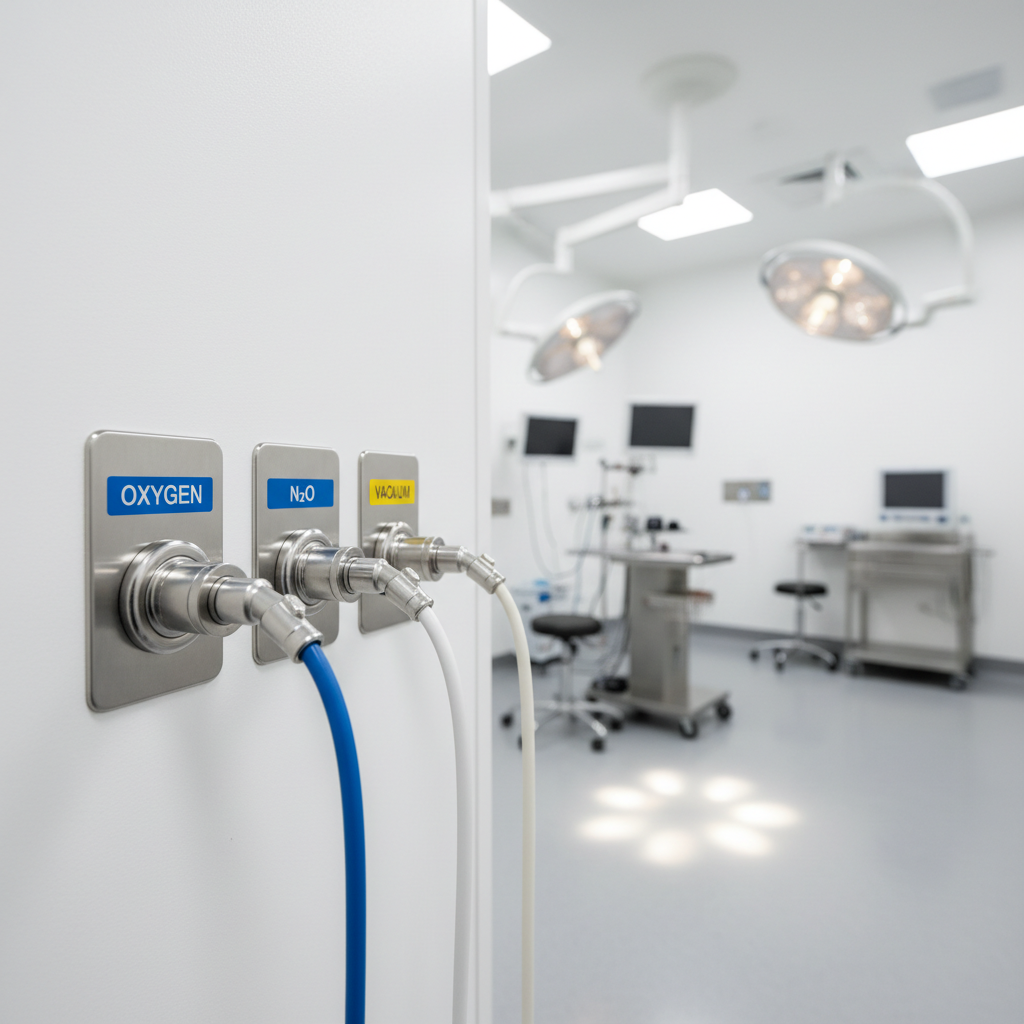
Oxygen (O2): The most common medical gas. Supply is typically from high-pressure cylinders (H-tanks) or a bulk cryogenic liquid vessel. Systems are designed with a primary and secondary supply (a "reserve" manifold) to ensure uninterrupted service, as mandated by NFPA 99.
Nitrous Oxide (N2O): Used for its anesthetic and analgesic properties. Like oxygen, it is stored in high-pressure cylinders and connected to a manifold system.
Medical Vacuum: An essential tool for suctioning fluids during surgical procedures. A dedicated vacuum pump system creates negative pressure, which is piped to the points of use.
Waste Anesthetic Gas Disposal (WAGD) / Scavenging: This critical system safely removes exhaled anesthetic gases from the surgical suite, protecting staff from long-term exposure. It is an active system connected to the vacuum pump or a dedicated producer.
Distribution Network
Piping: All medical gas piping must be cleaned and certified for oxygen service (ASTM B819). The pipes are typically Type K or L copper, brazed with a nitrogen purge by an ASSE 6010 certified installer to prevent internal oxidation.
Valves: Zone valves are installed to isolate specific areas (e.g., the surgical suite, recovery ward) of the clinic without shutting down the entire system. This is crucial for maintenance and emergencies.
Outlets and Inlets: Quick-connect outlets, specific to each gas (DISS or another standard), are installed at the point of use. This prevents accidental cross-connection of gases.
Monitoring and Alarms
Master and Area Alarms: NFPA 99 requires alarm panels to monitor gas pressure and vacuum levels continuously. The master alarm is typically located in an area of continuous surveillance, while area alarms are placed in the locations they serve. These alarms provide immediate audible and visual alerts for any abnormal conditions.
NFPA 99 and AVMA: Key Compliance Standards
Compliance is non-negotiable. The primary standard governing these systems is the National Fire Protection Association's NFPA 99, Health Care Facilities Code. While often associated with human hospitals, its principles are the foundation for safe veterinary installations.
Why this matters for compliance: The AVMA (American Veterinary Medical Association) Guidelines for Anesthesia state that facilities should have anesthetic delivery systems that "minimize exposure of personnel to waste anesthetic gases." This directly points to the need for properly designed and installed WAGD systems that comply with NFPA 99 standards for performance and safety.
Standard
Requirement Focus
Relevance to Veterinary Clinics
NFPA 99
Defines requirements for Category 1-4 systems. Veterinary is typically Cat 2 or 3. Covers storage, piping materials, installation procedures, warning systems, and final verification testing.
Sets the minimum safety benchmark for all components, from the cylinder manifold to the wall outlet. Adherence is essential for patient and staff safety.
ASSE 6000 Series
Provides personnel qualifications. ASSE 6010 certifies individuals to perform the installation, and ASSE 6030 certifies the verifier who tests the system post-installation.
Ensures that the individuals building and inspecting your system are competent. A non-negotiable requirement for a compliant system.
CGA
The Compressed Gas Association provides standards for the safe handling and storage of gas cylinders (e.g., CGA V-1).
Governs how oxygen and nitrous oxide cylinders are stored, secured, and connected to the manifold to prevent leaks or accidents.
The Installation Process: A Step-by-Step Overview
A successful installation requires meticulous planning and execution by certified professionals. Here’s what to expect when working with a company like Medical Testing Solutions.
Design and Planning: The process begins with a detailed assessment of your clinic’s needs. This includes the number of operating rooms, recovery bays, and the types of procedures performed. A system is then designed to meet these specific demands, ensuring proper pipe sizing for adequate flow and pressure.
Rough-In: ASSE 6010 certified installers route the clean, copper piping throughout the facility. All joints are brazed with a continuous nitrogen purge, creating a smooth, oxide-free interior surface that won't contaminate the gas stream.
Valve and Alarm Placement: Zone valve boxes and alarm panels are installed in their designated locations. Wiring for the alarm systems is run back to the master alarm panel and power source.
Source Equipment Installation: The oxygen/N2O manifolds and vacuum pump/WAGD systems are installed, typically in a dedicated mechanical room with adequate ventilation and security.
Outlet Installation: Gas-specific outlets are installed at each point of use. These are connected to the pipeline, and the system is sealed.
ASSE 6030 Verification: The Final Step to Compliance
After the physical installation is complete, the system cannot be used until it has been rigorously tested and verified by an independent, ASSE 6030 certified verifier. This is a critical check to ensure everything was done correctly. For expert guidance, consider our medical gas verification services.
The verification process includes:
Purity Testing: Ensuring the gas delivered at the outlet is the correct gas and is free from contaminants.
Cross-Connection Testing: Confirming that each outlet provides only the gas it is labeled for.
Pressure and Flow Tests: Verifying that all components operate within the pressure ranges specified by NFPA 99.
Alarm Testing: Triggering every alarm condition to ensure the panels function correctly.
Only after passing every test in the ASSE 6030 checklist can the system be certified and put into service.
Look for ASSE 6010 Certification: Ensure the company employs installers who hold current ASSE 6010 credentials. This is your proof of their competence in medical gas system installation.
Request Proof of Insurance and Experience: The installer should have specific experience with veterinary facilities and carry appropriate liability insurance.
In-House Expertise: A company that handles both the medical gas installation and subsequent services like annual inspections and maintenance offers a single point of contact and accountability. Medical Testing Solutions provides this full lifecycle support.
Annual Inspections and Maintenance
Your responsibility doesn't end after the initial verification. Regular maintenance and annual inspections are required to ensure the system remains safe and compliant over its lifetime. An annual inspection from a certified technician will check for leaks, verify pressures, and test alarm functions, preventing minor issues from becoming major problems. You can learn more about our annual medical gas inspections to keep your facility running smoothly.
Your Partner for Compliant Veterinary Gas Systems
From initial design and ASSE 6010 installation to final ASSE 6030 verification and long-term maintenance, a properly executed medical gas system is a major investment in patient safety and staff well-being. The team at Medical Testing Solutions has the certified expertise to manage every aspect of your veterinary medical gas installation in Chesapeake, VA.
Ready to ensure your facility is safe and compliant? Contact our team today at +1 (754) 315-1078 or request a quote online to discuss your project with one of our medical gas specialists.
Frequently Asked Questions
The core principles of NFPA 99 apply, but veterinary clinics are typically classified as Category 2 or 3 facilities, which may have slightly different requirements for reserve capacity and alarm systems compared to a Category 1 human hospital. The range of services also dictates the complexity.
For a new construction or major renovation, it can take several weeks, coordinated with other trades. For a smaller, single-room addition, it could be a matter of days. The key is detailed planning to minimize disruption.
Flexible hoses are only permitted for the final connection from the wall outlet to the anesthesia machine. The primary distribution network must be rigid copper piping to ensure durability and prevent leaks.
Personnel qualification. Using an ASSE 6010 certified installer and an ASSE 6030 certified verifier is the single most important factor in ensuring a safe, compliant, and reliable system.
Request a quote for your facility
Talk with Medical Testing Solutions about your next inspection, repair or equipment request.