Veterinary Medical Gas Systems: An Introduction for Charleston Vets
Properly installed and maintained medical gas systems are a critical component of any modern veterinary practice, directly impacting patient safety and clinical outcomes. For veterinary clinics in Charleston, SC, designing and installing systems for oxygen (O2), nitrous oxide (N2O), medical vacuum, and Waste Anesthetic Gas Disposal (WAGD) is not just a matter of convenience, it's a requirement governed by stringent codes and standards. A compliant installation ensures the reliable delivery of medical gases for anesthesia and respiratory support, and critically, protects both patients and staff from the risks of exposure or system failure. This guide will walk you through the essential components, design considerations, and regulatory requirements for a veterinary medical gas installation, helping you ensure your facility meets the highest standards of safety and compliance.
Key Components of a Veterinary Medical Gas System
A compliant veterinary medical gas system is more than just pipes and outlets. It's an integrated network of source equipment, distribution piping, and terminal units, each playing a vital role. Understanding these components is the first step in planning a new installation or upgrading an existing one.
1. Gas Source Equipment
This is the heart of your system. The type and size of your source equipment depend on your clinic's specific needs, case load, and physical space.
- Oxygen (O2): Most veterinary clinics use high-pressure cylinders (H-tanks or K-tanks) connected to a manifold. An automatic changeover manifold is essential for uninterrupted supply, switching from the primary bank to the secondary bank when pressure drops. For larger hospitals, a bulk liquid oxygen (VIE) tank may be more economical.
- Nitrous Oxide (N2O): Like oxygen, N2O is typically supplied via high-pressure cylinders connected to a manifold system.
- Medical Vacuum: A dedicated medical vacuum pump system is required to create suction for surgical procedures. These systems must be duplexed (containing at least two pumps) so that one can operate while the other is in reserve or undergoing maintenance. The system must also include a receiver tank to maintain consistent vacuum levels.
- Waste Anesthetic Gas Disposal (WAGD): Also known as scavenging, a WAGD system is crucial for removing exhaled anesthetic gases from the operating room, protecting your staff from chronic exposure. These are dedicated vacuum systems designed specifically for this purpose and should not be combined with the medical surgical vacuum system.
2. Distribution Piping Network
The piping network transports the gases from the source to the points of use. Per NFPA 99, all medical gas piping must be Type K or L seamless copper, cleaned for oxygen service, and installed by a certified ASSE 6010 technician.
- Materials: All piping must be hard-drawn, seamless copper (ASTM B819).
- Brazing: Joints must be brazed, not soldered. Brazing creates a much stronger and more reliable seal suitable for the pressures of a medical gas system. The process must use a nitrogen purge to prevent the formation of contaminants inside the pipe.
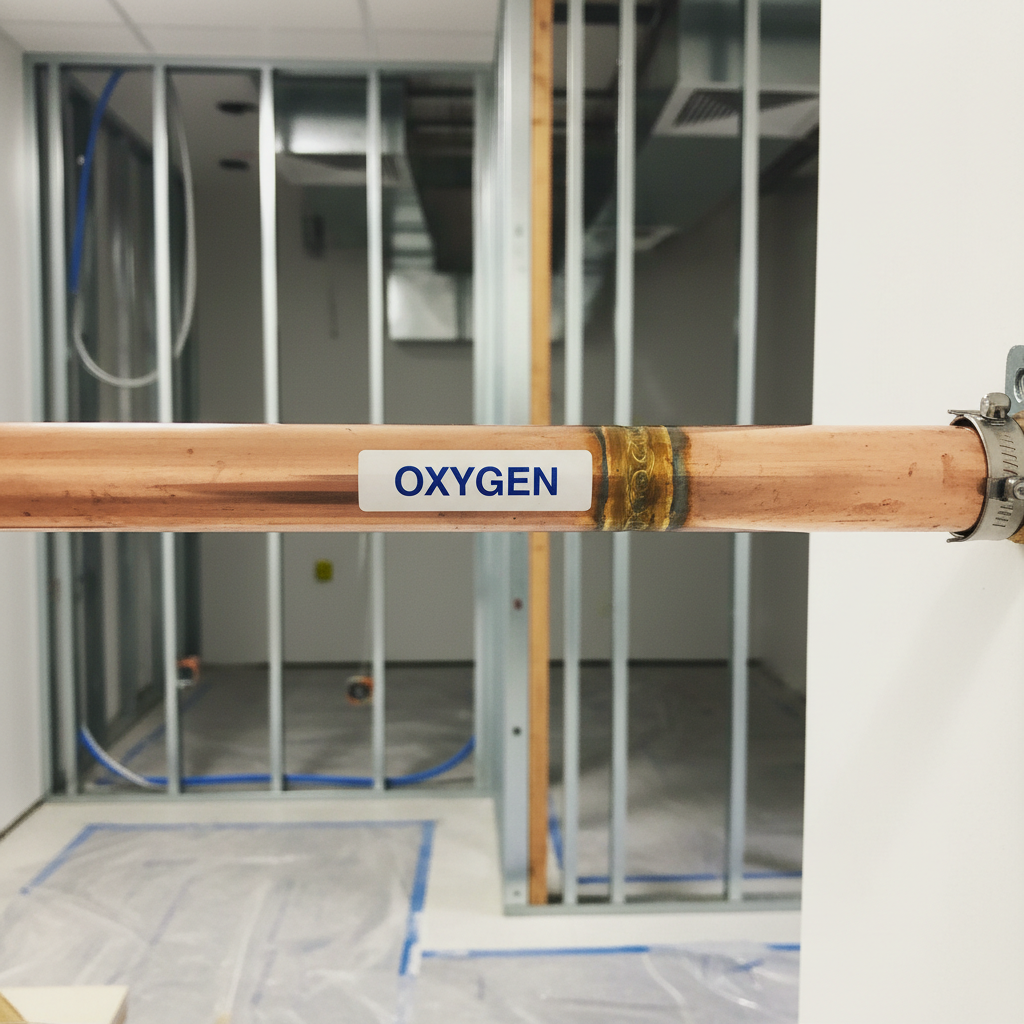
- Labeling: Pipes must be clearly labeled with the gas they carry and the direction of flow at regular intervals and at every connection point.
3. Alarms and Monitoring
Warning systems are a non-negotiable safety feature required by NFPA 99. They provide audible and visual alerts to staff about critical changes in the system.
- Master Alarms: Located in a central area where they can be continuously monitored, these alarms track the status of the entire system, including source equipment operation, manifold changes, and high/low pressure in the main lines.
- Area Alarms: Installed in specific locations like the surgical suite or recovery area, these monitor the pressure of the gas lines serving that particular zone.
Why this matters for compliance: NFPA 99 (Health Care Facilities Code) mandates the use of alarm systems for all Level 1 and Level 2 medical gas systems. For a typical veterinary clinic, the system is often categorized based on a risk assessment, but following these alarm requirements is a best practice that ensures patient and staff safety, mirroring standards in human healthcare.
Designing Your Installation: AVMA & NFPA 99 Requirements
A successful installation begins with a thorough design phase that considers both regulatory requirements and your clinic's unique workflow. This involves collaboration between your architect, builder, and a certified medical gas specialist like Medical Testing Solutions.
Planning for Gas Demand
Before laying a single pipe, you must calculate your clinic's peak gas demand. Consider:
- How many simultaneous procedures will you be running?
- What are the typical flow rates for your anesthesia machines?
- What are your plans for future expansion? (e.g., adding another operating room)
Under-sizing a system can lead to pressure drops during peak use, while over-sizing it results in unnecessary upfront costs. A certified specialist can help you perform these calculations accurately.
Room Layout and Outlet Placement
Strategic placement of terminal outlets is crucial for an ergonomic and safe workspace. Outlets for oxygen, vacuum, and N2O should be conveniently located near the anesthesia machine and surgical table. WAGD outlets must also be available at each anesthetizing location. Consider ceiling-mounted service columns or booms to keep hoses off the floor, reducing trip hazards.
Code Compliance Comparison: NFPA 99 vs. Local Codes
While NFPA 99 provides the foundational requirements for medical gas systems nationwide, jurisdictions like Charleston, SC, may have additional local building codes that must be followed. It's essential to work with an installer who is knowledgeable about both.
| Standard | Key Requirements for Veterinary Installations |
|---|---|
| NFPA 99 | Specifies requirements for source equipment, piping materials (Type K/L copper), brazing with nitrogen purge, alarm systems, and final system verification testing. |
| AVMA Guidelines | Recommends the use of professional engineers and installers for system design; emphasizes the need for dedicated scavenging systems to protect staff from waste anesthetic gas exposure. |
| ASSE 6000 Series | Provides the certification standards for personnel. ASSE 6010 is required for installers, and ASSE 6030 is required for verifiers. Anyone working on your system must hold these credentials. |