Veterinary Medical Gas Systems: The Definitive Guide for Asheville, NC Clinics
Properly installed and maintained medical gas systems are the lifeblood of a modern veterinary practice. For clinics in Asheville, NC, ensuring these systems, delivering oxygen, nitrous oxide, medical air, and removing waste anesthetic gas (WAG), are safe, efficient, and compliant isn't just a matter of best practice; it's a legal and ethical necessity. A correctly piped gas system ensures patient safety during surgical procedures and protects your staff from chronic exposure to harmful anesthetic agents. This guide provides a comprehensive overview of the critical components, design considerations, and regulatory standards governing veterinary medical gas installation, equipping you to make informed decisions for your practice.
Understanding the Core Components of a Veterinary Gas System
A compliant veterinary medical gas system is more than just pipes in the wall. It's an integrated network of sources, pipelines, and outlets, each governed by strict standards. Understanding these components is the first step toward a successful installation.
- Source Equipment: This is the heart of your system.
- Oxygen (O2): Typically supplied by high-pressure cylinders (H-tanks) or a bulk cryogenic vessel. A manifold system with automatic changeover is essential to ensure an uninterrupted supply.
- Nitrous Oxide (N2O): Similar to oxygen, supplied via high-pressure cylinders connected to a manifold.
- Medical Vacuum: A dedicated pump system, compliant with NFPA 99, designed to safely suction fluids and waste from the surgical site.
- Waste Anesthetic Gas Disposal (WAGD): A critical scavenging system that actively removes exhaled anesthetic gases from the operating room, protecting your staff. This is a dedicated vacuum system and should never be combined with the medical vacuum source.
- Pipeline Distribution System: The network of specially prepared, cleaned, and brazed copper tubing that transports the gases from the source to the point of use. All piping must be Type K or L, cleaned for oxygen service, and installed by an ASSE 6010 certified technician.
- Alarms and Monitoring: NFPA 99 mandates master and area alarm panels to provide audible and visual warnings of system failures, such as high/low pressure or a change in supply source.
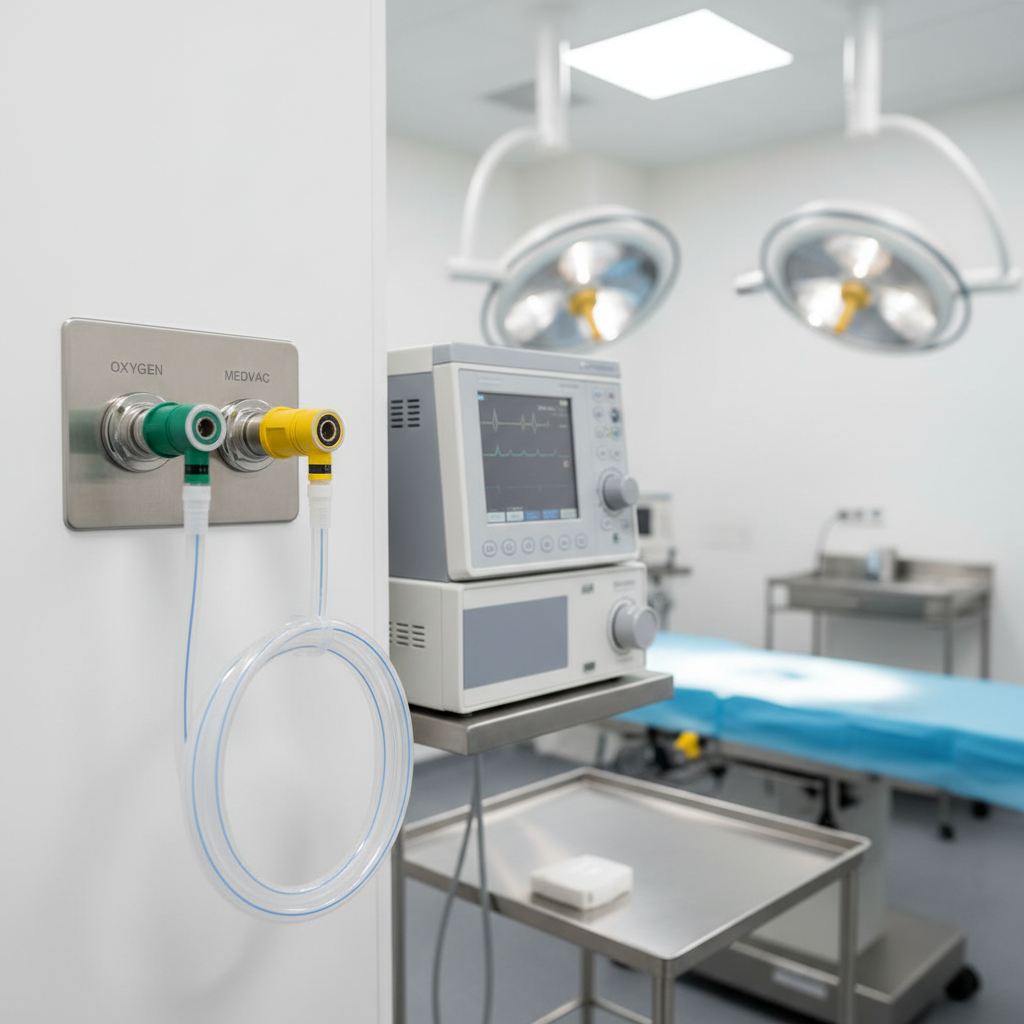
- Terminal Units (Outlets): These are the gas-specific connection points in operating rooms and treatment areas. They use a unique indexing system (like DISS or Chemetron) to prevent accidental cross-connection of gases.
NFPA 99 and AVMA Guidelines: The Pillars of Compliance
Navigating the regulatory landscape is one of the most challenging aspects of a medical gas installation. Two primary documents govern veterinary systems: NFPA 99 (Health Care Facilities Code) and the AVMA's guidelines for anesthetic systems.
Why this matters for compliance: Failure to adhere to NFPA 99 can result in failed inspections, costly rework, and potential legal liability in the event of an accident. It is the foundational code for medical gas safety in human and animal healthcare settings.
While veterinary facilities may not always be held to the same stringent standards as human hospitals (depending on local jurisdiction), following NFPA 99 is the industry best practice and ensures the highest level of safety. Key chapters for veterinary installations include:
- Chapter 5: Gas and Vacuum Systems: Outlines requirements for everything from source equipment and pipelines to alarms and terminals.
- Chapter 13: Nonhospital Health Care Facilities: Provides specific guidance for clinics and ambulatory surgery centers, which often aligns with the structure of a veterinary practice.
Key Code & Standard Comparison
| Standard | Focus Area | Key Requirement for Vet Med |
|---|---|---|
| NFPA 99 | Overall system safety, installation, testing | Requires systems to be installed by ASSE 6010 certified personnel and verified by an ASSE 6030 verifier. |
| ASSE 6000 Series | Personnel competency and certification | Defines credentials for installers (6010), verifiers (6030), and maintenance personnel (6040). |
| CGA | Gas quality, cylinder handling, and safety | Provides standards like CGA V-1 for gas cylinder connection types (e.g., CGA 540 for Oxygen). |
| AVMA | Anesthetic machine use and scavenging | Recommends active scavenging systems and regular WAG monitoring to protect staff health. |
The Installation Process: A Step-by-Step Overview
A successful veterinary medical gas installation in Asheville requires careful planning and execution by certified professionals. Here's what to expect:
- Design & Planning: An expert from Medical Testing Solutions works with your architect and builder to design a system that meets your clinical needs and complies with all relevant codes.
- Rough-In: ASSE 6010 certified installers route the copper piping throughout the facility before the walls are closed up.
- Brazing & Purging: All joints are brazed (a high-temperature soldering process) while an inert gas like nitrogen is purged through the pipes to prevent oxidation and contamination.
- Standing Pressure Test: The piping is pressurized to 150 psi to test for any leaks in the joints before the system is put into service.
- Source & Terminal Installation: The manifolds, pumps, alarms, and wall outlets are installed and connected to the pipeline.
- Final Verification & Certification: This is the most critical step. A third-party ASSE 6030 certified verifier, like the experts at Medical Testing Solutions, performs a battery of tests to ensure system purity, pressure, flow, and safety. This is not optional; it's a requirement for a compliant system.
Our team at Medical Testing Solutions has the ASSE-certified expertise to handle every phase of the project, from initial design consultation to the final ASSE 6030 verification.
Scavenging and WAG Monitoring: Protecting Your Team
Waste Anesthetic Gas (WAG) poses a significant long-term health risk to veterinarians and technicians. Chronic exposure to unscavenged isoflurane or sevoflurane is linked to neurological and reproductive health issues. A properly designed WAGD (Waste Anesthetic Gas Disposal) system is essential.
- Active vs. Passive Systems: Active systems use a vacuum producer to actively draw waste gas away from the anesthesia machine. Passive systems simply vent the gas outside, which is often less effective and may not be compliant. The AVMA and common sense dictate an active system is far superior.
- Regular Monitoring: How do you know your system is working? The only way is through WAG chemical vapor monitoring. This service samples the air in your operating and recovery rooms to quantify exposure levels and ensure they are below OSHA-recommended limits.
Choosing the Right Partner in Asheville, NC
When selecting a company for your veterinary medical gas installation, expertise and certification are non-negotiable. Medical Testing Solutions is a premier provider of medical gas services in the Asheville area. We are not just equipment sellers; we are a full-service partner. Our team consists of ASSE 6010 and 6030 certified professionals who ensure your system is designed and installed for maximum safety and compliance from day one. We offer comprehensive services including installation, annual inspections, and ongoing medical gas system maintenance.