Properly installed medical gas systems are a non-negotiable cornerstone of any modern veterinary surgical suite in Arlington, VA. For procedures requiring anesthesia, the safe, reliable delivery of oxygen (O2) and nitrous oxide (N2O), along with the effective removal of waste anesthetic gases (WAGs) and provision of surgical vacuum, is critical to patient safety and staff health. This guide provides a definitive overview of the design, installation, and verification process for veterinary medical gas systems, ensuring your facility complies with all relevant codes, including NFPA 99 and AVMA guidelines. You will learn the key components, code requirements, and steps to a successful, compliant installation.
Medical Gas Service
Compliance & Standards
Veterinary
Veterinary Medical Gas Installation in Arlington, VA: A Complete Guide
Medical Testing SolutionsAugust 20, 20266 min read
Understanding the Core Components of a Veterinary Gas System
A compliant veterinary medical gas system is more than just pipes; it's a life-support system. The primary components for a typical Arlington veterinary hospital include:
- Source Equipment: This is the heart of the system. It includes high-pressure cylinders (e.g., H-cylinders) for oxygen and nitrous oxide, a manifold to regulate pressure, and source machinery like vacuum pumps and WAGD outlets.
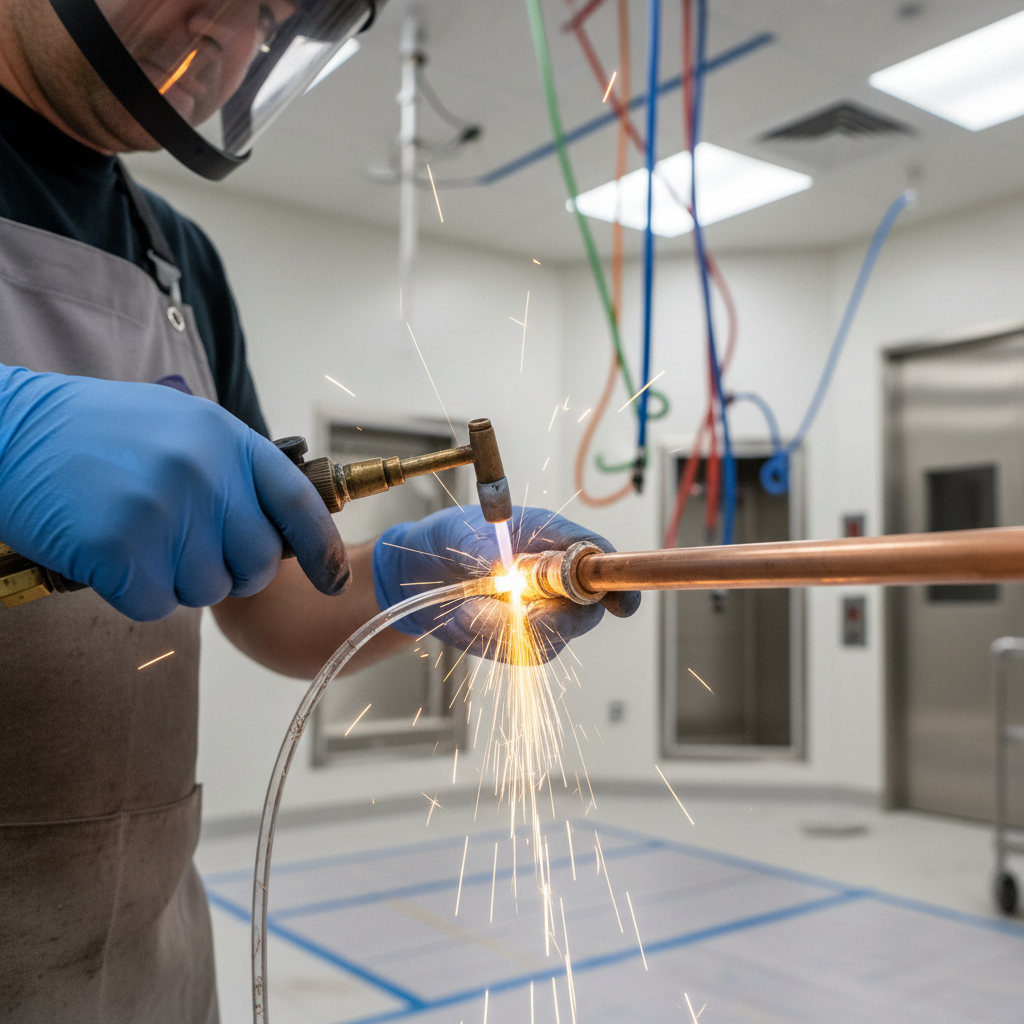
- Distribution Piping: Medical-grade copper piping (ASTM B819) is used to transport the gases from the source to the points of use. All piping must be brazed by an ASSE 6010 certified technician.
- Zone Valve Boxes: These allow specific areas or rooms (e.g., surgery, dental suite) to be isolated for maintenance or in an emergency without shutting down the entire facility.
- Alarms: Master and area alarms are crucial for safety. They provide audible and visual warnings for critical system changes, such as low source pressure or a failure in the vacuum pump, as mandated by NFPA 99.
- Terminal Outlets: These are the connection points in the operating rooms where anesthesia machines and other equipment are plugged in. They are gas-specific (e.g., DISS, quick-connect) to prevent cross-connection.
NFPA 99: The Code of Authority for Veterinary Facilities
While often associated with human hospitals, the National Fire Protection Association (NFPA) 99, Health Care Facilities Code, is the governing standard for veterinary medical gas systems. The AVMA and AAHA defer to NFPA 99 for best practices.
For an Arlington, VA vet clinic, this means your system must be designed and installed based on a risk assessment. Most surgical facilities fall under Level 1, requiring the highest degree of safety and redundancy.
Key NFPA 99 requirements include:
- Piping: All piping must be cleaned and certified for oxygen service.
- Brazing: Joints must be brazed using a nitrogen purge to prevent interior oxidation, which can contaminate the gas stream.
- Warning Systems: Alarms are mandatory for all Level 1 systems.
- Verification: Before any system is put into service, it must be inspected and verified by a qualified third party, like Medical Testing Solutions, holding an ASSE 6030 certification. This is not optional.
Why this matters for compliance: Failure to comply with NFPA 99 can not only jeopardize patient and staff safety but also lead to significant liability, failed inspections, and costly rework. Local Arlington, VA authorities and insurance carriers expect facilities to adhere to these national standards.
Oxygen (O2) System Installation
Oxygen is the most critical medical gas. The source is typically a manifold of high-pressure cylinders. The system must maintain a continuous supply at a nominal pressure of 50-55 psi.
Key Installation Steps:
- Source Manifold: Securely mount the manifold with automatic switchover capabilities to ensure an uninterrupted supply when one bank of cylinders is depleted.
- Pressure Regulation: Install regulators to step down the high cylinder pressure to the nominal line pressure.
- Piping and Outlets: Route cleaned copper piping to surgical suites and install DISS-indexed oxygen outlets.
Nitrous Oxide (N2O) Systems
Nitrous oxide is used for its analgesic and anesthetic properties. Like oxygen, it is supplied from high-pressure cylinders and piped at 50-55 psi. A critical consideration is ensuring there is no cross-connection with the oxygen system.
Medical Vacuum & Waste Anesthetic Gas Disposal (WAGD)
Equally important as gas delivery is waste removal. This is handled by two separate systems:
- Medical/Surgical Vacuum: Used for suctioning fluids during procedures. It's powered by a dedicated vacuum pump.
- WAGD (also called EVAC or Scavenging): This system actively removes waste anesthetic gases exhaled by the patient from the anesthesia machine. It is crucial for protecting staff from the long-term health risks of exposure to trace anesthetic gases. Proper WAGD monitoring is essential for OSHA compliance.
Comparison of Vacuum Systems
| System Feature | Medical/Surgical Vacuum | WAGD/Scavenging |
|---|---|---|
| Purpose | Fluid and debris removal | Waste anesthetic gas removal |
| Pump Type | Dedicated medical vacuum pump | Dedicated WAGD producer |
| NFPA 99 Chapter | Chapter 5 | Chapter 5 |
| Typical Use | Connected to suction canisters | Connected to anesthesia machine scavenger port |
| Key Concern | Maintaining strong, consistent suction | Preventing occupational exposure to WAGs |
The Critical Role of ASSE 6000 Certification
The American Society of Sanitary Engineering (ASSE) 6000 series provides personnel certifications for individuals working with medical gas systems. For your Arlington, VA installation, you should only use a company whose technicians hold these credentials:
- ASSE 6010 Certified Installer: The qualification for individuals who physically install the piping and components.
- ASSE 6030 Certified Verifier: The qualification for third-party inspectors who test and verify the entire system before it can be used for patient care.
Medical Testing Solutions provides technicians with both ASSE 6010 installation and ASSE 6030 verification expertise. This ensures a seamless, compliant process from start to finish.
The Installation and Verification Process
A typical veterinary gas installation follows a strict, phased approach:
- Design & Planning: An initial consultation to determine the clinic's needs, number of locations, and gas requirements.
- Rough-In: ASSE 6010 installers route the copper piping throughout the facility before the walls are closed.
- Brazing: All joints are brazed with a nitrogen purge.
- Initial Piping Tests: The system is pressure-tested to check for leaks.
- Component Installation: Source equipment, alarms, and outlets are installed.
- Final Verification (ASSE 6030): This is the most critical step. A certified verifier performs a battery of tests to confirm system purity, pressure, flow, and absence of cross-connections. The verification process is the final gate before the system can be deemed safe for use.
Choosing a Qualified Installer in Arlington, VA
When selecting a partner for your veterinary medical gas installation, expertise is paramount. Look for a company that:
- Employs ASSE 6010 certified installers and ASSE 6030 verifiers.
- Has extensive, verifiable experience with veterinary-specific projects in the Arlington area.
- Demonstrates deep knowledge of NFPA 99 and AVMA guidelines.
- Can provide both the equipment and the installation/certification services, like Medical Testing Solutions.
Get a Compliant Installation for Your Arlington Clinic
Ensuring your medical gas system is installed correctly from day one is one of the most important investments you can make in your practice's safety and compliance. It protects your patients, your staff, and your business.
If you are building, renovating, or upgrading a veterinary facility in Arlington, VA, contact the experts at Medical Testing Solutions. Our ASSE-certified technicians provide turnkey installation, testing, and verification services to ensure your peace of mind. Call us today at +1 (754) 315-1078 or request a quote online for your project.
Frequently Asked Questions
After the initial ASSE 6030 verification, NFPA 99 requires that your systems undergo annual inspections to ensure they continue to operate safely and efficiently. This includes checking outlets, alarms, and source equipment.
Absolutely not. You must use medical-grade copper tubing (ASTM B819) that has been specifically cleaned for oxygen service. Using standard copper can introduce contaminants into the gas stream, posing a severe risk to patients.
Verification is the specific, multi-test process performed by an ASSE 6030 verifier to confirm a new or modified system is safe before use. Medical gas certification is a broader term that encompasses the entire quality assurance process, including the installer's qualifications and the final verification report.
Yes. OSHA requires employers to protect staff from workplace hazards, including waste anesthetic gases. An active WAGD system is the industry standard and best practice for compliance and ensuring the long-term health of your veterinary technicians and staff.
Request a quote for your facility
Talk with Medical Testing Solutions about your next inspection, repair or equipment request.