Veterinary Medical Gas Installation in Alexandria VA: A Complete Guide
Medical Testing SolutionsAugust 20, 20266 min read
Share
Veterinary Medical Gas Systems: An Overview
A properly designed and installed medical gas system is a critical component of any modern veterinary surgical suite. These systems deliver life-sustaining gases like Oxygen (O2) and provide crucial support functions such as nitrous oxide (N2O) for anesthesia, and vacuum for waste gas scavenging and surgical suction. For veterinary facilities in Alexandria, VA, ensuring these systems are safe, reliable, and compliant with national standards is not just a matter of best practice, it's a legal requirement.
This guide will walk you through the essential aspects of veterinary medical gas installation, covering everything from the specific codes and standards you must follow to the components of a typical system and the importance of professional, ASSE-certified installation and verification.
Key Anesthetic & Medical Gases in Veterinary Medicine
Oxygen (O2): The cornerstone of veterinary anesthesia, used as a carrier for inhalant anesthetics and for patient resuscitation.
Nitrous Oxide (N2O): Often used in conjunction with oxygen for its analgesic and sedative effects, particularly in dental and minor procedures.
Vacuum: Not a gas, but a critical piped service for removing waste anesthetic gases (WAGs) from the breathing circuit and for surgical suction.
Medical Air: Used for orthopedic procedures and other applications requiring compressed air free of contaminants.
NFPA 99 & AVMA Guidelines: The Compliance Framework
The primary standard governing medical gas systems in the United States is the National Fire Protection Association's NFPA 99, Health Care Facilities Code. While often associated with human hospitals, its requirements are directly applicable to veterinary facilities that perform Level 2 or Level 3 procedures, which includes most surgical clinics.
Why this matters for compliance: The AVMA (American Veterinary Medical Association) guidelines on anesthesia explicitly reference adherence to NFPA 99. Failure to comply can result in safety hazards, failed inspections, and potential liability. An Alexandria-based clinic must meet these national standards.
Key NFPA 99 requirements for veterinary gas systems include:
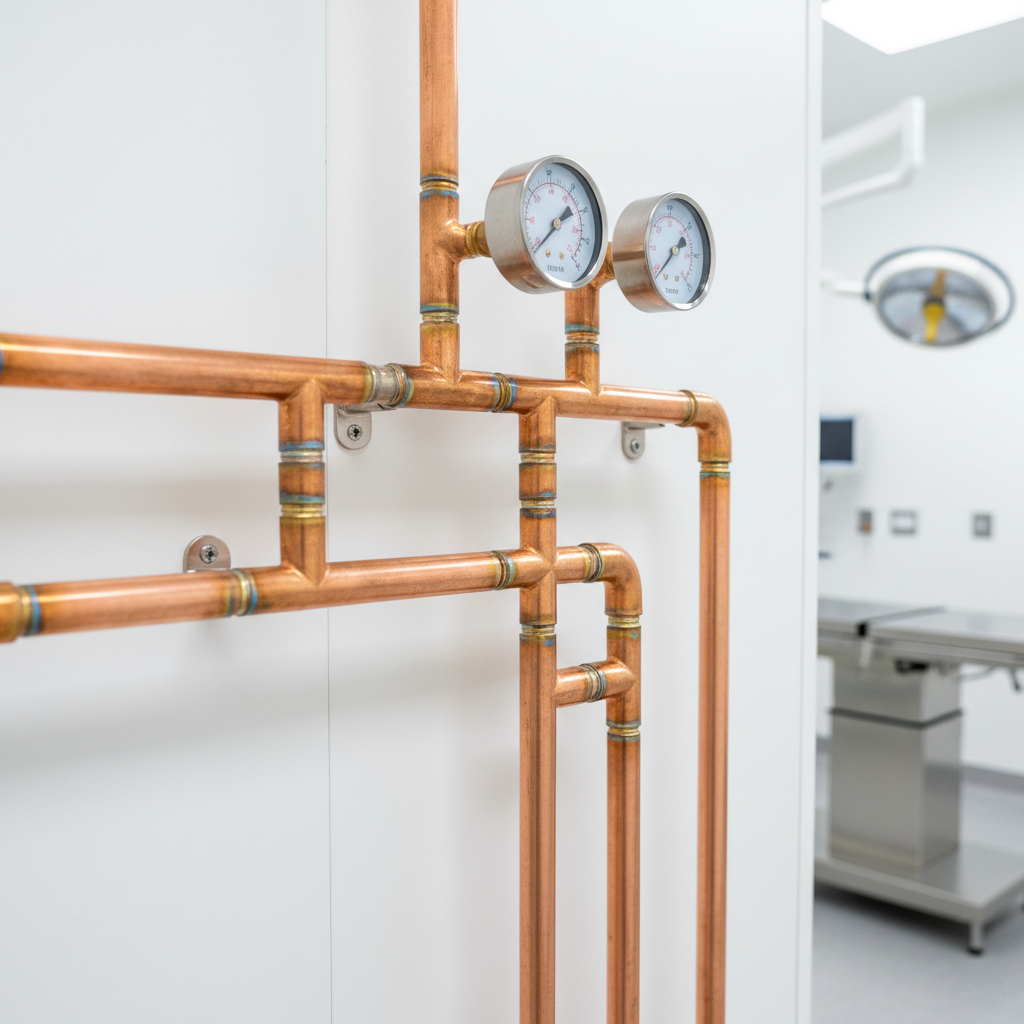
Piping Material: All piping must be medical-grade, hard-drawn seamless copper (Type L or K), cleaned for oxygen service.
System Alarms: Master and area alarm panels are required to provide audible and visual warnings of system failures, such as low pressure or high temperature.
Zone Valves: Ball valves installed in designated boxes to isolate specific areas (e.g., a single operating room) for maintenance or emergencies without shutting down the entire facility.
Source Equipment: Manifolds for high-pressure cylinders or bulk liquid oxygen tanks must meet specific criteria for location, ventilation, and security.
The ASSE 6000 Series: Professional Qualification Standards
Beyond the facility standards of NFPA 99, the American Society of Sanitary Engineering (ASSE) 6000 series provides the personnel certification standards for those who work on these critical systems.
ASSE 6010 Certified Installers: The standard requires that all medical gas system installation be performed by a qualified ASSE 6010 certified installer. This ensures the individual has the knowledge and experience to correctly braze, purge, and assemble the system according to code.
ASSE 6030 Certified Verifiers: After the installation is complete, an independent, ASSE 6030 certified verifier must test the entire system. This is a crucial final step to ensure safety and compliance before the system is put into service. This medical gas verification process is non-negotiable.
Core Components of a Veterinary Gas Installation
A complete veterinary medical gas installation is more than just pipes in the wall. It’s a complex system with several key components working together.
1. Source Equipment (The "Heart" of the System)
This is where the gases originate. For most vet clinics, this means:
Oxygen Manifold: Typically a duplex system with two banks of high-pressure cylinders. An automatic changeover ensures an uninterrupted supply when one bank is depleted.
N2O Manifold: Similar to the oxygen manifold, but for nitrous oxide cylinders.
Vacuum Pump: A dedicated pump (or duplex pumps for redundancy) that creates the negative pressure for the vacuum lines.
WAGD Outlet: Waste Anesthetic Gas Disposal systems are crucial for scavenging and safely removing waste gases from the operating room, protecting staff from exposure.
2. The Distribution Network (Pipes, Valves, Alarms)
From the source, the gases are distributed throughout the facility.
Piping: As mentioned, this must be specially cleaned and brazed copper tubing.
Zone Valve Boxes: These allow staff to shut off gas flow to a specific room in case of fire or for maintenance.
Alarm Panels: These monitor the entire system and provide immediate warnings of any issues. At Medical Testing Solutions, we can help you select and install the right alarm systems for your Alexandria practice.
3. Terminal Equipment (The "Point of Use")
This is where the gas is delivered to the patient and equipment.
Wall Outlets: Gas-specific outlets (e.g., DISS, Ohmeda) that prevent cross-connection of gases.
Ceiling Drops/Booms: Flexible systems that bring gases and other utilities down from the ceiling to the anesthesia machine.
Anesthesia Machine: The final point of delivery, where gases are mixed and delivered to the patient. Regular maintenance and WAG chemical vapor monitoring are essential for safety.
Design & Planning: Working with a company like Medical Testing Solutions, you'll design a system that meets your clinic's specific needs while adhering to all relevant codes.
Installation (ASSE 6010): A certified installer lays the copper piping, brazing all joints with a continuous nitrogen purge to prevent internal oxidation. They will install the source equipment, alarms, and terminal outlets.
Initial Testing: The installer performs initial pressure testing to check for leaks.
Verification (ASSE 6030): This is where a third-party verifier comes in. They will perform a battery of tests to confirm:
No cross-connections exist.
All system alarms are functional.
Gas concentration and purity meet USP standards.
Flow and pressure at each outlet are correct.
The system is free of leaks and contaminants.
Certification: Once the verifier confirms the system meets all NFPA 99 requirements, they will issue a formal certification, and only then can the system be used for patient care.
Test Aspect
NFPA 99 Requirement
Why It's Important
Cross-Connection
Each gas must be delivered only by its own designated outlet.
Prevents accidentally administering the wrong gas to a patient.
Particulate Test
System must be shown to be free of construction debris.
Prevents contaminants from reaching the patient or damaging equipment.
Purity & Concentration
Gas must meet USP specifications at the outlet.
Ensures the patient receives the correct, uncontaminated medical gas.
System Alarms
All master and area alarms must function as intended.
Provides immediate notification of dangerous pressure changes or failures.
Choosing a Partner for Your Alexandria, VA Clinic
When it comes to something as critical as medical gas, you need a partner with proven expertise. Medical Testing Solutions is an ASSE-certified company with deep experience in the design, installation, and certification of medical gas systems for veterinary facilities in Alexandria, VA, and beyond. We are not just a sales company; our certified technicians provide hands-on service and verification to ensure your system is safe, compliant, and ready for service.
After the initial verification, a full system inspection by a certified technician is typically required annually to ensure ongoing safety and compliance.
Absolutely not. You must use medical-grade copper tubing that has been specifically cleaned for oxygen service to prevent fires and contamination.
According to NFPA 99, installation must be performed by a qualified ASSE 6010 certified installer.
Installation is the physical assembly of the system by an ASSE 6010 professional. Verification is the subsequent testing of the completed system by an independent ASSE 6030 professional to ensure it is safe and code-compliant before use.
Request a quote for your facility
Talk with Medical Testing Solutions about your next inspection, repair or equipment request.