Does Your Veterinary Practice Need Medical Gas Certification?
Medical Testing SolutionsJune 23, 20264 min read
Share
If your animal hospital runs oxygen, nitrous oxide, medical air, surgical vacuum, or a waste anesthetic gas (WAGD) scavenging system, the answer is almost certainly yes, even though your practice isn't a "hospital" in the way NFPA 99 defines one.
Here's the honest version most inspection companies won't give you, because most of them don't work on veterinary facilities at all.
Your practice runs the same systems a hospital does
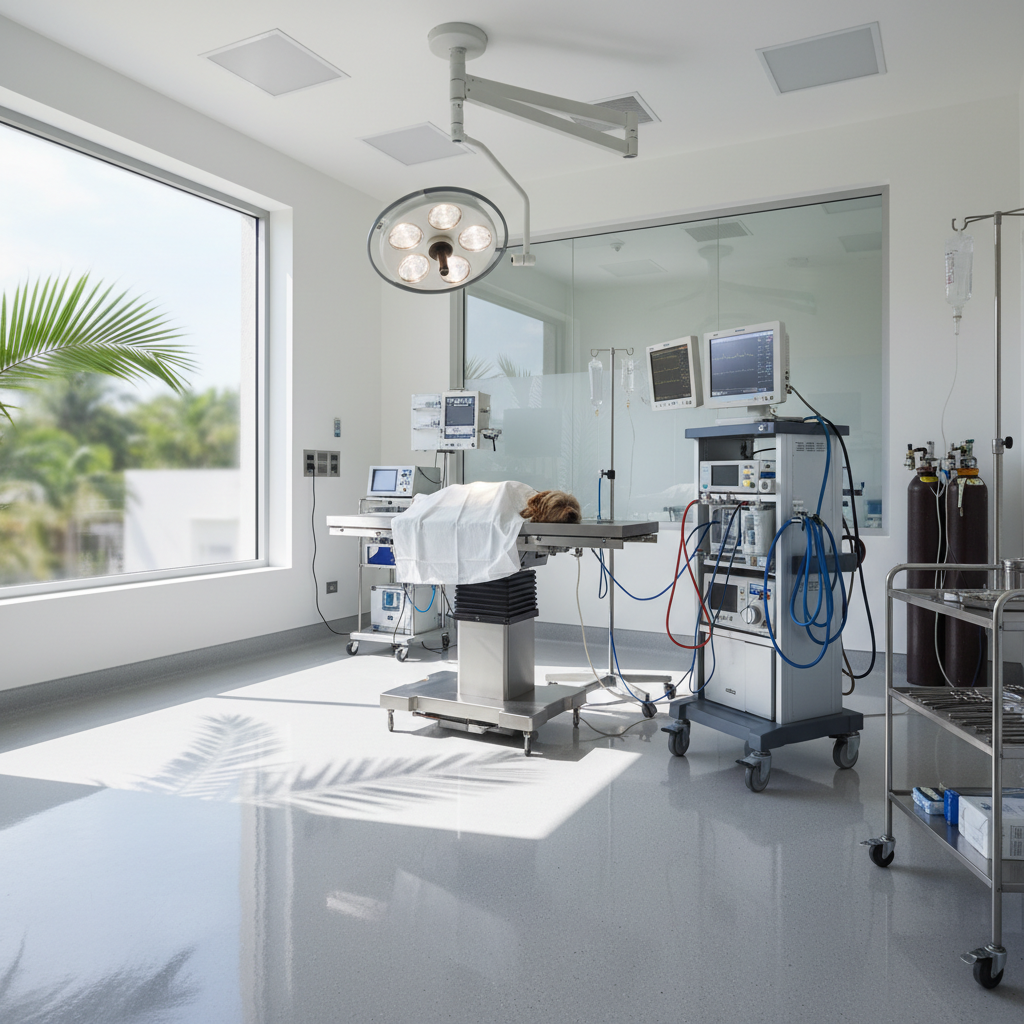
The medical gas equipment in a busy animal hospital is functionally identical to what you'd find in a human surgical suite:
Oxygen, cylinder manifolds, concentrators, or a piped source supplying your surgery and treatment areas
Nitrous oxide, for inhalant anesthesia, typically from E-cylinders or a small manifold
Medical air, driving tools and ventilators in larger practices
Surgical/medical vacuum, suction at the table
WAGD / anesthetic gas scavenging, capturing waste isoflurane, sevoflurane, and nitrous so your team isn't breathing it
If any of these are present, they can fail, leak, cross-connect, or under-perform exactly the way a hospital system can, and the consequences land on your patients and your staff.
Where the requirements actually come from
This is where you should be skeptical of anyone who tells you "NFPA 99 requires it." Strictly, NFPA 99 is the Health Care Facilities Code written for human patient care, and veterinary practices sit outside its literal scope. But that doesn't put you in the clear, the compliance pressure just comes from several other directions at once:
OSHA and NIOSH, waste anesthetic gas exposure is a documented occupational hazard. NIOSH recommends keeping nitrous oxide exposure low during administration, and OSHA can cite a practice under the General Duty Clause when scavenging is inadequate.
AAHA accreditation, if you're accredited or pursuing it, anesthesia safety and equipment maintenance standards apply directly.
State veterinary boards, many require documented equipment maintenance and safe handling of compressed gases and anesthetics.
Your AHJ (fire marshal / local code official), some jurisdictions adopt NFPA standards for any facility storing and piping medical gases, regardless of patient species.
Equipment manufacturers and your insurer, both expect documented inspection and maintenance, and a gap can void coverage after an incident.
Translation: you may not be legally bound to NFPA 99 by name, but you are very much on the hook for the safety outcomes it's designed to produce.
The risk most owners never see coming
Ask any tech who's spent years next to a leaky nitrous line how they feel by mid-afternoon. Chronic exposure to waste anesthetic gas, from a scavenging system that was never tested, a worn interface, or a leak nobody knew about, is the quiet liability in most practices. It doesn't trip an alarm. It shows up as headaches, staff turnover, and, eventually, a workers' comp claim or an OSHA visit.
A failed or undersized scavenging system is the single most common deficiency we find in animal hospitals, and it's almost always invisible until someone tests it.
What a veterinary medical gas inspection covers
A proper inspection verifies the whole chain, not just the cylinders:
Source equipment and manifolds, condition, pressure regulation, changeover
Alarms and monitoring, where systems are piped
Outlet and inlet performance, flow and pressure at every station
Leak and cross-connection testing, confirming oxygen is oxygen and nitrous is nitrous, everywhere
Scavenging / WAGD effectiveness, the test that actually protects your team
A documented report you can hand to your board, your accreditor, or your insurer
Why a specialist matters here
Most medical gas inspection firms are built around human hospitals and won't touch a veterinary account, or they'll send a tech who's never set foot in an animal hospital. Medical Testing Solutions specializes in exactly this work. We hold ASSE/IAPMO/ANSI 6020, 6030, and 6040 certifications, carry 20+ years in medical gas, and certify veterinary and dental facilities nationwide, practices the big firms overlook.
If you've never had your systems formally inspected, or it's been more than a year, that's the gap worth closing before it closes on you.
Frequently Asked Questions
No. NFPA 99 (Health Care Facilities Code) governs human healthcare facilities and is not legally enforced on veterinary practices. Most vet hospitals voluntarily install systems to NFPA 99-style standards because it is the recognized best practice for medical gas piping, oxygen, vacuum and WAGD. The enforceable rules for vet settings come from OSHA (waste anesthetic gas exposure), state veterinary boards, and manufacturer requirements. See our [veterinary anesthesia services](/veterinary-anesthesia) or [request a quote](/request-quote).
OSHA expects employers to control waste anesthetic gas (WAG) exposure, which means scavenging systems must be working, oxygen and N2O cylinders/manifolds must be safe, vacuum must hold spec, and anesthesia machines must be leak-tested and calibrated. We follow ASSE 6020/6030/6040 inspection methodology even though NFPA 99 is not mandated for vet.
Best practice is an annual medical gas and anesthesia safety inspection, plus monthly staff WAG awareness checks. High-volume surgical practices and university teaching hospitals often inspect every 6 months.
A technician credentialed to ASSE 6020 (inspector), ASSE 6030 (verifier) for new/modified systems, and ASSE 6040 (maintenance) for ongoing service. MTS holds all three and services veterinary practices across Florida and nationwide. Call (754) 315-1078.
Request a quote for your facility
Talk with Medical Testing Solutions about your next inspection, repair or equipment request.