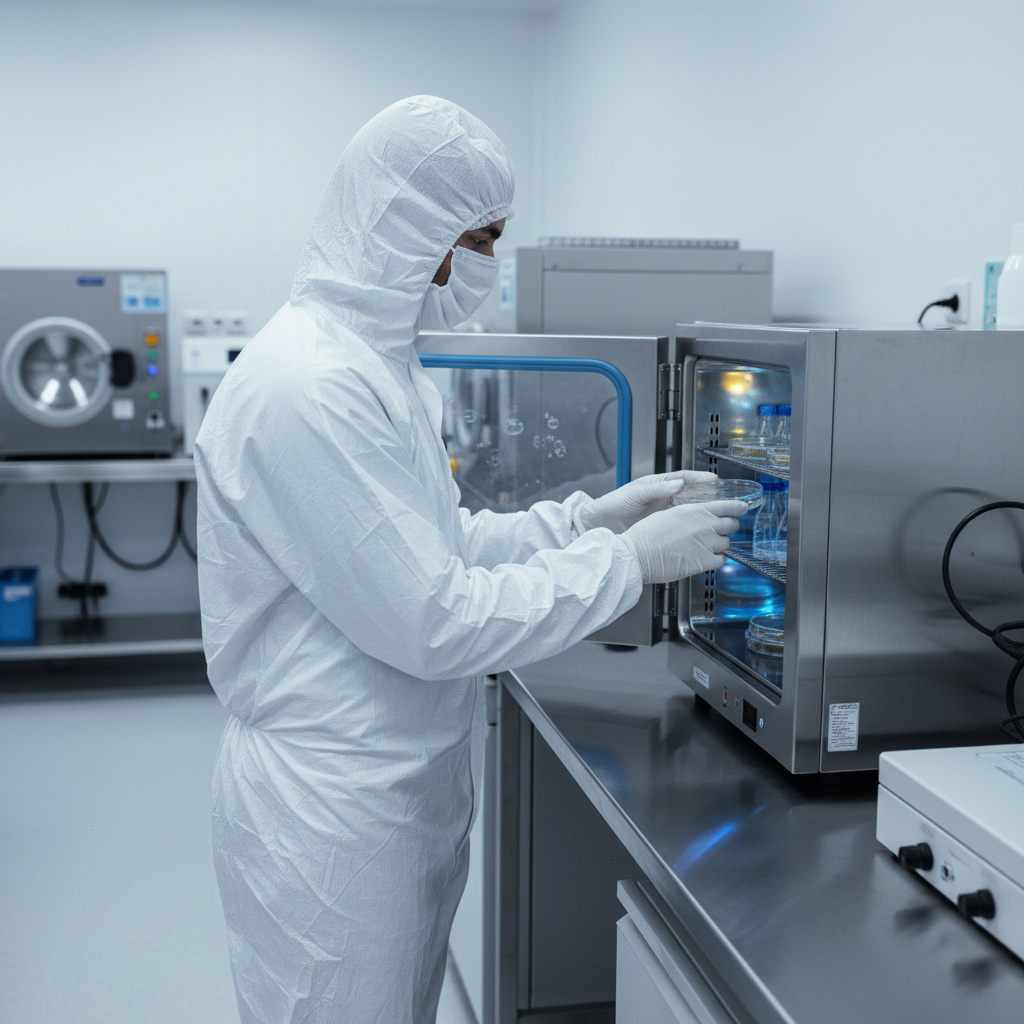
For pharmacies, especially those involved in compounding sterile preparations, ensuring patient safety is paramount. United States Pharmacopeia (USP) chapters <797> and <800> provide the standards for this, and a critical component is a robust environmental monitoring (EM) program. This program is your way of verifying that your controlled environments, the cleanrooms and secondary engineering controls where sterile products are prepared, are consistently maintaining their intended state of quality. It involves a series of tests to detect and enumerate potential contaminants, both living and non-living. This guide will walk you through the essential components of an EM program for USP 797 and USP 800 compliance, from air sampling to personnel testing.
The Core of Environmental Monitoring: What Are You Testing For?
An EM program is fundamentally about detecting two categories of contaminants: non-viable particles and viable microorganisms. Both can pose a significant risk to the sterility of compounded sterile preparations (CSPs).
Non-Viable Particle Testing
Non-viable particles are airborne particles that do not contain living microorganisms but can act as transport vehicles for them. Think of them as microscopic dust taxis for bacteria and fungi. USP <797> sets specific limits for the concentration of these particles, measured by size (e.g., ≥0.5 µm). This testing is a primary indicator of your cleanroom's air filtration efficiency and overall cleanliness. It's performed using a specialized particle counter and is a key part of the certification process for your cleanroom, typically conducted every six months.
Viable Particle Testing (Air & Surface)
Viable sampling is designed to detect the presence of living microorganisms, such as bacteria and fungi. It tells you not just that particles are present, but that they are a direct microbiological threat. This involves collecting samples from the air and from critical surfaces and incubating them in growth media to see what, if anything, grows. The results are measured in Colony-Forming Units (CFUs).
Why this matters for compliance: USP <797> mandates specific frequencies and action levels for viable sampling. Exceeding these CFU limits requires immediate investigation and corrective action, making this testing a non-negotiable part of your routine operations.
Air Sampling: Viable and Non-Viable
Air quality is the cornerstone of a sterile compounding environment. Your EM program must include both non-viable and viable air sampling to get a complete picture.
How Non-Viable Air Sampling Works
This is performed under dynamic (in-operation) conditions. A light-scattering particle counter is placed in designated locations within the cleanroom suite, including the buffer area (ISO 7), ante-area (ISO 8), and inside the primary engineering control (PEC) like a laminar airflow workbench or biological safety cabinet (ISO 5). The machine draws in a known volume of air and counts the particles, providing a snapshot of air cleanliness. This is a service that a certified company like Medical Testing Solutions performs during the semi-annual certification of your facility.
How Viable Air Sampling Works
Also known as "active air sampling," this test uses a device that impacts a known volume of air onto a petri dish containing a growth medium (e.g., tryptic soy agar or TSA). The plates are then incubated, and the resulting colonies are counted. This should be performed at least every six months as part of a comprehensive certification, and more frequently in some facilities. Locations are chosen based on risk, targeting areas where contamination could directly impact the CSP.
Surface Sampling and Glove Fingertip Testing
While air quality is crucial, contamination is often transferred by touch. That's why USP standards place a heavy emphasis on testing surfaces and personnel.
Routine Surface Sampling
Regular sampling of surfaces ensures that your cleaning and disinfection protocols are effective. Samples are collected from high-touch areas within the PEC and other critical zones like work surfaces, equipment, and pass-throughs. This is typically done at the end of a compounding shift to represent the dirtiest state of the environment. A contact plate or swab is used to sample the area, which is then incubated to culture any viable microorganisms. For a full breakdown of requirements, see our guide on USP 797 & 800 compliance.
Glove Fingertip & Thumb Sampling
The single greatest source of contamination in a cleanroom is the personnel working within it. Glove fingertip and thumb sampling is a direct test of an individual's aseptic technique and garbing competency. After performing compounding manipulations, the operator presses their gloved fingertips and thumb onto a growth medium plate. This is done before disinfecting the gloves with sterile 70% isopropyl alcohol (IPA). The plates are incubated, and the goal is to have zero CFUs. This test must be performed initially for all compounding personnel and then periodically as part of their ongoing qualification.
Test Type
Frequency (Minimum)
Purpose
Standard
Non-Viable Air
Every 6 months
Certify room cleanliness (particle count)
USP <797>
Viable Air
Every 6 months
Detect airborne microbial contamination
USP <797>
Surface Sampling
Monthly
Validate cleaning & disinfection effectiveness
USP <797>
Glove Fingertip
Initially & periodically with media fill
Assess personnel aseptic technique
USP <797>
Creating Your Environmental Monitoring Plan
A written EM plan is a requirement. It should be a detailed document that outlines your entire strategy. Key components include:
Sampling Locations: A diagram of your facility with all sampling sites clearly marked.
Frequency: How often each type of sampling will occur (e.g., daily, weekly, monthly, semi-annually).
Methodology: The specific equipment and procedures used for sampling.
Action Levels: The CFU counts that will trigger an investigation and corrective actions.
Corrective Actions: A clear plan for what to do when results exceed your action levels.
This plan is a living document and should be reviewed and updated regularly.
The Role of a Certified Partner
While some routine monitoring can be performed by trained pharmacy staff, the semi-annual certification, which includes non-viable particle counting and viable air sampling, must be performed by a qualified, independent certifier. A company like Medical Testing Solutions provides comprehensive environmental monitoring solutions that align with ASSE 6000 series standards. Our technicians are ASSE-certified and can perform the required tests, interpret the results, and help you establish a compliant and effective EM program.
From initial cleanroom certification to ongoing support, working with an expert partner ensures your facility remains compliant and your patients are protected. Medical Testing Solutions has the expertise to help you navigate the complexities of USP <797> and <800>.
Get a Quote for Your Pharmacy's Environmental Monitoring
Ensuring your compounding pharmacy meets USP <797> and <800> standards is not just about compliance, it's about patient safety. Don't leave your environmental monitoring to chance. The expert team at Medical Testing Solutions provides comprehensive, ASSE-certified environmental monitoring services, from air and surface sampling to complete cleanroom certification. Contact us today to discuss your facility’s needs and get a free quote for our services. Call us at (754) 315-1078 or request a quote online.
Frequently Asked Questions
Any result exceeding the defined action level requires an immediate investigation. You must document the event, identify the likely cause (e.g., poor technique, cleaning failure, HVAC issue), and implement corrective and preventive actions (CAPAs). This could include retraining personnel, revising cleaning procedures, or even a temporary halt to compounding.
Glove fingertip testing must be successfully completed as part of the initial training and qualification for any personnel who will compound sterile products. After that, it is performed in conjunction with the media-fill test at a frequency determined by the complexity of compounding your facility performs (low, medium, or high-risk).
While USP <797> allows for trained in-house personnel to perform some sampling, the official semi-annual certification testing must be done by an independent, qualified certifier. Many facilities choose to partner with a firm like Medical Testing Solutions for all their EM needs to ensure consistency and unbiased results.
ISO classification refers to the number of particles per cubic meter of air. An ISO 5 environment is the cleanest, required for primary engineering controls (PECs) where direct compounding occurs. An ISO 7 area (the buffer room) is less clean but still highly controlled, and an ISO 8 area (the ante-room) is the transition space from the general pharmacy.
USP <800> focuses on handling hazardous drugs and adds requirements for containment. While the core principles of viable and non-viable monitoring from USP <797> apply, USP <800> requires surface wipe sampling for specific hazardous drug residues to ensure containment is effective. This is a separate test from the viable surface sampling for microbial contamination.
The best first step is to partner with a certified testing and verification company. They can help you develop a site-specific plan, perform the initial certification, and provide ongoing testing services. Contact us to learn more about our environmental monitoring and USP compliance services.
Request a quote for your facility
Talk with Medical Testing Solutions about your next inspection, repair or equipment request.