PSA Medical Oxygen: A Hospital's Guide to On-Site Generation
Medical Testing SolutionsJune 20, 20267 min read
Share
For decades, healthcare facilities have relied on bulk liquid oxygen (LOX) deliveries. While effective, this model presents significant logistical, safety, and financial challenges. Today, a proven and increasingly adopted alternative is transforming hospital oxygen supply: on-site generation using Pressure Swing Adsorption (PSA) technology. PSA medical oxygen systems produce a continuous, reliable supply of USP 93% oxygen directly from the ambient air, offering unprecedented operational autonomy and substantial long-term cost savings.
This definitive guide explains how PSA technology works, from the molecular level to the complete system. We will dissect the compelling return on investment (ROI) compared to traditional bulk liquid oxygen, explore real-world hospital applications, and detail the critical safety and compliance standards, including NFPA 99 and ASSE 6000, that govern these systems. You will learn what it takes to implement a PSA system and how a certified partner like Medical Testing Solutions can ensure a seamless and compliant transition.
What is Pressure Swing Adsorption (PSA) Technology?
Pressure Swing Adsorption is a gas separation technology that utilizes a special material called a molecular sieve to isolate specific gas molecules from a mixture under pressure. In the context of medical oxygen generation, a PSA system takes compressed ambient air, composed of roughly 78% nitrogen, 21% oxygen, and 1% other gases, and separates the nitrogen, allowing the oxygen to pass through.
The result is a continuous stream of medical-grade oxygen, typically at 93% (±3%) purity, which meets the requirements of the United States Pharmacopeia (USP) for medical use. This process eliminates a hospital's dependence on external suppliers for its primary life-support gas.
How a PSA Medical Oxygen Generator Works
A PSA oxygen generator operates on a cyclical process of pressurization and depressurization across two vessels, or "towers," filled with a synthetic zeolite molecular sieve. This material has a specific affinity for adsorbing nitrogen molecules at high pressure.
Here’s a step-by-step breakdown of the process:
Air Compression & Filtration: The process begins with an air compressor drawing in ambient air. This air is then conditioned, cooled, dried, and filtered, to remove contaminants like dust, oil, and water vapor, which could damage the zeolite sieve material.
Pressurization (Adsorption): The clean, compressed air is directed into the first tower. As the pressure inside the tower increases, the zeolite sieve selectively adsorbs nitrogen molecules onto its surface, allowing the oxygen molecules, which are smaller, to pass through unimpeded.
Oxygen Collection: This high-purity oxygen exits the top of the tower and is collected in a storage tank, known as an oxygen receiver, which ensures a steady pressure and flow is delivered to the hospital's medical gas pipeline.
Depressurization (Desorption): While the first tower is in its production cycle, the second tower, which is saturated with nitrogen from a previous cycle, undergoes depressurization. The pressure is rapidly dropped, causing the zeolite sieve to release the trapped nitrogen molecules.
Purge & Regeneration: A small portion of the purified oxygen from the production tower is used to purge, or flush out, the remaining nitrogen from the desorbing tower. This regenerates the zeolite material, making it ready for the next cycle.
The "Swing": The system "swings" between the two towers, with one always producing oxygen while the other regenerates. This continuous, automated cycle ensures an uninterrupted supply of medical oxygen 24/7.
On-Site Oxygen Generation vs. Bulk Liquid Oxygen (LOX): A Cost-Benefit Analysis
For hospital administrators and facility managers, the decision to switch from LOX to on-site PSA generation is primarily financial and operational. While PSA systems require an initial capital expenditure, the long-term ROI is typically realized within 1-3 years. Medical Testing Solutions has seen firsthand how facilities benefit from this transition.
Here is a direct comparison:
Feature
On-Site PSA Generation
Bulk Liquid Oxygen (LOX)
Cost Structure
Higher initial CAPEX, very low long-term OPEX. Payback period often 1-3 years.
Low initial setup cost, perpetually high and volatile OPEX (delivery fees, tank rental, hazmat charges, market price fluctuations).
Supply Control
Full autonomy and control over oxygen supply. Immune to weather, traffic, or supply chain disruptions.
Complete dependence on a third-party supplier for deliveries. Vulnerable to shortages, delays, and force majeure events.
Operational Safety
Operates at low pressure, eliminating cryogenic hazards and the risks associated with high-pressure deliveries.
Involves storing a high-pressure, cryogenic liquid (-297°F / -183°C). Poses risks of severe burns, leaks, and creating oxygen-enriched atmospheres.
Required Purity
Produces USP 93% (±3%) medical oxygen. Purity is continuously monitored by integrated analyzers.
Supplied as USP 99% oxygen.
Logistics & Footprint
Minimal logistics post-installation. Systems can be installed in a mechanical room or equipment shed.
Requires frequent tanker truck deliveries, complex scheduling, and a large, dedicated outdoor concrete pad for the bulk tank.
Why this matters for compliance: NFPA 99 has specific requirements for on-site oxygen generation systems (see Chapter 5.1.3.3). These include continuous monitoring of oxygen concentration and pressure, with alarms that trigger at the master alarm panels. A properly designed and maintained PSA system, verified by an ASSE 6030 certified technician, ensures full compliance with these life safety codes.
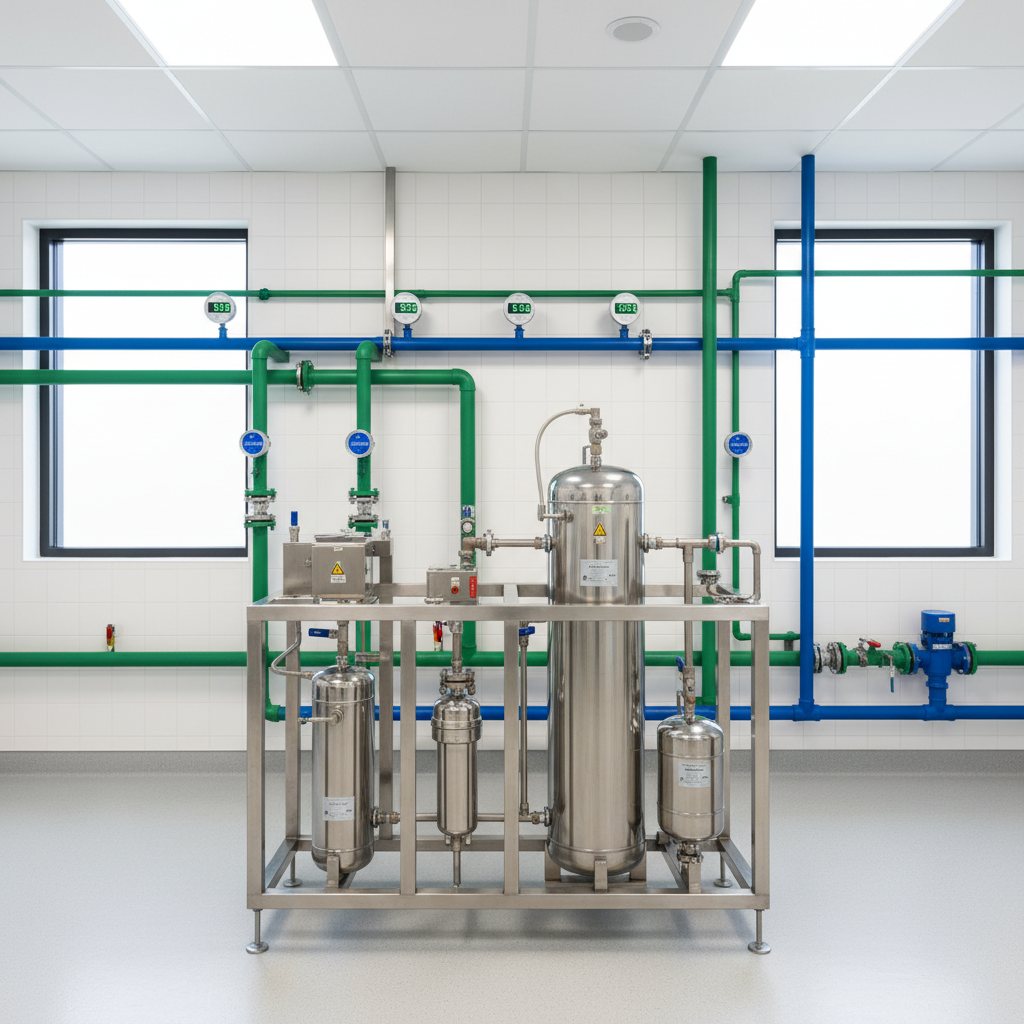
Key Components of a Hospital-Grade PSA System
A complete PSA oxygen generation system is more than just the generator itself. It's an integrated solution that must be sized and configured for your facility's specific needs. The core components include:
Dedicated Air Compressor: The "engine" of the system, providing the necessary volume and pressure of air.
Air Dryer & Filter Bank: Crucial for protecting the zeolite sieve. A refrigerated or desiccant dryer removes moisture, and a series of filters removes particulates and oil vapor.
PSA Generator Skid: The heart of the system, containing the dual towers with the zeolite molecular sieve, switching valves, and controls.
Oxygen Receiver Tank: A buffer tank that stores the produced oxygen, ensuring a smooth, consistent supply to the facility's pipeline.
Oxygen Analyzer & Monitoring: A USP-compliant sensor that continuously monitors the purity of the produced oxygen and integrates with the building's alarm system.
High-Pressure Backup System: NFPA 99 requires a backup oxygen supply. Most facilities retain a smaller liquid oxygen tank or a high-pressure cylinder manifold that automatically engages if the primary PSA system goes offline.
The Importance of Certified Installation and Maintenance
Transitioning to on-site oxygen generation is a significant infrastructure project that directly impacts patient safety. It is not a task for general contractors. The installation and validation of these systems fall under stringent medical gas standards.
Installation: The system must be installed by qualified individuals who adhere to ASSE 6010 standards, ensuring every component is correctly integrated into the existing medical gas network. Medical Testing Solutions provides expert medical gas installation performed by certified technicians.
Verification: Before a new PSA system can be brought online, it must be rigorously tested and verified by an independent, ASSE 6030 Certified Medical Gas Verifier. This medical gas verification process confirms correct installation, function, and purity, ensuring patient safety and regulatory compliance.
Maintenance: Ongoing preventative maintenance is key to the longevity and reliability of your PSA system. Regular checks on filters, compressor service, and valve function are essential. Partnering with a firm like MTS for a routine medical gas maintenance services plan protects your investment.
Take Control of Your Medical Oxygen Supply
Pressure Swing Adsorption technology offers a secure, compliant, and highly cost-effective solution for hospital oxygen supply. By generating oxygen on-site, you insulate your facility from price volatility and supply chain disruptions, enhance operational safety, and achieve a rapid return on your investment. However, the success of this transition hinges on expert planning, proper sizing, and certified installation and verification.
Medical Testing Solutions is your ASSE-certified partner in achieving oxygen independence. We provide turnkey PSA systems, medical gas certification, and a full suite of testing and maintenance services.
Ready to analyze the ROI for your facility? Contact our specialists today for a professional assessment. Call us at +1 (754) 315-1078 or request a quote online to get started.
'''
Frequently Asked Questions
PSA generators produce medical oxygen at a concentration of 93% ±3%, which is compliant with the United States Pharmacopeia (USP) standard for "Oxygen 93 Percent." This purity is safe and effective for all standard medical applications.
Yes. When installed and maintained correctly, PSA systems are fully compliant with NFPA 99, the Health Care Facilities Code. The code outlines specific requirements for monitoring, alarms, and backup supplies for on-site generation systems to ensure patient safety.
Yes. NFPA 99 mandates a backup and often an emergency reserve supply. Most hospitals that switch to PSA as their primary source will keep a smaller LOX tank or a cylinder manifold as their secondary/emergency supply, ensuring triple redundancy.
This depends on the system's capacity, which is sized based on your facility's peak demand. A system for a medium-sized hospital might fit in a space of 200-400 square feet, typically within an existing mechanical room or a small, dedicated outbuilding.
Routine maintenance typically involves quarterly or semi-annual filter changes and an annual service of the air compressor. The zeolite sieve material itself is regenerative and can last for more than 10 years with proper care.
A well-maintained PSA system is a long-term asset, with a typical operational lifespan of 15-20 years or more. The core components are robust and designed for continuous industrial use.
Request a quote for your facility
Talk with Medical Testing Solutions about your next inspection, repair or equipment request.