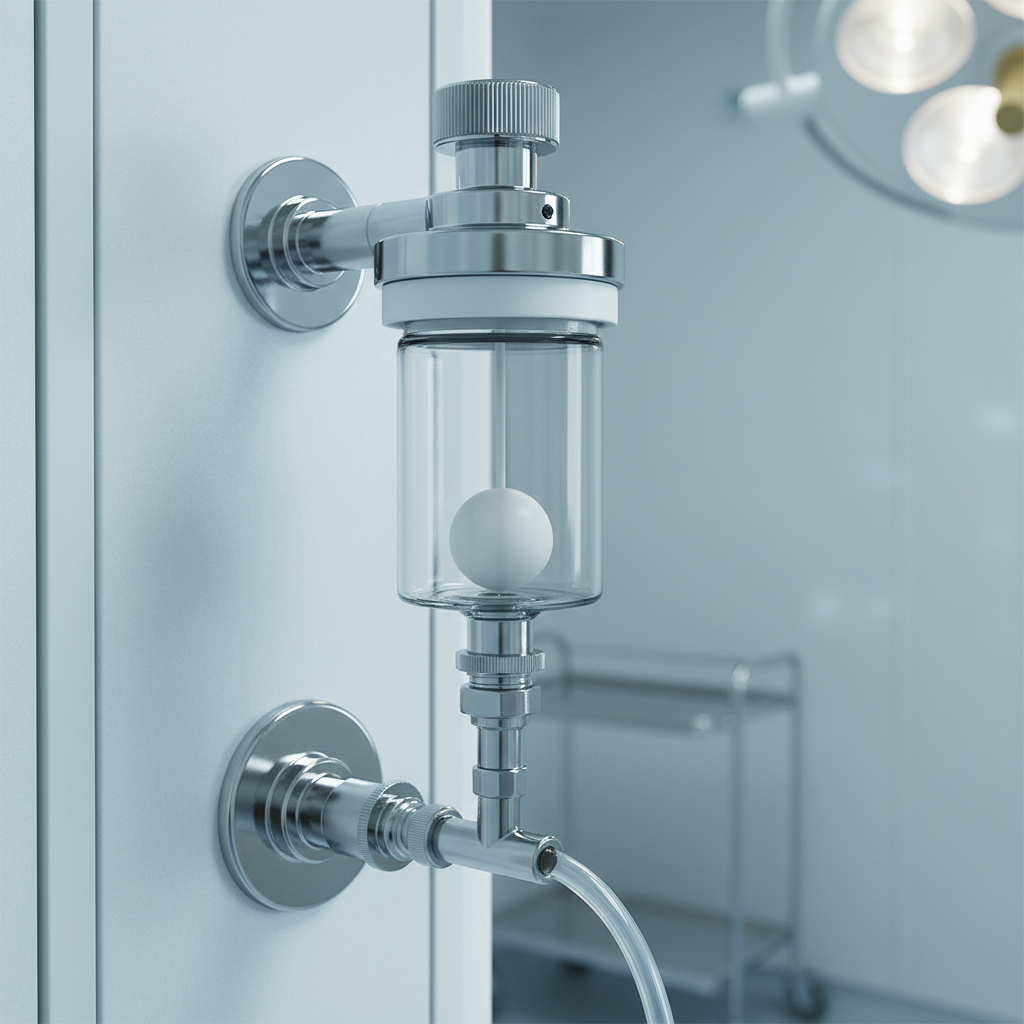
When an ASSE 6030 verifier unscrews a DISS vacuum inlet in Operating Room 3 and dark brown sludge oozes out of the wall valve body, the facility has a systemic problem that started months earlier. That biohazardous slurry did not originate inside the copper pipeline. It bypassed a full collection canister, overwhelmed a missing or fouled secondary safety jar, and got pulled straight through the regulator into the branch main at 19 inches of mercury (inHg). Proper medical vacuum trap bottle maintenance is the single physical barrier keeping blood, irrigation saline, bone fragments, and laser plume condensate out of your hospital's copper distribution network.
Once liquid enters the concealed piping behind the wall, gravity and vacuum velocity pull it toward the low-point drips, zone valve boxes, and central vacuum receivers in the mechanical room. Cleaning a contaminated surgical vacuum main requires system shutdowns, back-flushing, biocide treatment, and costly re-verification. Keeping the point-of-use trap assembly clean, sealed, and functional prevents pipeline biofouling before it starts.
How Liquid Carryover Breaches the Medical Vacuum Pipeline
Operating suites generate massive volumes of fluid waste during orthopedic lavages, trauma cases, and general surgery. Clinical staff rely on primary disposable suction canisters (typically 1,500 mL to 3,000 mL liners) fitted with hydrophobic shutoff filters inside the lid. In theory, when fluid reaches the top of the disposable liner, the float or hydrophobic disk blocks airflow and stops suction.
In practice, foaming blood, high-protein exudates, and rapid aerosolization defeat disposable canister lids more often than clinical engineering teams realize. When an orthopedic team runs high-volume pulsed lavage or links four canisters in tandem on a mobile suction tree, conductive foam gets sucked through the primary filter before the mechanical float can seat. If the facility plugged the suction regulator directly into the wall inlet without an intermediate overflow safety trap bottle, that liquid enters the regulator diaphragm immediately.
Within seconds, fluid pushes past the regulator internals and enters the wall terminal unit. Under NFPA 99 (Health Care Facilities Code) Chapter 5 requirements, medical-surgical vacuum systems must maintain at least 12 inHg at the most distant inlet during peak calculated demand, which means main trunks usually operate between 15 and 22 inHg. At that negative pressure differential, fluid aspirated into a 1/2-inch Type L copper drop moves rapidly into horizontal branch piping, coating the interior pipe walls in proteinaceous biofilm and corroding brass zone valve seats.
Anatomy of an Operating Suite Vacuum Trap Assembly
A compliant surgical vacuum point-of-use setup separates collection from pipeline protection. The primary canisters sitting on the floor carousel or anesthesia boom collect surgical waste. The overflow safety trap bottle, Mounted directly below the vacuum regulator or integrated into the wall slide bracket, exists strictly as a fail-safe interceptor.
Look closely at a standard 400 mL polycarbonate or glass safety trap assembly (such as those paired with Ohmeda, Chemetron, or Amico continuous suction regulators). Four specific mechanical components determine whether the trap stops fluid or fails under vacuum load:
- The Float Ball and Cage: Suspended beneath the trap cap, the lightweight polypropylene float rises when liquid enters the jar, pressing up against a contoured elastomer float seat to physically block the vacuum path to the regulator.
- The Hydrophobic Micron Filter: Many high-flow surgical traps include a replaceable 0.3-micron bacterial/hydrophobic cartridge behind the mechanical float seat to block aerosolized mist and surgical smoke residue.
- The Cap O-Ring Seal: A silicone or Buna-N perimeter gasket seated inside the threaded cap assembly that maintains vacuum integrity between the reusable bottle and the metal or composite head.
- The Splash Deflector Tube: The inlet baffle inside the cap that directs incoming liquid downward toward the bottom of the jar rather than letting high-velocity droplets splash directly across the vacuum exhaust port.
If the float ball gets sticky from dried Betadine or saline crystals, it sticks to the bottom of the cage. When a primary canister overflows, fluid fills the trap jar, submerges the stuck float, and shoots straight into the wall outlet.
If your facility is already experiencing slow vacuum draw or fouled wall inlets, schedule professional medical gas maintenance services to inspect your terminal units and regulators before contamination spreads into the main riser.
Preventative Medical Vacuum Trap Bottle Maintenance Schedules
Waiting until an operating room reports "weak suction" during a procedure guarantees an unplanned clinical delay. In our field inspections at Medical Testing Solutions, roughly 30 percent of underperforming surgical vacuum inlets trace back to cracked trap jars, missing cap O-rings, or clogged hydrophobic discs rather than central pump issues.
Assigning clear maintenance ownership solves the problem. In many hospitals, the trap bottle sits in an operational gray zone: environmental services (EVS) avoids touching the regulator between cases, nursing assumes biomedical engineering services the trap, and facilities management only looks from the wall faceplate backward. You need a unified maintenance protocol divided by timeframe.
| Maintenance Interval | Responsible Team | Required Inspection & Action Items | Pass / Fail Criteria |
|---|
| Between Surgical Cases | OR Turnover / Periop Staff | Inspect safety trap jar for liquid accumulation; check primary liner lines. | Jar must be 100% dry and empty prior to next case. |
| Weekly | Biomedical / Clinical Eng | Remove jar, inspect cap O-ring for flattening, test float ball movement inside cage. | Float rises freely with zero sticking; O-ring is supple and intact. |
| Quarterly | ASSE 6040 Maintenance Tech | Disassemble trap head, replace hydrophobic filter element, run occlusion leak test at 20 inHg. | Holds static vacuum with zero gauge drop over 15 seconds; clean internal passages. |
| Annually | ASSE 6030 / 6040 Specialist | Verify wall inlet flow (SCFM) and static vacuum per NFPA 99; replace crazed polycarbonate jars. | Meets minimum 3.0 SCFM flow per OR inlet and holds ≥12 inHg dynamic pressure. |
Why this matters for compliance: Under NFPA 99 Section 5.1.14 and The Joint Commission utility system standards (EC.02.05.09), healthcare facilities must maintain a documented inventory and preventative maintenance program for all medical gas and vacuum terminal assemblies. A clogged or leaking vacuum trap directly reduces dynamic flow rate (SCFM) at the patient interface, causing the room to fail its annual medical gas inspections.
Step-by-Step Cleaning, Decontamination, and Sterilization
When liquid actually trips the overflow safety trap, you cannot simply dump the jar in the utility sink and screw it back onto the regulator. Once biohazardous fluid enters the trap bottle, the entire head assembly, float cage, and regulator output port must be treated as contaminated.
First, close the vacuum regulator completely and disconnect the assembly from the wall DISS or quick-connect terminal unit while wearing appropriate personal protective equipment. Unscrew the collection jar carefully over a biohazard disposal basin. Dispose of the liquid waste according to facility infectious waste protocols.
Next, disassemble the trap cap. Pull the float cage off its retaining boss, remove the float ball, and extract the main perimeter O-ring with a non-marring plastic pick. Never use a metal screwdriver to pry out the O-ring, scratching the composite sealing groove creates a permanent vacuum leak path. Discard any disposable hydrophobic filter wafer inside the cap.
Wash the jar, cap, float cage, and float ball in a neutral-pH enzymatic detergent solution to break down coagulated blood proteins. Rinse thoroughly with warm distilled water. Before sending the components to Central Sterile Processing (CSP) for autoclaving, verify the material tolerances stamped onto the bottom of the bottle:
- Polycarbonate (PC) Jars: Clear and rigid, but prone to chemical crazing and spiderweb cracking if exposed to harsh quaternary ammonium compounds, ketones, or standard 270°F steam sterilization cycles. Most standard polycarbonate jars tolerate cold chemical disinfection or low-temperature hydrogen peroxide plasma only.
- Polysulfone (PSU) Jars: Recognizable by their distinctive amber/honey tint, polysulfone bottles withstand repeated steam autoclaving up to 275°F (135°C) without losing structural integrity.
- Borosilicate Glass Jars: Chemically inert and fully autoclavable, though heavier and requiring elastomeric bumper rings to prevent breakage in high-traffic trauma bays.
After drying, reassemble the float cage, press a fresh silicone O-ring into the cap channel, and thread the jar onto the cap hand-tight. Do not over-torque the bottle; crushing the gasket deforms the rubber and causes vacuum whistling during surgery.
Diagnosing Common Vacuum Trap Failures in the Field
During routine medical gas verification and troubleshooting calls, technicians from Medical Testing Solutions see the same four mechanical failures repeatedly across surgical centers and hospital OR suites. Knowing how to diagnose them saves hours of tearing into wall chases.
1. The "Phantom" Low Vacuum Alarm or Weak Suction
A surgeon complains of zero suction at the Yankauer tip even though the wall gauge reads 19 inHg when the regulator is turned off. As soon as you open the regulator knob, the gauge needle plummets to zero. Nine times out of ten, the hydrophobic filter wafer inside the trap bottle cap took a splash of salineDuring the previous case and swelled shut. The wall inlet is fine; the saturated filter is acting like a solid plug.
2. Hairline Stress Cracks on the Bottle Thread Neck
Polycarbonate jars degrade when wiped down daily with aggressive surface disinfectant wipes. Microscopic craze lines form along the upper threaded neck. Under 20 inHg of negative pressure, air pulls inward through these hairline cracks. Because the leak occurs downstream of the regulator gauge, the gauge displays lower available vacuum, and the central vacuum pumps in the basement run longer cycles to compensate for constant room air ingestion.
3. Inverted Float Balls
On older cylindrical float designs (as opposed to spherical balls), reassembling the float upside down after cleaning prevents the tapered elastomer tip from seating against the upper orifice. The trap appears complete on visual inspection, yet provides zero shutoff protection during a fluid surge.
4. Cross-Threaded Cap Heads
When staff rush to swap a trap bottle mid-procedure, cross-threading the wide-mouth jar onto the anodized aluminum or brass cap tilts the sealing face by a fraction of a millimeter. You can test for this immediately: turn the regulator to maximum, pinch the patient suction tubing shut with your fingers, and watch the regulator gauge. If the needle does not match full line vacuum within three seconds, or if you hear a faint hiss at the bottle neck, the cap seal is leaking.
Protecting Downstream Piping and Central Vacuum Pumps
Why do ASSE 6010 installers and ASSE 6040 maintenance personnel care so deeply about a $45 plastic bottle in the operating room? Because the downstream mechanical consequences of bypassing that trap scale into tens of thousands of dollars.
Per NFPA 99 Section 5.1.3.7, central medical-surgical vacuum systems rely on dual or multiplex vacuum pumps (liquid ring, claw, or oil-sealed rotary vane), receiver tanks, and bacterial exhaust filters. While horizontal piping mains are pitched toward low-point drain legs during medical gas installation, copper tubing is not designed to transport surgical liquids.
When blood and saline bypass the OR trap bottle, three things happen inside the infrastructure:
- Terminal Unit Fouling: The secondary check valve and primary seal inside the wall inlet accumulate sticky organic residue. When a technician unplugs the regulator, the internal check valve fails to snap shut cleanly, creating an audible vacuum leak at the wall plate.
- Zone Valve Seat Degradation: Fluid settles into the horizontal branch lines and reaches the three-piece brass ball valve inside the corridor zone valve box. Dried saline and biological debris score the PTFE seats when the valve is cycled during emergency drills or repairs.
- Biohazard Exposure for Maintenance Personnel: Under NFPA 99 and OSHA bloodborne pathogen rules, any liquid drained from a medical vacuum receiver tank or low-point drip leg must be handled as infectious waste. Preventing carryover at the surgical wall inlet keeps the main piping dry and protects the technicians servicing your central mechanical room.
Additionally, operating rooms with surgical lasers and electrosurgical units (ESUs) frequently route smoke evacuators or fluid-smoke tandem manifolds into the vacuum system. Without rigorous trap bottle maintenance and inline ULPA/charcoal pre-filtration, sticky carbonaceous smoke particulates coat the trap float and builds up gummy deposits inside the DISS inlet stems. Facilities looking to upgrade worn regulators, replace crazed polycarbonate trap jars, or stock OEM float repair kits can browse our products for fully compliant point-of-use vacuum hardware.
Building an ASSE-Compliant Vacuum Maintenance Protocol
Keeping your surgical suites compliant doesn't require reinventing your clinical engineering workflow. It requires eliminating ambiguity around who inspects the safety trap and when damaged components get pulled from service.
Start by auditing every operating room, cystoscopy suite, labor and delivery room, and emergency trauma bay in your facility. Verify that every single vacuum regulator plugged into a wall inlet or ceiling column has an intact, dedicated overflow safety trap bottle installed between the regulator and the disposable collection canister line. Standardize your fleet on autoclavable polysulfone jars where possible so staff don't accidentally destroy polycarbonate bottles in the steam sterilizer.
When internal clinical engineering teams are stretched thin, partnering with an accredited testing provider closes the gap. Medical Testing Solutions provides turnkey preventative maintenance, terminal unit repair, flow testing, and full system evaluations conducted by credentialed ASSE 6030 verifiers and ASSE 6040 maintenance specialists. Whether you need replacements for fouled OR vacuum inlets, routine medical gas certification, or emergency decontamination of a flooded vacuum branch line, our team delivers exact code compliance without disrupting your surgical schedule. Contact us today to request a quote or call (754) 315-1078 to speak directly with a certified medical gas specialist.