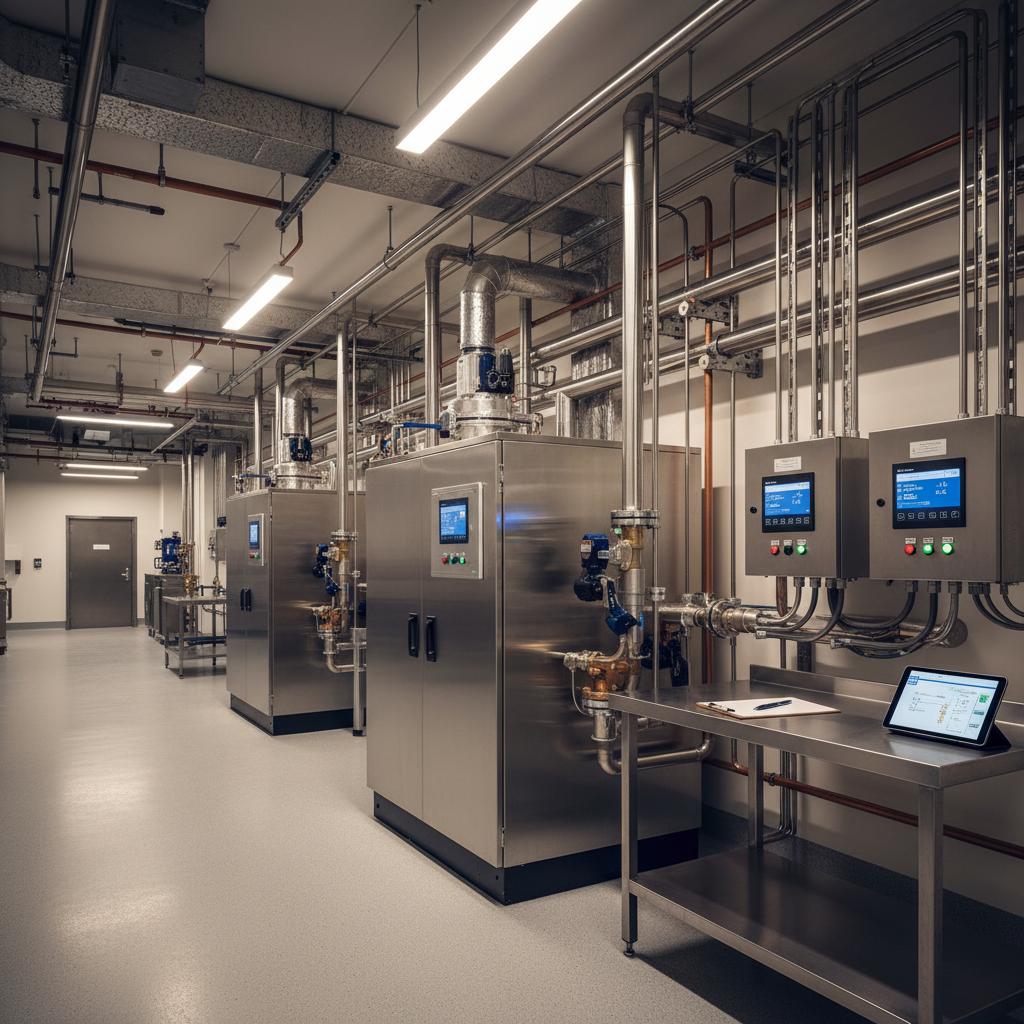
Navigating healthcare facility compliance can feel overwhelming, especially when patient safety relies directly on the integrity of life-support infrastructure. NFPA 99: Health Care Facilities Code establishes mandatory criteria to minimize the hazards of fire, explosion, and electricity in patient care spaces. Central to this standard is the design, installation, performance, and maintenance of piped medical gas and vacuum systems.
In this comprehensive guide, ASSE-certified professionals break down NFPA 99 compliance from the ground up. You will learn how system risk categories (Categories 1 through 4) dictate engineering controls, explore critical Chapter 5 medical gas piped system requirements, understand source equipment criteria, and navigate third-party testing mandates. Whether managing a major hospital expansion, operating an ambulatory surgery center, or preparing for an upcoming accreditation audit, this guide provides the technical roadmap required to ensure uninterrupted patient safety and full regulatory adherence.
What Is NFPA 99 and Why Is It Mandatory?
The National Fire Protection Association’s NFPA 99 is not merely a recommended guideline; it is an enforceable standard adopted across the United States. Federal agencies such as the Centers for Medicare & Medicaid Services (CMS), state departments of health, and accreditation organizations like The Joint Commission (TJC) mandate adherence to NFPA 99.
Historically, NFPA 99 applied prescriptive rules based primarily on facility occupancy type (e.g., hospital vs. clinic). However, modern editions follow a strictly risk-based approach. The vulnerability of the patient and the potential consequence of equipment failure dictate the engineering safeguards, backup redundancies, and testing frequencies required for every medical gas and vacuum system.
Why this matters for compliance: Failing to align medical gas systems with the appropriate NFPA 99 risk category creates severe audit findings during Joint Commission or CMS surveys. More critically, non-compliant cross-connections, pressure failures, or contaminated pipeline supplies can result in immediate, catastrophic patient harm.
At Medical Testing Solutions, our specialists regularly interface with facility directors, mechanical engineers, and compliance officers to bridge the gap between technical code language and operational facility management.
Understanding NFPA 99 Risk Categories (Categories 1–4)
NFPA 99 Chapter 4 defines four distinct risk categories. The healthcare facility governing body must document an engineering risk assessment to categorize every building space and piping branch before system design or modification begins.
| Diagram text |
|, |
| NFPA 99 RISK CATEGORIZATION |
| Category 1 Failure causes major injury or death to patients/staff |
| Category 2 Failure causes minor injury to patients or staff |
| Category 3 Failure terminates procedure but causes no injury |
| Category 4 Failure has no impact on patient care or safety |
Category 1 Medical Gas Systems
Category 1 applies where system failure can directly result in major injury or death to patients or caregivers. These are life-support systems serving critical care units, operating rooms, intensive care nurseries, and emergency trauma suites. Category 1 piping requires full operational redundancy:
- Duplexed or triplexed source equipment (compressors, vacuum pumps).
- Reserve gas manifolds or emergency oxygen supply connections (EOSC).
- Dual line pressure regulators.
- Continuous monitoring via master and area alarm systems.
Category 2 Medical Gas Systems
Category 2 applies where system failure causes minor injury to patients or caregivers. Common in outpatient surgical facilities or endoscopy suites where procedures can be rescheduled without life-threatening consequences, Category 2 systems require high reliability but may allow slightly lower redundancy parameters than Category 1 systems.
Category 3 Medical Gas Systems
Category 3 systems are defined as those where system failure terminates a procedure or causes patient discomfort, but poses zero threat of injury. Common examples include diagnostic dental clinics and private medical practice procedure rooms.
Category 4 Medical Gas Systems
In Category 4 environments, gas delivery failure has no clinical impact on patient safety. These systems are largely limited to basic physical therapy rooms, research laboratories, or general building utilities operating outside direct patient contact areas.
Risk Categories and Technical Requirements Comparison
To visualize how these risk categories dictate physical hardware and system engineering, review the breakdown below:
| Feature / Requirement | Category 1 | Category 2 | Category 3 | Category 4 |
|---|
| Typical Clinical Setting | Operating Rooms, ICUs, Trauma, Cath Labs | Outpatient Surgery, Endoscopy, Procedure Rooms | General Dental, Diagnostic Clinics | Physical Therapy, Non-clinical Labs |
| Potential Consequence of Failure | Major injury or death | Minor injury | Discomfort / aborted procedure | No patient impact |
| Source Redundancy | Mandatory (N+1 rule for compressors/vacuum) | Mandatory (N+1 rule) | Dual source often required, partial redundancy | Single source permitted |
| Reserve Manifold / EOSC | Required for bulk systems | Required where bulk oxygen is utilized | Not required | Not required |
| Alarm Infrastructure | Master (dual location) + Area alarms | Master + Area alarms | Local alarms permitted in select layouts | Not required |
| Verification Standard | ASSE 6030 Comprehensive | ASSE 6030 Comprehensive | Modified ASSE 6030 protocol | Visual/Functional check |
| Annual Inspection Mandate | Full pipeline & source testing | Full pipeline & source testing | Annual source & outlet check | Periodic maintenance |
Chapter 5 Breakdown: Piped Medical Gas and Vacuum Systems
Chapter 5 is the largest and most technically rigorous portion of NFPA 99. It governs the design, installation, performance, testing, and maintenance of all piped medical gas infrastructure.
1. Medical Air Compressor Systems (NFPA 99 § 5.1.3.6)
Medical air is classified as an active drug by the FDA and must meet strict purity standards. Key Category 1 medical air compressor requirements include:
- Duplex Source: Multiple compressors engineered so that if the largest unit fails, the remaining unit(s) handle 100% of peak calculated demand.
- Intake Air Quality: Intakes must be located outdoors, minimum 25 feet away from all engine exhausts, building exhausts, sewer vents, and medical vacuum discharges, and at least 10 feet from doors or operable windows.
- Treatment Train: Must feature dual desiccant or membrane dryers, dual filtration banks (particulate and coalescing), and pressure reducing regulators.
- Continuous Monitoring: Carbon monoxide (CO) monitors and high dew point monitors must alarm locally and broadcast to master alarm panels before moisture or toxic gas reaches distribution piping.
2. Medical Vacuum and WAGD Systems (NFPA 99 § 5.1.3.7 & § 5.1.3.8)
Medical-surgical vacuum removes fluids and debris during clinical procedures, while Waste Anesthetic Gas Disposal (WAGD) extracts exhaled halogenated gases from anesthesia circuits.
- Vacuum pumps must satisfy the N+1 redundancy rule.
- Exhaust must discharge outdoors at least 30 feet from any mechanical air intake.
- Where anesthesia machines operate, active WAGD lines or coordinated scavenging systems must safeguard surgical personnel against chronic vapor exposure. Facilities implementing waste scavenging can further validate staff safety through routine WAG chemical vapor monitoring.
3. Cylinder Manifolds and Bulk Gas Delivery
High-pressure cylinder manifolds (Oxygen, Nitrous Oxide, Carbon Dioxide) must feature automatic changeover mechanisms. Cryogenic liquid bulk systems require:
- A secondary reserve supply capable of meeting average facility demand for a designated duration (typically 24 to 48 hours).
- An exterior Emergency Oxygen Service Connection (EOSC) to permit connection of a temporary liquid or high-pressure mobile tanker during main tank failure or maintenance.
4. Zone Valves, Area Alarms, and Outlets
- Zone Valve Boxes (ZVBs): Must be located outside the rooms they control, positioned within immediate line of sight, and clearly labeled with the specific gas and zones served.
- Area Alarm Panels: Placed at nurses' stations or clinical monitoring desks in critical care areas. Alarms must signal a 20% variance above or below normal line pressure (e.g., ±10 psig on a standard 50 psig delivery system).
- Outlets and Inlets: Station outlets must be gas-specific (DISS or Quick-Connect) to mechanically prevent accidental cross-connections.
Installation Best Practices: ASSE 6010 Protocols
Achieving NFPA 99 compliance begins long before gas flows to patients. Proper piping assembly prevents contamination and fire hazards within pure oxygen lines.
Under NFPA 99 § 5.1.10, all medical gas piping must be installed by personnel certified to ASSE 6010 (Medical Gas System Installers). Key rules include:
- Piping Material: Only hard-drawn, seamless copper tube conforming to ASTM B819 (Type K or L), factory-cleaned and capped for medical gas service, may be used.
- Continuous Nitrogen Purge: During brazing, the interior of the copper pipe must be purged with oil-free dry nitrogen to prevent the formation of cupric oxide scale inside the pipe. Scale dislodged by gas flow will clog delicate ventilator valves, contaminate check valves, and degrade anesthesia machines.
- Brazing Alloys: Joints must be brazed using a filler metal having a melting point exceeding 1000°F (538°C), typically BCuP series without flux (except on copper-to-brass joints where approved flux is meticulously controlled).
For facility managers executing construction or remodeling, selecting qualified contractors certified in medical gas installation eliminates costly rework during final verification.
Independent Verification: The ASSE 6030 Imperative
A medical gas installation cannot be placed into service until it undergoes complete third-party system verification. NFPA 99 § 5.1.12 dictates that this verification must be executed by an independent agency employing technicians certified to ASSE 6030 (Medical Gas System Verifiers).
| Diagram text |
|, |
Critical Verification Steps:
- System Standing Pressure Test: Lines are pressurized with oil-free dry nitrogen to 20% above normal operating pressure for 24 hours to prove leak integrity.
- Cross-Connection Testing: Each gas piping system is pressurized individually while other systems remain open to atmospheric pressure. Every outlet and inlet is physically checked to ensure no cross-piping exists.
- Piping Purge and Particulate Checks: High-flow discharges through each station outlet ensure no construction debris or particulate remains trapped in the lines.
- Purity Testing: Gas samples are analyzed at the furthest outlets to verify absence of total hydrocarbons, moisture (dew point), carbon monoxide, halogenated solvents, and particulate matter.
- Operational Flow Testing: Outlets are tested under dynamic flow conditions to verify line sizing and pressure drops meet design limits.
- Alarm Verification: Every alarm sensor (switches and transducers) must be physically tripped to confirm both local and remote annunciators display correct visual and audible warnings.
Medical Testing Solutions delivers turnkey medical gas verification services nationwide, providing facility directors with fully documented, audit-ready compliance packages.
Inspection, Testing, and Maintenance (ITM) Frequencies
Compliance does not end when the certificate of occupancy is issued. NFPA 99 Chapter 5 requires active healthcare facilities to establish an ongoing inspection, testing, and maintenance (ITM) program.
Why this matters for compliance: Joint Commission standard EC.02.05.09 requires facilities to inspect, test, and maintain piped medical gas systems, maintaining documented inventory and test logs. Failure to produce annual inspection records can immediately trigger a Requirement for Improvement (RFI).
| Diagram text |
|, |
| RECOMMENDED ITM FREQUENCY SCHEDULE |
| System Component Frequency Mandated Action |
| Station Outlets/Inlets Annually Leak test, latching check |
| Area Alarm Panels Annually Signal trip, sensor test |
| Master Alarm Panels Annually Dual-channel relay check |
| Source Equipment (Pumps) Semi-Annual/Annual Filter swap, oil check, run |
| Medical Air Dew Point/CO Continuous/Annual Sensor calibration, baseline |
| Zone Valve Boxes Annually Visual inspection, operation |
Outlets and Inlets
Every station outlet and inlet must be tested at least annually for structural integrity, positive latching, mechanical wear, dynamic pressure drop, and leakage. Faulty seals waste thousands of dollars annually in lost cryogenic gases and force vacuum pumps to cycle continuously.
Alarm Panels and Sensors
Master alarm panels (which must be located in two separate monitoring spaces, such as an engineering control room and a 24-hour security office or nurses' station) and area alarm panels require annual functional verification. Sensors must be calibrated or tested against calibrated master gauges.
Scheduling routine annual medical gas inspections and enlisting qualified technicians for ongoing medical gas maintenance services protects clinical staff, mitigates equipment downtime, and maintains inspection readiness 365 days a year.
Specialized Environments: Dental, Ambulatory, and Beyond
NFPA 99 encompasses requirements for various outpatient and non-acute clinical spaces that differ from general acute-care hospital mandates.
Dental Surgery and Sedation Clinics
Dental facilities utilizing nitrous oxide conscious sedation fall under Category 3 or Category 2 requirements depending on the depth of sedation administered. Nitrous oxide and oxygen delivery heads must be routinely inspected, calibrated, and maintained to ensure patient dosing accuracy and prevent operatory ambient gas contamination. Facilities relying on inhalation analgesia systems require routine dental flowmeter repair and calibration to maintain flow accuracy and prevent gas leakage.
Ambulatory Surgery Centers (ASCs)
ASCs are frequently categorized under Category 1 or Category 2 rules. Due to compact mechanical spaces, ASCs often utilize packaged skid systems for medical air and vacuum. These systems require precise environmental ventilation, reliable acoustic isolation, and dedicated electrical circuits tied to emergency generator backup systems.
Other Essential NFPA 99 Testing: Electrical and Wet Locations
While Chapter 5 focuses heavily on gas delivery, NFPA 99 also governs other life-safety systems within patient environments, most notably electrical infrastructure in wet procedure locations (NFPA 99 Chapter 6).
In operating rooms and specialized procedure suites where pooled liquids can compromise electrical safety, isolated power systems (IPS) prevent power interruption and protect patients against electrical macroshock. Isolated power systems utilize an isolation transformer and an integrated Line Isolation Monitor (LIM).
The LIM continuously measures leakage impedance from line to ground and trips an alarm if leakage current exceeds threshold limits (typically 5 milliamperes). Under NFPA 99 § 6.3.3.3, Line Isolation Monitors must be tested periodically to verify visual/audible alarms and calibration thresholds. Facilities managing operating suites can ensure electrical safety compliance through dedicated line isolation monitor testing.
Step-by-Step NFPA 99 Compliance Checklist
To ensure your facility meets all current standards, execute the following phased compliance workflow:
Perform a Risk Assessment
Assemble clinical leadership, facility engineering, and safety teams to classify every care area into Category 1, 2, 3, or 4 per NFPA 99 Chapter 4 guidelines. Document this assessment formally.
Audit Source Equipment Redundancies
Review mechanical spaces. Verify that medical air compressors and medical vacuum pumps meet N+1 operational redundancy standards. Ensure medical air intakes and vacuum exhausts comply with minimum separation clearances.
Verify Alarm Transmission Pathways
Confirm that all source signals (low pressure, dew point, carbon monoxide, compressor trip) annunciate correctly at both primary and secondary master alarm locations.
Inspect Master and Area Valves
Check every zone valve box. Ensure labeling accurately identifies the specific rooms and gases controlled. Verify that valves operate smoothly and gauges read within operating ranges (e.g., 50–55 psig for medical air and oxygen; 160–180 psig for nitrogen).
Schedule Annual Third-Party Inspections
Partner with an ASSE 6040 or ASSE 6030 certified organization to test every station outlet, verify purity, inspect manifolds, and produce audit-ready compliance reports.
Establish Preventive Maintenance Logs
Maintain comprehensive records of filter changes, compressor belt adjustments, pump oil changes, sensor calibrations, and system repairs for all accreditation bodies.
Common NFPA 99 Violations and How to Prevent Them
During compliance audits, our field technicians frequently encounter recurring deficiencies:
- Missing or Outdated Risk Assessments: Facilities often operate under legacy assumptions without maintaining a documented Chapter 4 risk evaluation signed by clinical directors.
- Blocked Zone Valve Boxes: NFPA 99 requires zone valve boxes to remain immediately accessible in an emergency. Storing crash carts, linen hampers, or IV poles in front of valve boxes constitutes a serious citation.
- Improper Intake Clearances: Remodeling projects on hospital rooftops often place new exhaust vents, HVAC economizers, or cooling towers within 25 feet of the medical air intake, compromising delivery air purity.
- Unverified Piping Alterations: Relocating or adding a single patient headwall outlet without scheduling an independent ASSE 6030 verification violates NFPA 99 § 5.1.12. All system modifications, regardless of size, require verification before clinical use.
Partner with Medical Testing Solutions for NFPA 99 Compliance
Maintaining medical gas compliance protects your patients, safeguards your staff, and ensures your facility sails through rigorous Joint Commission, CMS, and state audits.
Medical Testing Solutions is an ASSE-certified authority in medical gas systems. Headquartered in Fort Lauderdale, Florida, our team provides complete nationwide lifecycle solutions, from new system medical gas verification and installations to comprehensive annual medical gas inspections and equipment distribution.
Ensure your medical gas systems are 100% compliant. Contact Medical Testing Solutions today or call our engineering team at (754) 315-1078 to schedule an inspection, request a project quote, or discuss your facility’s compliance needs.