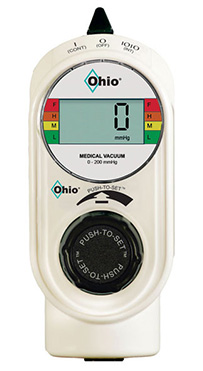
Medical vacuum regulators are indispensable components of any hospital, ambulatory surgery center (ASC), or specialized dental office. From clearing surgical fields of fluids to maintaining gastric drainage and securing open airways, healthcare providers rely on uninterrupted, precise suction. However, these devices act as the critical interface between the facility's central vacuum system and the patient. Without a strict maintenance schedule, they are prone to mechanical degradation, gauge inaccuracies, and biological contamination.
A malfunctioning vacuum regulator poses severe clinical risks, including pulmonary tissue damage from over-suctioning or asphyxiation from inadequate clearance. To prevent these sentinel events, biomedical engineers and facility managers must implement a rigorous preventative maintenance (PM) schedule. This guide details the comprehensive maintenance requirements for medical vacuum regulators to ensure clinical efficacy and strict compliance with national standards.
The Regulatory Framework: NFPA 99 and ISO 10079
Establishing a proactive maintenance schedule begins with understanding the central codes that govern medical gas and vacuum systems. The National Fire Protection Association (NFPA) 99 establishes the baseline criteria for healthcare facilities, mandating that all piped medical gas and medical-surgical vacuum systems act flawlessly. Specifically, NFPA 99 dictates regular testing and documentation of all source equipment, alarms, and patient-terminal hardware, including vacuum regulators.
Simultaneously, the International Organization for Standardization (ISO) 10079 outlines the basic safety and essential performance parameters explicitly for medical suction equipment. It dictates thresholds for flow rates, vacuum pressures, and fail-safe mechanisms.
Coupled with the American Society of Sanitary Engineering (ASSE) 6030 and 6040 standards, which certify the technicians who inspect and maintain these systems systems, facilities must adopt a holistic approach. Local clinical protocols often assign daily checks to nursing staff, while biomedical departments and certified third-party vendors handle semi-annual functional testing and annual calibration.
Daily and Weekly Visual Inspections
Routine visual inspections act as the first line of defense against catastrophic failure. While biomedical teams cannot realistically check hundreds of wall suction regulators daily, floor nurses and respiratory therapists should be trained to perform basic evaluations before patient use.
During the weekly rounds, biomedical staff should randomly sample equipment across high-acuity wards like Intensive Care Units (ICUs) and operating theaters. Consider the following critical checkpoints:
Canister and Trap Evaluation: Ensure the safety trap and collection canisters are properly connected, uncracked, and empty. Fluids entering the regulator body are the leading cause of premature failure.
Gauge Integrity: Inspect the analog or digital gauge faceplate. Any cracked glass or damaged housing necessitates immediate removal, as it compromises the vacuum seal and gauge accuracy.
Tubing Connections: Examine the DISS (Diameter Index Safety System) or quick-connect fittings. The regulator should seat firmly into the wall outlet without hissing.
Control Checks: Rotate the vacuum adjustment knob. It should move smoothly without excessive resistance or "dead spots."
Semi-Annual Performance and Flow Testing
Every six months, biomedical engineering teams must perform structured, intermediate testing on all vacuum equipment. This semi-annual schedule bridges the gap between daily visual checks and heavy annual maintenance. The goal during this phase is to confirm that the regulator responds correctly and maintains accurate pressure under clinical loads.
For a proper functional bench test, connect the regulator to a verified vacuum source (ideally 21 inHg or greater) and complete the following steps:
Static Suction Test: Occlude the suction port fully and turn the control knob to its maximum setting. Allow the gauge to stabilize. The unit should achieve near-source vacuum levels with no audible leaks.
Pressure Drop Test: Continue to occlude the port, then shut off the source vacuum. Observe the gauge, a rapid drop in pressure indicates a leaky O-ring, a compromised diaphragm, or debris caught in the control valve.
Low Vacuum Sensitivity: Adjust the knob to a low suction range (e.g., 20-40 mmHg). Verify that the regulator can hold this delicate pressure without fluctuating, which is a critical necessity for pediatric care and sensitive tissue drainage.
In-line Filter Replacement: If the regulator utilizes an external hydrophobic filter, it should be preemptively replaced every six months to prevent flow restriction.
Annual Preventative Maintenance and Calibration
The centerpiece of a medical vacuum regulator maintenance schedule is the annual overhaul. Over twelve months of heavy usage, internal components such as springs, O-rings, and diaphragms fatigue. Consequently, the gauge reading may drift from the actual delivered vacuum, posing a direct threat to patient safety. Annual maintenance involves both mechanical refurbishment and exact calibration.
To perform an annual PM, technicians must utilize a certified, NIST-traceable digital vacuum and flow meter to verify the accuracy of the regulator's gauge. The accepted tolerance usually falls within +/- 5% of full scale. If the analog gauge reads 100 mmHg but the referenced meter measures 130 mmHg, the regulator requires recalibration or a gauge replacement.
Internal maintenance often involves completely disassembling the unit. Biomedical teams should replace worn elastomeric parts, specifically the primary stem O-ring and the backplate gasket. The internal mechanism should be cleared of dried debris or aspirated aerosolized fluids using manufacturer-approved, non-solvent cleaners. Once reassembled, the unit must pass a final flow-rate test to confirm it delivers the precise liters-per-minute (LPM) suction required by ISO 10079 guidelines.
Differentiating Continuous and Intermittent Regulator Maintenance
When establishing your preventative maintenance protocols, it is vital to discern between continuous and intermittent models. Their internal architecture varies drastically, which alters your maintenance checklist.
Continuous Regulators: Designed for airway management and surgical procedures, these supply an uninterrupted vacuum. Their maintenance revolves heavily around max flow capacity and leak prevention.
Intermittent Regulators: Used predominantly for nasogastric (NG) drainage, these units cycle on and off automatically. Constant, uninterrupted suction on gastric mucosa can cause irreversible tissue damage, necrosis, or ulcerations.
Key Specification Comparison & Checklist:
Operating Mechanism: Continuous models utilize a single main flow control valve; Intermittent models feature a secondary pneumatic timing logic module.
Maintenance Focus: For intermittent models, biomeds must time the cycling rate. A standard factory cycle is approximately 15 seconds "ON" and 8 seconds "OFF" (though some are adjustable).
Flow Rates: Continuous regulators typically exceed 80 LPM of free airflow. Intermittent regulators max out much lower during the "ON" cycle, often delivering only 8-10 LPM.
Failure Modes: Continuous devices fail through O-ring deterioration and gauge damage; Intermittent devices fail due to clogged pneumatic timing ports which cause the unit to stall in the "ON" position.
Biomedical teams must prioritize testing the timing module during semi-annual checks. If an intermittent regulator stalls and delivers uninterrupted suction, it severely endangers the patient.
Troubleshooting Common Vacuum Regulator Failures
Despite the most robust maintenance schedules, failure occurs. Quickly mapping symptoms to specific hardware faults accelerates repair times and reduces clinical downtime. Maintainers should refer to the following troubleshooting points:
Inability to Reach High Suction: If the regulator cannot reach the wall source vacuum maximum (e.g., stopping at 200 mmHg instead of 500+ mmHg), suspect a torn internal diaphragm or a cracked gauge housing.
Suction Does Not Drop to Zero: When the adjustment knob is turned completely off, but suction is still felt at the patient port, the primary control valve seat is likely scarred, or debris is lodged inside preventing a complete seal.
Erratic Gauge Needle: A bouncing or vibrating needle typically points to fluid ingress that has reached the bourdon tube of the gauge, or severe wear on the main valve stem.
Unit Fails to Cycle (Intermittent Models): As mentioned, if the timing module freezes, it is almost always due to aspirated fluid bypassing the safety traps and drying inside the microscopic timing apertures.
Infection Control and Cross-Contamination Prevention
Maintaining a vacuum regulator is not solely about mechanical integrity; it is intrinsically linked to infection control. Suction equipment regularly interacts with biohazardous fluids. While traps and canisters capture the bulk of aspirant, aerosolized pathogens can easily bypass standard mechanical limits and enter the regulator body.
To mitigate this, always mandate the use of high-efficiency hydrophobic bacterial filters between the collection canister and the regulator inlet. These filters arrest liquid and airborne contaminants. Should a massive fluid override occur, often referred to as a "flood", the regulator must be immediately sequestered from patient care.
Biomeds must evaluate flooded devices carefully. While some models can be flushed with specific enzymatic detergents, many manufacturers advise that heavily contaminated internal modules be fully replaced. Adhering strictly to standard biological hazard decontamination protocols prevents the spread of healthcare-associated infections (HAIs) and protects the technicians servicing the hardware.
Why Professional Service and Calibration Matters
Executing a disciplined maintenance schedule keeps modern hospitals and ASCs functioning safely. The precise nature of vacuum delivery handles some of the most critical patient safety requirements, leaving no room for compromised equipment. Partnering with certified ASSE 6030 and 6040 medical gas specialists guarantees that your vacuum system repairs, flow tests, and calibrations meet every strict requirement defined by NFPA 99.
At Medical Testing Solutions, patient safety and reliable medical gas delivery are our top priorities. From comprehensive biomedical equipment verification to ASSE-compliant annual preventative maintenance, our certified technicians are fully equipped to calibrate, repair, and optimize your suction systems. We proudly sell, service, and calibrate top-tier brands, including Ohmeda, Amvex, Precision, Allied, and Bay Corp vacuum regulators. For expert service or to browse our extensive inventory of medical gas products, visit medicaltestingsolutions.com or contact us today at (754) 315-1078. Let our team ensure your critical vacuum regulators are performing perfectly.
Frequently Asked Questions
Regulatory standards for medical vacuum maintenance are heavily guided by NFPA 99 for medical gas systems, ISO 10079 for medical suction equipment base performance, and ASSE credentialing standards.
Most original equipment manufacturers and compliance guidelines require annual preventative maintenance and rigorous testing to guarantee gauge accuracy, optimal flow rates, and safe vacuum pressures.
Continuous regulators supply uninterrupted suction for surgical and airway usage. Intermittent regulators alternate cycle flow (e.g., 15 seconds on, 8 seconds off) to prevent tissue necrosis during ongoing gastric drainage.
Liquid aspiration, or flooding, is the primary cause of malfunctioning. When safety traps overflow, aspirate enters the internal valves and pneumatic timing modules, compromising suction control.
While some facilities change O-rings internally, calibration and internal module repairs should be executed by qualified ASSE-certified technicians equipped with NIST-traceable testing tools to ensure complete regulatory compliance.
Request a quote for your facility
Talk with Medical Testing Solutions about your next inspection, repair or equipment request.
 vacuum regulator preventive maintenance schedule">