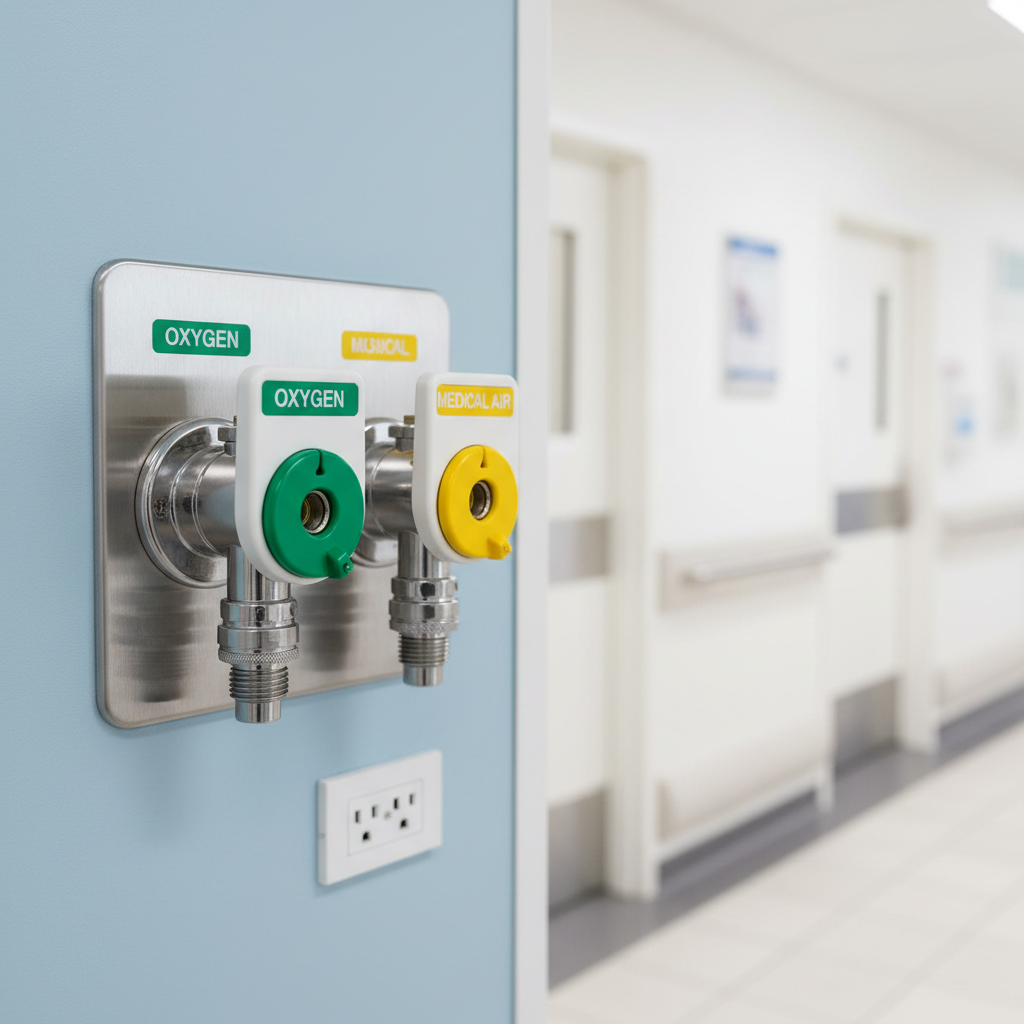
Medical Gas Testing in Plantation, FL: A Guide to NFPA 99 Compliance
Medical Testing SolutionsJune 20, 20267 min read
Share
Medical gas systems are a critical life support utility in any healthcare facility. From oxygen and medical air to nitrous oxide and vacuum systems, their proper function is non-negotiable for patient safety. For healthcare facilities in Plantation, Florida, ensuring these systems are clean, correct, and functioning as intended requires rigorous testing according to strict national standards. This process, known as medical gas testing, is the only way to ensure your systems are safe, effective, and compliant.
This comprehensive guide will walk you through the essentials of medical gas testing. You will learn about the governing NFPA 99 standards, the specific tests required for your facility, what to expect during an inspection, and how to choose a qualified, ASSE-certified provider. We will cover the requirements for hospitals, ambulatory surgery centers (ASCs), and dental clinics throughout the Plantation area, providing the clarity you need to maintain a safe and compliant environment.
What Is Medical Gas Testing and Why Is It Critical?
Medical gas testing is a series of procedures performed to verify the integrity and safety of piped medical gas and vacuum systems. It's not just a suggestion; it's a mandate for patient safety and regulatory compliance. These tests confirm that the correct gas is flowing from the correct outlet, at the proper pressure, and free from contaminants.
A failure in a medical gas system can have catastrophic consequences, from delivering the wrong gas to a patient to system-wide shutdowns. Regular testing mitigates these risks, protecting patients, staff, and your facility's accreditation. For facilities in Plantation, FL, this means partnering with a certified testing agency like Medical Testing Solutions to ensure every outlet is ready for patient use.
The Human Impact of Untested Systems
Imagine a scenario where a wall outlet labeled "Oxygen" is accidentally crossed with nitrogen during a renovation. Without proper medical gas verification, this life-threatening error might not be caught until it's too late. This is not a theoretical risk; such incidents have occurred, leading to tragic outcomes. Testing is the critical final step that stands between construction and patient care.
Understanding NFPA 99: The Standard for Medical Gas Systems
The National Fire Protection Association (NFPA) 99, Health Care Facilities Code, is the cornerstone document for medical gas systems in the United States. It outlines the minimum requirements for the installation, performance, and maintenance of these systems.
Chapter 5 of NFPA 99 is dedicated to Gas and Vacuum Systems, providing detailed criteria for testing and verification. The code distinguishes between initial verification (performed on new or modified systems) and periodic testing (part of a regular maintenance schedule).
Why this matters for compliance: Adherence to NFPA 99 is not optional. It is enforced by various authorities, including The Joint Commission (TJC), the Centers for Medicare & Medicaid Services (CMS), and local fire marshals. Non-compliance can lead to hefty fines, loss of accreditation, and mandated shutdowns.
Types of Medical Gas Testing for Plantation Healthcare Facilities
Medical gas testing is not a single event but a suite of specific tests. An ASSE 6030 credentialed verifier performs these checks to ensure every aspect of the system meets code. Key tests include:
Purity Testing: Ensures the gas being delivered is at least the minimum percentage required by USP standards (e.g., Oxygen 99%).
Particulate Testing: Checks for solid contaminants within the pipeline, which can harm patients and damage equipment.
Piping Purge Test: A high-volume flow of nitrogen is used to blow out any debris left over from the medical gas installation process.
Initial Pressure Test: Ensures the piping has no leaks before the walls are closed up.
Cross-Connection Test: Confirms that each gas-specific outlet delivers only the intended gas. This is one of the most critical tests in the series.
Valve and Alarm Testing: Verifies that all zone valves and master alarm panels are functioning correctly, ensuring staff can be alerted to and isolate problems quickly.
Concentration Testing: Verifies the concentration of medical air and other mixed gases.
These are just a few of the dozens of individual tests performed during a full system verification. For ongoing safety, facilities must also have annual medical gas inspections to monitor system performance over time.
Who Needs Medical Gas Testing in Plantation, FL?
Any healthcare-related facility in the Plantation area that utilizes piped medical gases or vacuum systems must have them tested. This includes a wide range of facilities:
Hospitals: The most complex systems, requiring extensive testing for patient rooms, operating theaters, and recovery areas.
Ambulatory Surgery Centers (ASCs): These facilities rely on medical gases for anesthesia and patient recovery, making testing just as critical as in a hospital.
Dental Clinics: Offices that provide sedation using nitrous oxide and oxygen must comply with NFPA 99 standards. This includes ensuring the scavenger systems are working correctly to protect staff from waste anesthetic gas (WAG).
Veterinary Clinics: While not always subject to the same human-focused regulations, quality care demands safe gas delivery for animal patients.
The Medical Gas Testing Process: What to Expect
When you engage a certified testing firm like Medical Testing Solutions, the process is systematic and thorough.
Review of Documentation: The verifier will first review the system design drawings and installer qualifications.
On-Site Inspection: The technician will trace every pipeline, inspect every component, and conduct the full battery of tests required by NFPA 99.
Systematic Testing: Using calibrated equipment, the verifier will connect to every outlet, alarm panel, and source equipment to gather data.
Reporting: Upon completion, you will receive a comprehensive, multi-page report detailing every test performed, the results for each, and a clear pass/fail statement.
Certification: If the system passes all tests, the verifier will issue a formal certification, which you must keep on file for inspectors.
If any deficiencies are found, the report will clearly identify the problem, the relevant NFPA 99 code section, and the required corrective action.
Choosing a Certified Medical Gas Testing Provider in Plantation
Not just anyone can test a medical gas system. NFPA 99-2021 (5.1.14.2.2.1) explicitly requires that testing be conducted by a party that is credentialed to ASSE 6030, Medical Gas Systems Verifier. This ensures the individual has the training, knowledge, and experience to perform these critical life-safety tests accurately.
When selecting a provider, always ask for their ASSE 6000 series credentials. Below is a table outlining the most relevant credentials for gas system work.
ASSE Credential
Title
Scope of Work
ASSE 6010
Medical Gas Installer
Can install and braze medical gas pipelines and components.
ASSE 6020
Medical Gas Inspector
Typically a government or administrative official inspecting installations.
ASSE 6030
Medical Gas Verifier
The required credential to test and "verify" a new or modified system.
ASSE 6040
Medical Gas Specialist
A maintenance-focused credential for facility personnel.
Medical Testing Solutions employs a team of ASSE 6030 and 6010 certified professionals, qualified to provide both installation and third-party verification services across Florida. Our deep understanding of NFPA standards ensures your Plantation facility receives the highest level of service and a compliant, patient-safe system.
Get a Quote for Certified Medical Gas Testing in Plantation
Ensuring your medical gas systems are compliant and safe is a critical responsibility. Don't leave it to chance. The certified experts at Medical Testing Solutions have provided trusted medical gas testing and services to healthcare facilities across Florida for years. We are headquartered in Fort Lauderdale and are ready to serve hospitals, ASCs, and dental clinics throughout the Plantation area.
To protect your patients and your facility, partner with a true ASSE-certified authority. Contact us today to discuss your testing needs. Request a quote online or call us directly at +1 (754) 315-1078 to schedule your service.
'''
Frequently Asked Questions
Periodic inspections should be part of your regular medical gas maintenance services and conducted annually. A full "verification" is required for any new system, or whenever an existing system is modified, extended, or breached for maintenance.
"Verification" is the formal, in-depth process required by NFPA 99 to certify a system for patient use. "Testing" often refers to the periodic, less intensive checks required as part of a maintenance program.
Only a party credentialed to the ASSE 6030 Medical Gas Systems Verifier standard can legally certify a system for use. Always ask for credentials.
Yes. Any dental office or oral surgery center that uses nitrous oxide, oxygen, or a medical vacuum system falls under the purview of NFPA 99 and must be verified.
The ASSE 6030 verifier will provide a detailed report listing the deficiencies and the specific NFPA code references. The installing contractor must perform repairs, and the system must be re-tested before certification.
Request a quote for your facility
Talk with Medical Testing Solutions about your next inspection, repair or equipment request.