Medical Gas Testing in Cape Coral, FL: A Guide for Healthcare Facilities
Medical Testing SolutionsJune 22, 20266 min read
Share
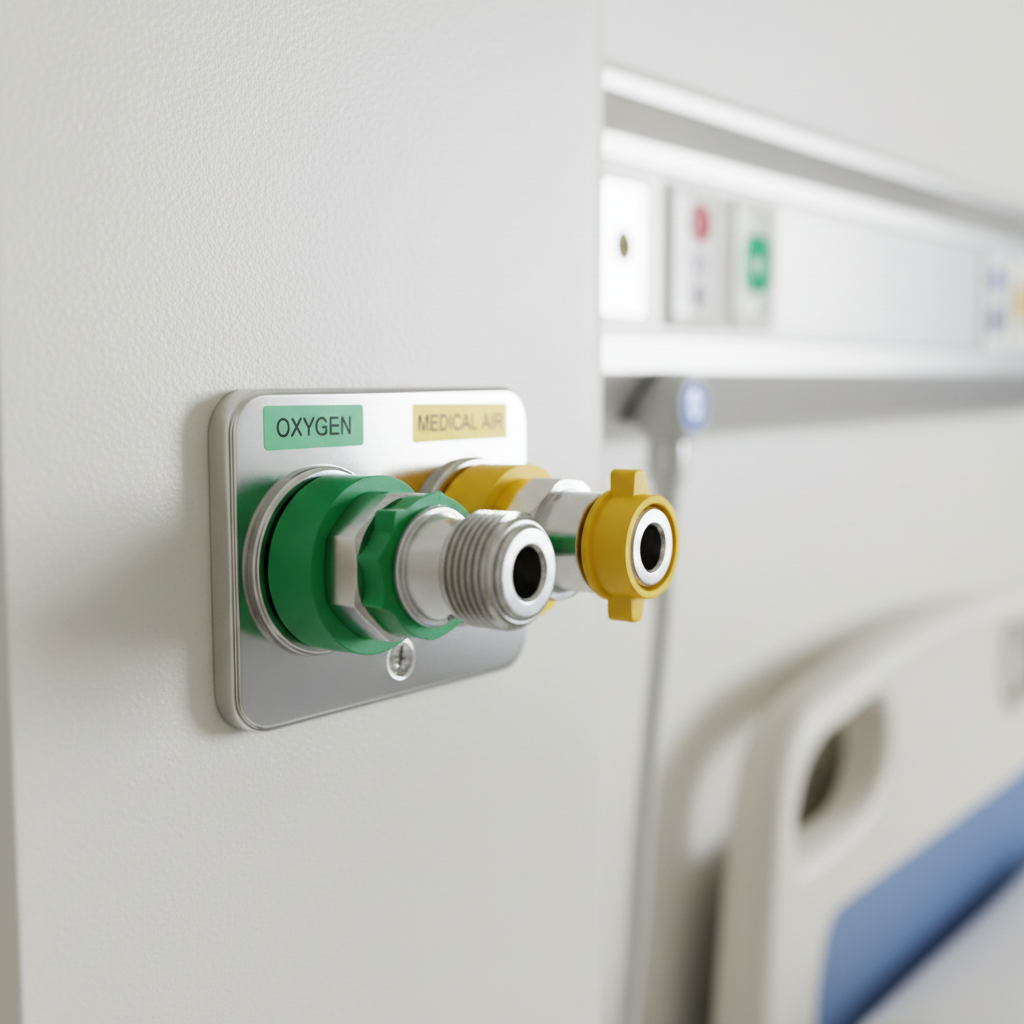
Medical gas systems are a critical life support utility in healthcare facilities. From oxygen and medical air to nitrous oxide and nitrogen, these systems must deliver pure, precise, and uninterrupted gas to patients. Ensuring their integrity is not just a matter of best practice, it's a stringent requirement for patient safety and regulatory compliance. For hospitals, ambulatory surgery centers (ASCs), and dental clinics in Cape Coral, Florida, rigorous medical gas testing is a non-negotiable aspect of operations.
This pillar post serves as a definitive guide to medical gas testing for Cape Coral healthcare facilities. We will explore the specific testing requirements mandated by NFPA 99, the distinction between initial verification and annual inspections, the core components of the testing process, and how to select a certified provider to ensure your facility is safe, compliant, and always ready to provide patient care.
What is Medical Gas Testing and Why is it Critical?
Medical gas testing is the systematic process of verifying that a piped medical gas and vacuum system is safe, functional, and compliant with code. It involves a series of specialized procedures performed by a certified technician to assess every component, from the source equipment (like tanks and manifolds) to the piping and the patient outlets in operating rooms and patient care areas. The primary goal is to prevent patient harm that could result from cross-connections, contamination, or incorrect gas delivery.
Patient Safety and Risk Mitigation
The most significant reason for testing is patient safety. A faulty medical gas system can have catastrophic consequences, including delivering the wrong gas or a contaminated gas to a patient. For example, a cross-connection between a nitrogen pipe and an oxygen pipe could be fatal. Regular testing by a qualified firm like Medical Testing Solutions mitigates these risks, confirming the identity, purity, and pressure of the gases being delivered.
NFPA 99 Compliance in Florida
The National Fire Protection Association (NFPA) Standard 99, Health Care Facilities Code, is the cornerstone of medical gas safety and is legally adopted in Florida. This code outlines the minimum criteria for the design, installation, inspection, testing, and maintenance of medical gas and vacuum systems. Adherence is mandatory for licensure and accreditation from bodies like The Joint Commission (TJC) and the Accreditation Association for Ambulatory Health Care (AAAHC).
Why this matters for compliance: NFPA 99 (2018 edition, Chapter 5) mandates specific testing protocols to ensure the gas delivered to the patient is precisely what is intended. Failure to verify purity, pressure, and flow can lead to catastrophic patient outcomes, immediate non-compliance penalties from the Agency for Health Care Administration (AHCA), and potential loss of accreditation.
Who Needs Medical Gas System Testing in Cape Coral?
Any healthcare facility in Cape Coral that utilizes piped medical gas or vacuum systems must have them tested. The frequency and type of testing depend on whether the system is new, modified, or simply undergoing its required periodic inspection.
Hospitals and Ambulatory Surgical Centers (ASCs)
Hospitals and ASCs rely on extensive medical gas systems for procedures in operating rooms, ICUs, and recovery areas. Testing is required for:
New construction: A complete system verification is needed before the facility can be occupied.
System modifications: Any breach or extension of the system, such as adding a new operating room, requires re-verification of the affected areas.
Annual inspections: All facilities must conduct periodic inspections of the central supply systems, alarms, and outlets. You can learn more about our annual inspection services.
Dental Clinics and Oral Surgery Offices
Dental facilities that use nitrous oxide and oxygen for patient sedation fall under the same regulatory umbrella. The systems must be tested to ensure patient safety and proper operation of equipment. This includes verifying the integrity of flowmeters and scavenging systems to protect both patients and staff.
Initial Verification (ASSE 6030) vs. Annual Inspections
A common point of confusion is the difference between an initial verification and an annual inspection. An initial verification is a comprehensive, one-time process for new or modified systems, while annual inspections are a less intensive, periodic check-up. Medical Testing Solutions provides both services with ASSE-certified personnel.
Aspect
Initial Verification (ASSE 6030)
Annual Inspection
Purpose
To certify that a new or modified system is safe for patient use.
To ensure an existing system continues to operate safely and correctly.
Frequency
Once, before a new system is placed into service.
Typically performed annually, as part of a routine maintenance plan.
Governing Standard
ASSE Standard 6030, performed by an ASSE 6030 Certified Verifier.
NFPA 99, performed by an ASSE 6040 Certified Maintenance Personnel.
Scope
Exhaustive testing of every system component (see list below).
Focused checks on key operational points: source equipment, alarms, pressure checks, and outlet function.
Performing a proper medical gas verification is a detailed, multi-step process. An ASSE 6030 Certified Verifier will conduct a battery of tests before a system can be deemed safe and compliant. Key steps include:
Initial Piping Blowdown: High-volume, oil-free nitrogen is used to purge the pipes of any construction debris.
Initial Pressure Testing: The system is pressurized to 1.5 times the working pressure to check for leaks in the piping.
Cross-Connection Testing: Each gas system is pressurized individually with nitrogen to ensure no gas can flow into an adjacent system.
Valve Testing: Verifying proper operation of all source valves, main valves, and zone valves.
Alarm Testing: Master and area alarms are tested to confirm they activate at the correct pressure points and send the required signals.
Particulate Testing: A test to confirm the gas stream is free of solid contaminants.
Purity Testing: An analysis to ensure the gas meets the purity requirements of USP and NFPA 99.
Final Tie-In: Connecting the new piping to the existing medical gas source.
Labeling and Documentation: Ensuring all pipes, valves, and outlets are correctly labeled and providing comprehensive documentation of all test results.
Choosing a Certified Provider in the Cape Coral Area
Selecting a qualified testing provider is crucial. Your vendor must have a deep understanding of NFPA codes and be staffed by properly credentialed professionals.
The Importance of ASSE 6030/6040 Certification
Always demand proof of ASSE 6000 series certification. An ASSE 6030 Certified Verifier is qualified to test and verify new or modified systems. An ASSE 6040 Certified Maintenance Person is qualified to perform system maintenance and annual inspections. These certifications ensure the technician has passed a rigorous examination and has the practical knowledge to perform the job correctly.
Why Partner with Medical Testing Solutions?
Medical Testing Solutions is a premier provider of medical gas maintenance services and testing for the Cape Coral region. Our technicians are ASSE 6030 and 6040 certified, bringing unparalleled expertise to every project. We are headquartered in Florida and have an in-depth understanding of the state-specific requirements enforced by AHCA. From initial verification of a new hospital wing to annual inspections and emergency repairs, we are a single-source solution for system compliance.
Ready to ensure your facility is compliant and safe? Contact our team to discuss your specific needs.
Frequently Asked Questions
A full verification is required for any new, modified, or repaired medical gas system. Beyond that, NFPA 99 requires periodic inspections at least annually. Some components, like alarms, may require more frequent checks.
Testing covers all piped medical gases as defined by NFPA 99, including Oxygen, Medical Air, Nitrous Oxide, Nitrogen, Carbon Dioxide, and Medical Vacuum systems.
If a system fails any part of the verification, the issue must be identified and corrected by qualified personnel (such as an ASSE 6010 certified installer). The system must then be re-tested until it passes before it can be used for patient care.
Yes, annual inspections and maintenance are performed on live systems. Our technicians coordinate closely with your facility staff to ensure there is no disruption to patient care during testing procedures.
Absolutely. We provide comprehensive services for dental sedation systems, including testing, verification, and dental flowmeter calibration and repair to ensure your equipment is accurate and safe.
Request a quote for your facility
Talk with Medical Testing Solutions about your next inspection, repair or equipment request.