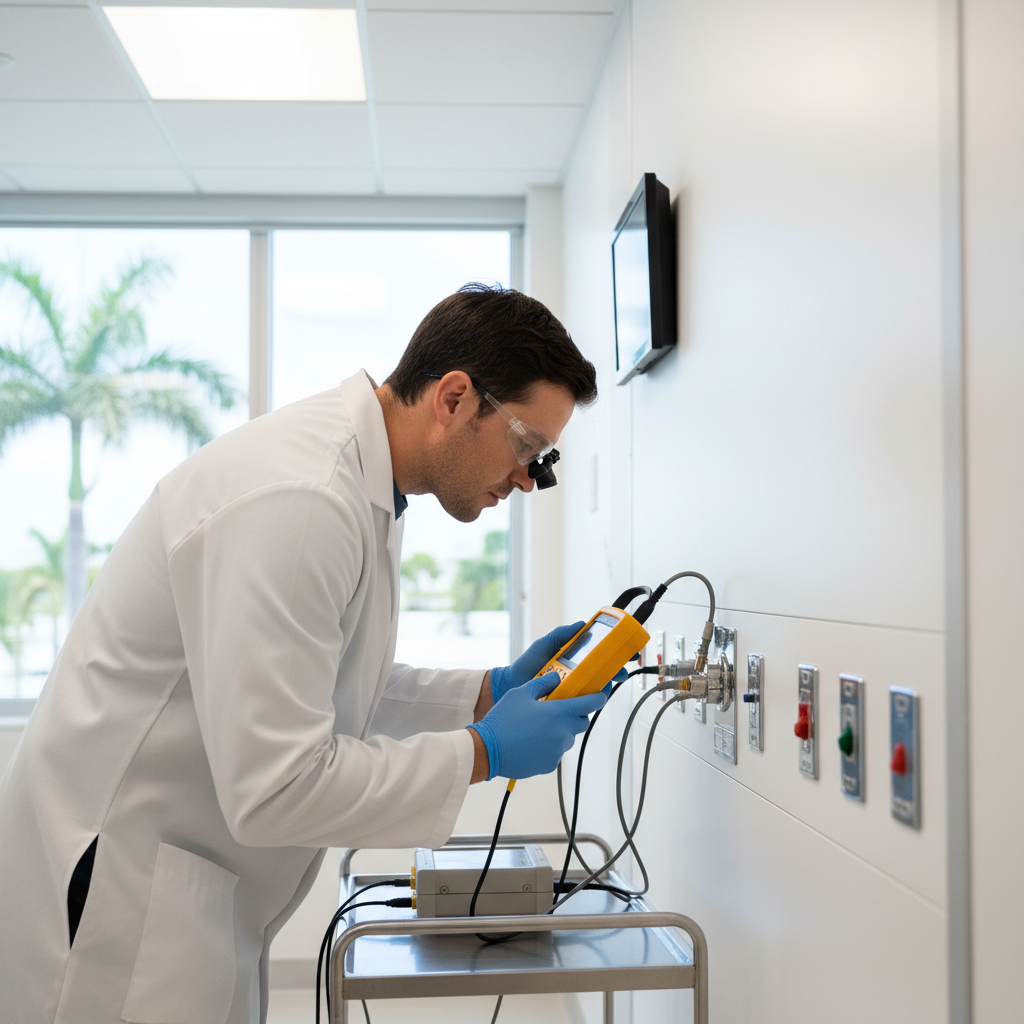
Medical Gas Testing in Boynton Beach, FL: A Guide to NFPA 99 Compliance
Medical Testing SolutionsJune 21, 20267 min read
Share
For hospitals, ambulatory surgery centers (ASCs), and dental clinics in Boynton Beach, Florida, medical gas systems are a silent, life-sustaining utility. The oxygen, medical air, nitrous oxide, and other gases delivered through these intricate networks are as critical as electricity and water. However, their potential for harm, from contamination, cross-connection, or pressure failure, is immense. This is why rigorous, standards-based medical gas testing is not just a best practice; it's a non-negotiable requirement for patient safety and regulatory compliance.
This comprehensive guide explains the critical aspects of medical gas system testing from the perspective of ASSE-certified professionals. You will learn what the NFPA 99 requires, the different types of testing your facility needs, who is qualified to perform it, and how Medical Testing Solutions ensures your Boynton Beach facility meets the highest standards of safety and compliance.
What Are Medical Gas Systems? An Overview
A medical gas system is a centralized network designed to store and deliver specific gases to patient care areas. While seemingly simple, these are complex systems regulated as a Level 1 utility, meaning their failure is likely to cause major injury or death to patients.
Key Gases and Their Uses
Oxygen (O2): Used for respiration and life support.
Medical Air: A purified, compressed air supply used for respiratory applications where regular air is unsuitable.
Nitrous Oxide (N2O): An analgesic and anesthetic gas, commonly used in dental and surgical procedures.
Nitrogen (N2): Used to power surgical tools and pneumatic equipment.
Carbon Dioxide (CO2): Used for insufflation during minimally invasive surgeries.
Medical Vacuum: A suction system used to remove fluids and debris from the patient's airway or surgical site.
Core System Components
Source Equipment: Bulk tanks, manifolds, and compressors that store or generate the gas.
Piping: A dedicated network of copper pipes, typically brazed, that transports the gases from the source.
Zone Valves: Ball valves placed in boxes that allow specific areas (zones) of the facility to be shut off in an emergency or for maintenance.
Alarms: Master, area, and local alarms that continuously monitor pressure and system status.
Outlets/Terminals: Gas-specific connection points in patient rooms and operating theaters where medical devices are attached.
The Critical Role of NFPA 99 in Medical Gas Testing
The National Fire Protection Association (NFPA) 99, Health Care Facilities Code, is the cornerstone of medical gas safety in the United States. It provides the minimum criteria for the installation, performance, and maintenance of medical gas and vacuum systems. All facilities in Boynton Beach must adhere to this code.
Chapter 5 of NFPA 99 is dedicated to "Gas and Vacuum Systems." It details requirements for everything from initial medical gas installation to periodic inspection and testing. The code mandates specific tests to verify system integrity, purity, and operational readiness before a system is ever used for patient care and on a recurring basis thereafter.
Why this matters for compliance: Adherence to NFPA 99 is a primary focus of accrediting organizations like The Joint Commission (TJC), the Accreditation Association for Ambulatory Health Care (AAAHC), and the Centers for Medicare & Medicaid Services (CMS). A failed inspection can lead to citations, loss of accreditation, and a halt to operations, not to mention the immense legal liability in the event of a system failure.
ASSE 6000 Series: The Credentials That Matter
NFPA 99 is clear: only qualified individuals can install, inspect, or maintain medical gas systems. The American Society of Sanitary Engineering (ASSE) 6000 series provides the nationally-recognized certifications for these professionals.
ASSE 6010 Certified Installers: Professionals qualified to perform the physical installation and brazing of medical gas piping.
ASSE 6030 Medical Gas Verifiers: Third-party individuals qualified to perform the critical final inspection and testing of new, modified, or extended systems. This is a crucial, unbiased step before a system can be put into service. Learn more about our medical gas verification services.
When you hire a provider, always demand proof of current ASSE certification. Medical Testing Solutions employs a team of ASSE 6030 and 6040 certified technicians to serve Boynton Beach and all of South Florida, ensuring every test is performed by a true expert.
Types of Medical Gas System Testing
Testing is not a one-time event. It occurs at different points in a system's lifecycle.
Initial Verification (New or Modified Systems)
This is the most intensive round of testing, performed by an ASSE 6030 Verifier. It happens after a new system is installed or an existing one is modified. It includes:
Checking for cross-connections.
Verifying pressures and flows at each outlet.
Gas concentration and purity testing for every gas.
Particulate testing to ensure the piping is clean.
Alarm and valve functionality checks.
Annual Medical Gas Inspections
For existing systems, NFPA 99 mandates periodic inspections. These are typically performed by an ASSE 6040 certified technician. Annual inspections are less invasive than a full verification but are vital for ongoing safety. They include checking source equipment, monitoring alarm function, and spot-checking outlet pressures. See our page on annual medical gas inspections for more detail.
Environmental and Exposure Monitoring
Facilities using nitrous oxide must also be concerned with occupational exposure. MTS provides Waste Anesthetic Gas (WAG) monitoring to ensure your facility complies with OSHA limits and keeps staff safe.
Medical Gas Testing Comparison: Verification vs. Annual Inspection
Understanding the difference between initial verification and routine inspection is key for facility managers.
Test / Procedure
Verification (ASSE 6030)
Annual Inspection (ASSE 6040)
Initial Piping Pressure Test
Required
No
Cross-Connection Test
Required
No
Outlet Gas Identity Test
100% of outlets
Spot check
System Purity Test (Contaminants)
Required
No
Gas Concentration Test
Required
No
Alarm System Function Test
100% of alarms
100% of alarms
Source Equipment Inspection
Required
Required
Zone Valve Operation
Required
Required
Specialized Testing for Boynton Beach Healthcare Settings
Different facilities have different needs. A large hospital's requirements vary significantly from a small dental practice.
Hospitals & Ambulatory Surgery Centers (ASCs)
These facilities have complex, Level 1 systems. Testing must be exhaustive. Special attention is paid to operating rooms, which are often "wet procedure locations." This requires isolated power systems and regular Line Isolation Monitor (LIM) testing to ensure electrical safety, a service MTS provides.
Dental Clinics & Oral Surgery Offices
Dental offices in Boynton Beach primarily use Oxygen and Nitrous Oxide for patient sedation. The key concerns here are the proper functioning of the sedation delivery systems. In addition to system testing, regular dental flowmeter repair and calibration is essential to ensure accurate gas delivery and patient safety. Cross-connections are a major risk in these settings.
Choosing a Medical Gas Testing Provider in Boynton Beach
When selecting a partner to test your life-support systems, you cannot compromise. Look for a provider who:
Is Certified: Employs technicians with current ASSE 6030 and ASSE 6040 credentials.
Is Unbiased: Provides third-party verification without a conflict of interest from the original installer.
Provides Detailed Reports: Delivers comprehensive documentation detailing every test performed, the results, and any corrective actions needed. This report is your proof of compliance.
Is a Full-Service Partner: Can assist with everything from initial testing and certification to ongoing preventative maintenance services.
Medical Testing Solutions is the trusted, ASSE-certified partner for healthcare facilities in Boynton Beach and across Florida. We provide unbiased, meticulous testing and clear, actionable reporting to ensure you are always prepared for an audit and always providing the safest environment for your patients.
Your Partner for Compliance and Safety in Boynton Beach
Your medical gas systems are too important to leave to chance. Ensuring they are safe, pure, and compliant requires expert knowledge of NFPA 99 and hands-on experience. The certified team at Medical Testing Solutions has the credentials and field-tested expertise to provide definitive testing for your hospital, surgery center, or dental clinic.
Don't wait for an audit or an emergency. Ensure your facility is safe and compliant today. Contact us to discuss your needs or request a quote for medical gas testing at your Boynton Beach facility. Call us directly at +1 (754) 315-1078.
'''
Frequently Asked Questions
New installations or modifications require a full ASSE 6030 verification before use. Existing systems require, at a minimum, an annual inspection by an ASSE 6040 technician. Some components, like alarms, may require more frequent checks per your facility's risk assessment.
A Verifier (ASSE 6030) is a third-party agent qualified to test and certify new or modified systems. An Inspector or Maintenance Professional (ASSE 6040) is qualified to perform periodic inspections and maintenance on existing systems.
No. Unless they hold a specific and current ASSE 6030 or ASSE 6040 credential, they are not qualified to perform this work under NFPA 99. Using unqualified personnel is a serious code violation and safety risk.
If a system fails any part of a verification or inspection, the certified technician will document the deficiency in a detailed report. The system cannot be used for patient care until the issue is corrected and the system is re-tested and passes.
Yes. While we are headquartered in Fort Lauderdale, Medical Testing Solutions provides medical gas testing, verification, and maintenance services throughout Florida and beyond.
Request a quote for your facility
Talk with Medical Testing Solutions about your next inspection, repair or equipment request.