Skip to content
    New: Medical Gas Outlet Retrofit & Rebuild Matrix — cross-reference legacy Chemetron, Ohio Diamond, Puritan-Bennett & more →
    ASSE Certified 24/7
    Medical Gas Service
    Compliance & Standards

    Medical Gas System Commissioning in Weston FL: A Guide to NFPA 99

    Medical Testing SolutionsSeptember 27, 20266 min read
    Share
    Medical Gas System Commissioning in Weston FL: A Guide to NFPA 99

    What is Medical Gas System Commissioning? A 2024 Guide for Weston Facilities

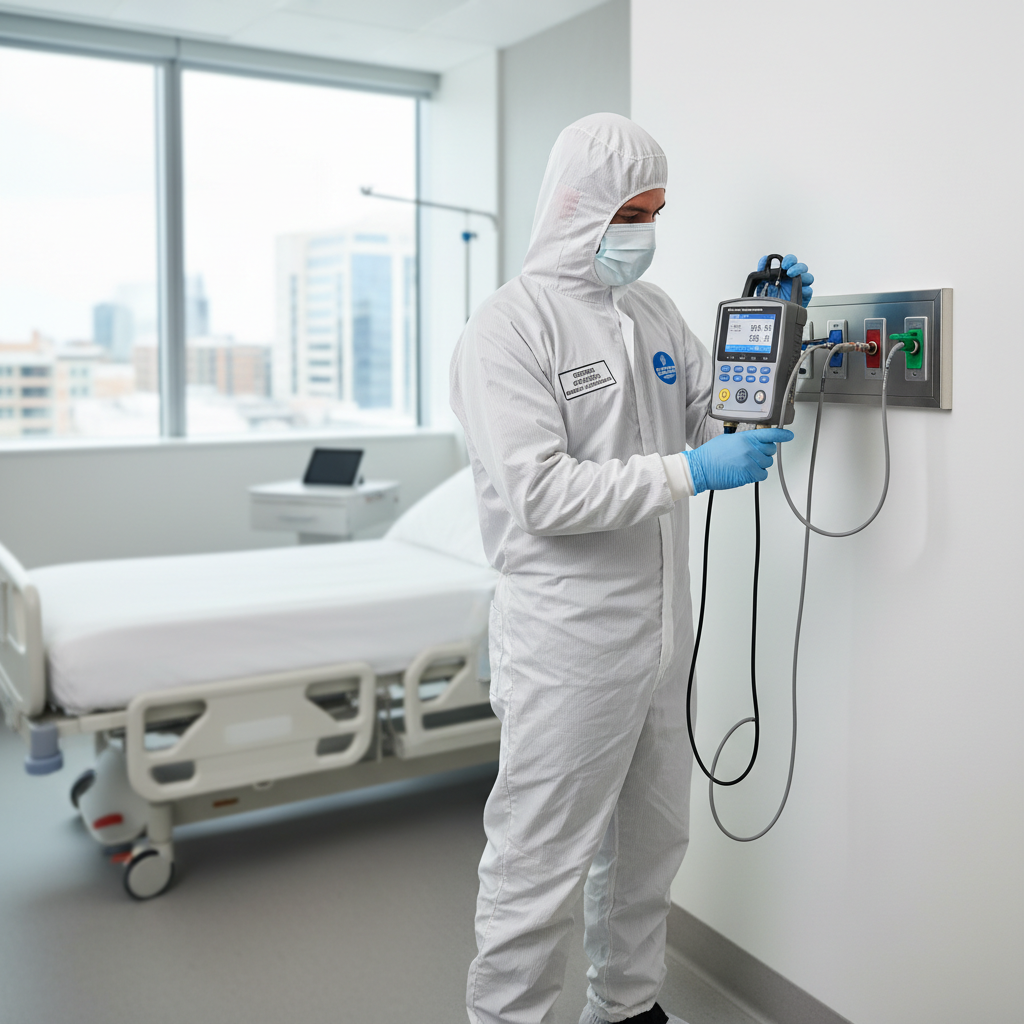
    Medical gas system commissioning is the final and most critical phase before a new or modified system can be used for patient care. It involves a series of rigorous tests to ensure the system is safe, effective, and compliant with national standards. For healthcare facilities in Weston, Florida, this process is governed primarily by NFPA 99, the Health Care Facilities Code. Commissioning, specifically the verification stage, confirms that the system was installed correctly, is free of contaminants, and delivers the correct gas at each outlet. This guide will walk you through the essential steps of commissioning, focusing on the NFPA 99 5.1.12 requirements for particulate, purity, and cross-connection testing, ensuring your facility is ready for its first patient.

    The "Why" Behind Commissioning: Patient Safety and NFPA 99 Compliance

    Commissioning isn't just a box to check; it's a fundamental patient safety requirement. A properly commissioned medical gas system ensures that a patient receiving oxygen gets pure oxygen, not a mix of nitrogen or room air. It guarantees that surgical tools powered by nitrogen are not accidentally connected to an oxygen line. The consequences of a compromised system can be catastrophic. The NFPA 99 code provides a roadmap for preventing these events. It outlines the minimum criteria for the installation, performance, and maintenance of medical gas and vacuum systems. For facility managers and construction project leaders in Weston, adhering to this code is non-negotiable.

    Why this matters for compliance: NFPA 99 5.1.12 outlines the "Final Performance Verification Procedures" which must be conducted by a party other than the installer, technically and medically competent to do so, such as an ASSE 6030 Certified Verifier. This third-party verification is the cornerstone of the commissioning process and is mandatory for accreditation.

    The Three Pillars of Medical Gas Verification (NFPA 99 5.1.12)

    Medical gas verification, a key part of commissioning, is performed by an ASSE 6030 certified third party. This process involves a comprehensive battery of tests. At Medical Testing Solutions, our ASSE 6040 certified technicians follow these procedures to the letter. Three of the most critical tests are for particulates, purity, and cross-connections.

    1. Particulate Testing: Ensuring a Clean Delivery

    During installation, microscopic debris like dust, copper dust, and other particles can be introduced into the piping. Particulate testing ensures this debris is not delivered to the patient.

    • Procedure: A high-flow of nitrogen is flushed through the system at a specified velocity to dislodge and carry particles to the outlets.
    • Test Method: A filter membrane is placed at the outlet to capture any particulate. The test is passed if no particulate is visible on the filter to the naked eye.
    • NFPA 99 Reference: This test is detailed in NFPA 99 5.1.12.3.5, which specifies the procedure for blowing out the lines with oil-free, dry nitrogen.

    2. Purity Testing: Confirming Gas Identity and Quality

    Purity testing confirms that the gas being delivered from an outlet is the correct gas and meets USP (United States Pharmacopeia) standards for medical use.

    • Procedure: An advanced gas analyzer is used at each outlet to measure the concentration of the specified gas.
    • Requirements: The purity levels must meet the standards set by the USP. For example, Oxygen USP must be ≥99.0% pure.
    • NFPA 99 Reference: NFPA 99 5.1.12.3.9 requires testing for the concentration of the source gas and also for contaminants, ensuring no harmful impurities are present.

    3. Cross-Connection Testing: Preventing Dangerous Gas Mix-ups

    This is arguably the most critical test. It confirms that gas-specific outlets are connected to the correct gas source line. An accidental cross-connection could deliver a harmful, or non-therapeutic, gas to a patient.

    • Procedure: Each gas system is tested individually while all other systems are reduced to atmospheric pressure. The test gas (typically nitrogen) is introduced into one system, and every outlet in the facility is checked to ensure only the correct outlets are delivering gas.
    • NFPA 99 Reference: NFPA 99 5.1.12.3.2 details this "Individual Pressurization Test" to verify that there are no interconnections between different medical gas piping systems.

    Proper medical gas verification is the only way to be certain these critical tests are performed correctly.

    The Full Commissioning and Verification Sequence

    While the three tests above are pillars, the full commissioning process is more extensive. It's a step-by-step validation that begins after the medical gas installation is complete.

    • Initial Blowdown: Lines are purged with nitrogen to remove construction debris.
    • Initial Pressure Test: The system is pressurized to 1.5 times the working pressure to check for leaks.
    • Standing Pressure Test: The system holds pressure for 24 hours to ensure there are no slow leaks.
    • Cross-Connection Test: As described above, to ensure system independence.
    • Piping Purge Test: A final high-flow purge to ensure cleanliness.
    • Particulate Test: Performed at each outlet.
    • Purity & Contaminant Analysis: Testing for gas identity, purity, and presence of any volatile hydrocarbons or halogenated compounds.
    • Alarm Testing: Verifying that all local and master alarm panels function correctly, signaling pressure drops, high pressure, or equipment failures.
    • Labeling and Documentation: Ensuring all pipes, outlets, and valves are correctly labeled per NFPA 99 standards.

    Commissioning Costs vs. The Cost of Failure

    Facility managers must budget for commissioning. While costs vary based on facility size and complexity, cutting corners is not an option. The cost of a failed inspection, or worse, a patient incident, far outweighs the investment in proper verification.

    Cost FactorDescriptionPotential Impact of Failure
    ASSE 6030 VerifierFee for the certified third-party testing agent.Project delays, re-testing fees, legal liability.
    RemediationCost to fix any issues found (e.g., leaks, cross-connections).Increased construction costs, potential for system teardown.
    Project DelaysEach day a facility opening is delayed results in lost revenue.Significant financial loss, reputational damage.
    Regulatory FinesFines from bodies like AHCA or The Joint Commission.Financial penalties, loss of accreditation.

    Investing in a reputable company like Medical Testing Solutions ensures a smooth, successful commissioning process from the start.

    After Commissioning: Ongoing Maintenance and Inspections

    Commissioning is the beginning, not the end. Once your facility is operational, a program of regular maintenance and inspection is required to maintain compliance and ensure ongoing safety. NFPA 99 mandates these activities.

    Get Your Weston, FL Project Commissioned Correctly

    Ensuring your new construction or renovation project in Weston meets NFPA 99 standards is our specialty. Medical Testing Solutions provides comprehensive, ASSE 6030-certified medical gas system commissioning to guarantee your facility is compliant and patient-ready from day one. Our technicians are among the most experienced in Florida.

    Don't risk project delays or patient safety. Contact the experts at Medical Testing Solutions today.

    Ready to ensure your system is compliant? Request a quote online or call us directly at (754) 315-1078 to discuss your project.


    Frequently Asked Questions

    Verification must be performed by a party that is certified to the ASSE 6030 standard and is independent of the system installer. This ensures unbiased, third-party validation.

    The duration depends on the size and complexity of the facility. A small dental office might take a day, while a large hospital wing could take a week or more.

    If a test fails, the installer is responsible for correcting the issue. The ASSE 6030 verifier will then re-test the affected portion of the system until it passes.

    Yes. Any modification, addition, or renovation of a medical gas system requires verification of the affected portions before they are put into service, as per NFPA 99.

    This article is provided for educational purposes and reflects industry standards as of publication. Always verify against current NFPA 99, CGA, and AHJ requirements. Medical Testing Solutions is ASSE-certified and ready to help — contact us for facility-specific guidance.

    Request a quote for your facility

    Talk with Medical Testing Solutions about your next inspection, repair or equipment request.

    Get a quote in 1 business day

    I agree to receive text messages from Medical Testing Solutions, L.L.C. at the phone number provided, including informational and marketing messages. Consent is not a condition of purchase. Message frequency varies. Message & data rates may apply. Reply STOP to opt out or HELP for help. See our Privacy Policy and Messaging Terms.

    Prefer to talk? Call (754) 315-1078

    Related articles