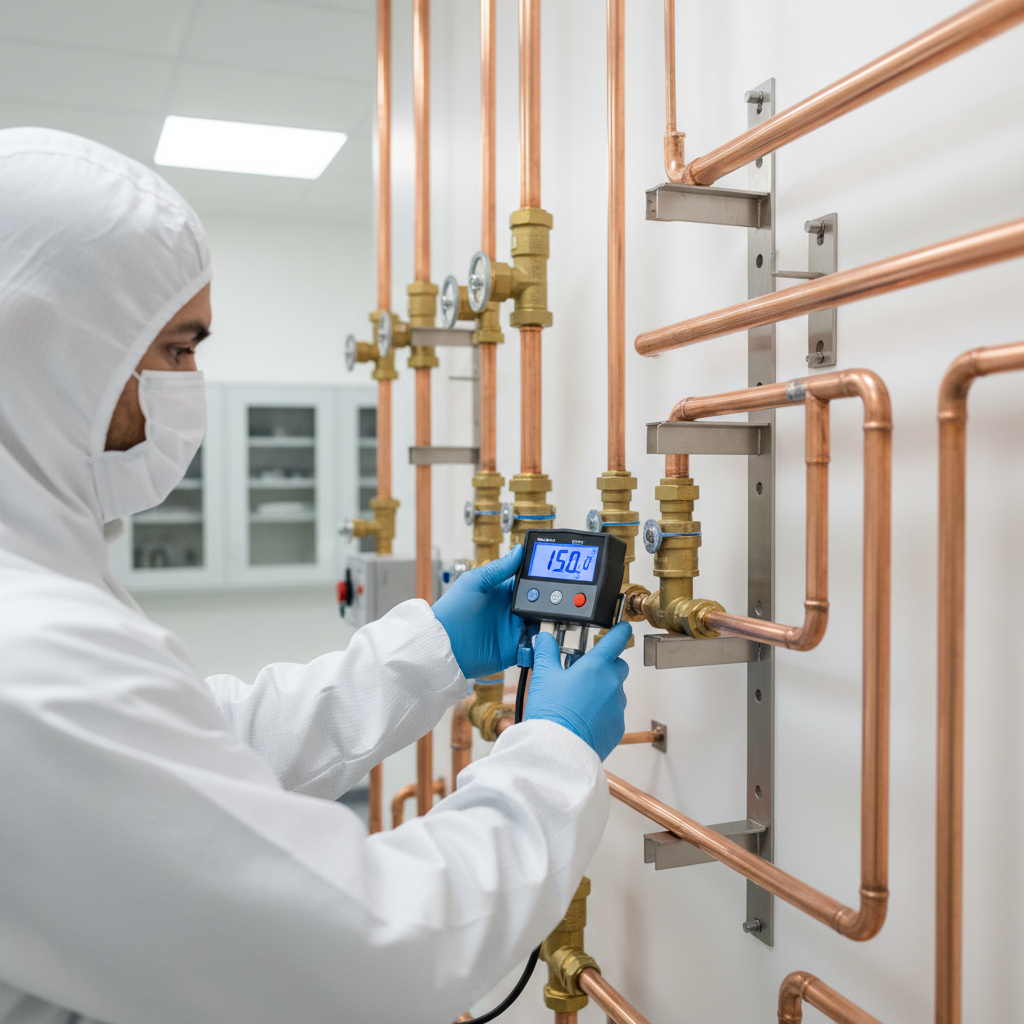
Medical Gas System Commissioning in Stuart, FL: A Guide to NFPA 99
Medical Testing SolutionsSeptember 29, 20266 min read
Share
What is Medical Gas System Commissioning?
Medical gas system commissioning is the final, critical phase in a new healthcare construction or renovation project. It is the comprehensive process of testing and verifying that a newly installed or modified medical gas and vacuum system is safe, effective, and compliant before it is used for patient care. Governed primarily by the National Fire Protection Association's standard NFPA 99, Health Care Facilities Code, this process ensures that every component, from the source equipment to the patient outlets, functions exactly as designed.
For facilities in Stuart, Florida, commissioning isn't just a best practice; it's a mandatory step for ensuring patient safety and achieving regulatory compliance. The process involves a series of rigorous tests performed by an ASSE 6030 Certified Medical Gas Verifier. This guide will walk you through the essential steps of commissioning as outlined in NFPA 99, section 5.1.12, explaining what the tests are, why they matter, and how to ensure your facility is prepared.
The Role of the ASSE 6030 Certified Verifier
The entire commissioning process hinges on the expertise of a qualified third-party verifier. Per NFPA 99, all testing must be conducted by a party that is technically competent and experienced in the field of medical gas system inspection and testing, and is acceptable to the authority having jurisdiction. This is where the ASSE 6000 Series of professional qualifications comes in. An ASSE 6030 Certified Medical Gas Verifier has demonstrated proficiency in all aspects of system verification.
An ASSE 6030 Verifier is responsible for:
Executing the full battery of tests required by NFPA 99 5.1.12.
Documenting every test, measurement, and result in a detailed report.
Certifying that the system is fully compliant and safe for patient use.
Providing an unbiased, third-party assessment independent of the original installer.
Engaging a certified professional like the team at Medical Testing Solutions ensures the integrity of your system and a smooth path to accreditation.
Initial System Verification: Pre-Testing Checks
Before the verifier begins the core commissioning tests, they confirm that the installer has completed their initial inspections. These are the installer's responsibility, as defined in NFPA 99, 5.1.12.2. The verifier will check for documentation confirming:
Initial Blow-Down: The installer must blow out the lines with oil-free, dry nitrogen to remove any construction debris.
Initial Pressure Test: The piping system must be proven to be leak-free. This is typically done at 1.5 times the system working pressure.
Once these prerequisites are confirmed, the verifier can proceed with the official, documented commissioning tests.
Core Commissioning Tests per NFPA 99 5.1.12
The heart of the commissioning process is the series of tests outlined in NFPA 99, section 5.1.12.3. These tests are performed in a specific sequence to ensure safety and accuracy.
Cross-Connection Testing
This is arguably the most critical test. Its purpose is to confirm that the gas intended for a specific outlet is the only gas being delivered to it. A mix-up could have catastrophic consequences for a patient.
Procedure:
Pressurize each medical gas system individually with oil-free, dry nitrogen.
At each outlet for the gas being tested, the verifier confirms nitrogen flow.
Crucially, the verifier checks all other gas outlets in the same zone to ensure no flow is present.
This process is repeated for every single gas system (Oxygen, Medical Air, Nitrous Oxide, etc.) in the facility.
Why this matters for compliance: A cross-connection is a life-threatening failure. This test is a non-negotiable step to prove the absolute integrity of the piping installation. A failed test requires immediate investigation and correction by the installer.
Particulate Testing
This test ensures the medical gas delivered to the patient is free of solid contaminants. NFPA 99 sets specific limits for particulate matter that could be harmful if inhaled.
Procedure:
A minimum of 1000 liters of gas is filtered through a special 0.45-micron filter at a representative outlet.
The filter is examined for any discoloration or collected particulate.
The test is performed at the most remote outlet from the source for each zone.
The goal is to find no significant contamination, ensuring the gas stream is clean and free of debris from the installation process.
Purity Testing
After confirming the gas pathways are correct and clean, the verifier tests the purity of the actual medical gas. This test confirms the concentration of the specified gas and ensures no other contaminants are present.
Procedure:
The system is filled with the source gas (e.g., Oxygen, Medical Air).
Using highly sensitive gas analyzers, the verifier measures the concentration of the gas at the outlet.
The analyzer also checks for other potential contaminants as specified by the code.
Gas/Vacuum Type
NFPA 99 Purity Requirement
Common Contaminants Tested For
Oxygen
> 99% Oxygen
Carbon Monoxide, Carbon Dioxide
Medical Air
19.5% - 23.5% Oxygen
Dew Point, Halogenated Hydrocarbons
Nitrous Oxide
> 99% Nitrous Oxide
Nitrogen Dioxide, Carbon Monoxide
Nitrogen
< 1% Oxygen
Dew Point
For a detailed list of requirements, you should always consult an expert in medical gas verification.
Final Verification: Alarms, Valves, and Source Equipment
With the piping distribution system verified, the focus shifts to the system's operational components.
Testing Alarms and Warnings
Medical gas systems are equipped with sophisticated alarm systems to warn staff of potential issues. The verifier will simulate various failure conditions to ensure every alarm functions correctly. This includes:
Master Alarms: Located for 24/7 surveillance, monitoring the main source supply.
Area Alarms: Located in critical care areas (ICUs, ORs) to monitor pressure in specific zones.
Local Alarms: Alarms located at the source equipment itself.
Each alarm must activate at the correct pressure setpoints (high and low) and report the correct condition and location.
Valve and Manifold Functionality
The verifier confirms that all zone valves are installed correctly, accessible, and properly labeled. They will operate each valve to ensure it correctly shuts off the gas supply to its intended zone and does not affect other areas.
They also test the source equipment, including the manifolds for high-pressure cylinders. This involves simulating a primary supply failure to ensure the system automatically and seamlessly switches over to the secondary supply, triggering the appropriate alarms.
The Final Report: Your Proof of Compliance
Upon successful completion of all tests, the ASSE 6030 Verifier provides a comprehensive final report. This document is your official record that the medical gas system has been tested according to NFPA 99 standards and is safe for patient use. It is a critical document for hospital accreditation, insurance, and regulatory bodies.
Medical Testing Solutions has provided ASSE 6030 verification and medical gas certification for healthcare facilities across Florida for years. Our meticulous process and detailed reporting ensure you can open your new facility with complete confidence.
Get Your Stuart, FL Facility Commissioned Correctly
Proper medical gas system commissioning is not just a line item on a construction checklist; it is a fundamental patient safety requirement. For new construction or renovation projects in Stuart, FL, partnering with a trusted, ASSE-certified team is essential.
The experts at Medical Testing Solutions provide thorough, code-compliant commissioning services to ensure your system is ready from day one. Contact us today to discuss your project and get a comprehensive quote. Call us at (754) 315-1078 or request a quote online to ensure your facility is safe, compliant, and ready for patient care.
Frequently Asked Questions
Medical gas installation is the physical assembly of the piping and components, performed by an ASSE 6010 Certified Installer. Verification is the independent, third-party testing of that system by an ASSE 6030 Certified Verifier to ensure it is safe and compliant before use.
The duration depends on the size and complexity of the facility. A small clinic might take a day, while a new hospital wing could take a week or more. The key is coordinating with the verifier well in advance of your planned opening.
If any test fails, the verifier will document the failure and the installer is responsible for correcting the issue. The verifier will then re-test the specific part of the system that failed until it passes. Medical Testing Solutions can work with your build team to identify and resolve issues efficiently.
Yes. NFPA 99 requires that any modification, extension, or repair to a medical gas system be verified before being put back into service. This ensures the integrity of the existing system is not compromised.
Request a quote for your facility
Talk with Medical Testing Solutions about your next inspection, repair or equipment request.