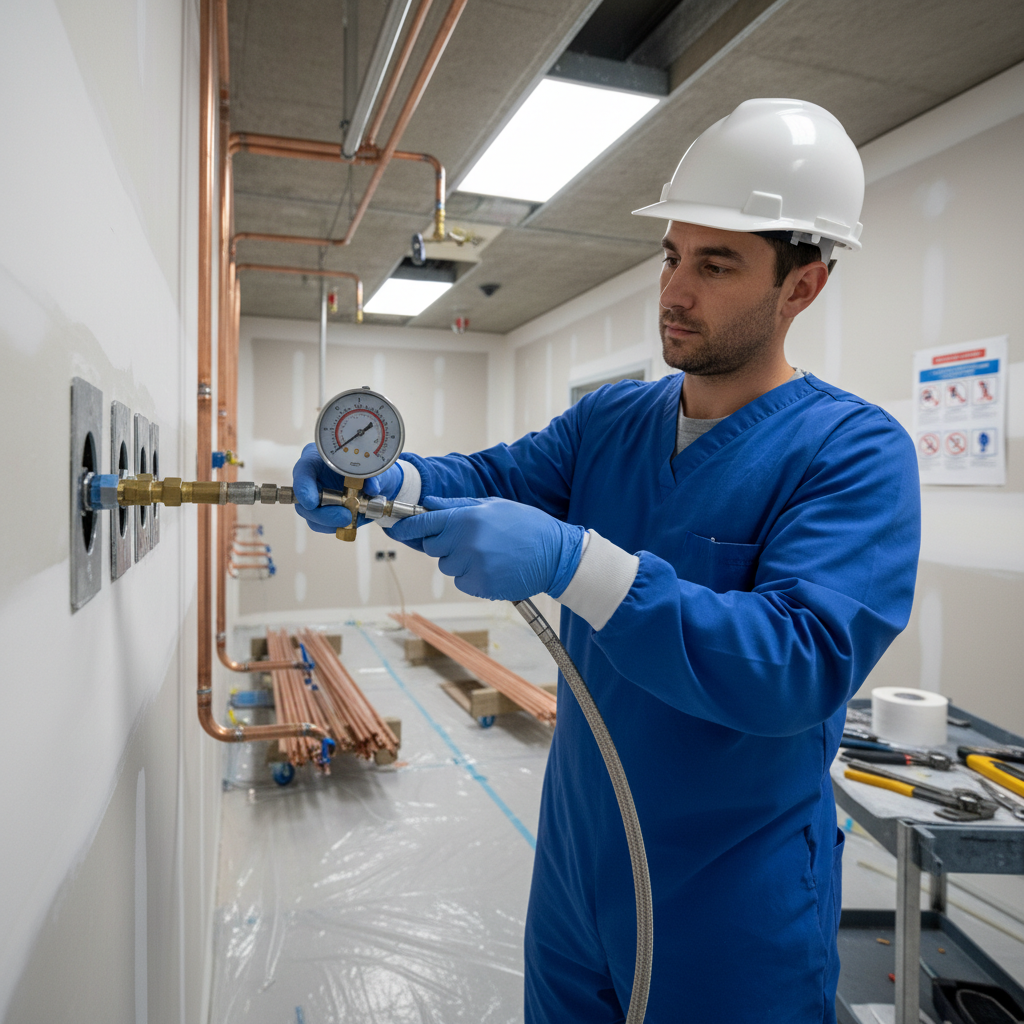
Understanding Medical Gas System Commissioning: Beyond the Basics
When a new healthcare facility is constructed in Port St Lucie, or an existing one undergoes major renovation, the medical gas piping systems, the lifeblood of patient care areas, must be rigorously tested before they can be used. This process is known as medical gas system commissioning. It's a series of detailed, mandatory tests performed to ensure that the newly installed pipelines are safe, clean, and deliver the correct gas to the correct outlets. Governed by the National Fire Protection Association (NFPA) 99 Health Care Facilities Code, specifically section 5.1.12, commissioning is the final, critical step before a system can be certified for patient use. This guide will walk you through the essential phases of commissioning, explaining the required tests, the standards that govern them, and how Medical Testing Solutions ensures your facility meets every requirement.
The Governing Standard: NFPA 99, 5.1.12
NFPA 99 is the foundational code for medical gas systems in the United States. Chapter 5, "Gas and Vacuum Systems," outlines every requirement from installation to testing. The commissioning process itself is detailed in section 5.1.12, which specifies the final verification tests that must be performed by a party other than the installer, such as Medical Testing Solutions. This independent, third-party verification is a crucial safeguard, ensuring an unbiased assessment of the system's integrity. All tests must be conducted by an ASSE 6030 Certified Medical Gas Verifier.
Why this matters for compliance: Failure to comply with NFPA 99 5.1.12 can result in denial of your certificate of occupancy, costly project delays, and significant safety risks. Proper commissioning by a certified verifier is not just best practice; it's a legal and ethical requirement to ensure patient safety.
Phase 1: Initial Pressure & Standing Pressure Tests
Before any gas is introduced, the mechanical integrity of the piping network must be confirmed. This begins with pressure testing.
- Initial Blowdown: The first step is to blow out any construction debris from the lines using oil-free, dry nitrogen. Each pipe section is purged until no particulate is visible on a clean white cloth.
- Initial Pressure Test (NFPA 99, 5.1.12.2.6): The entire piping system is pressurized to 1.5 times the system working pressure (but not less than 150 psig). This pressure must hold for a set duration, during which every joint and connection is checked for leaks using a soap bubble solution.
- Standing Pressure Test (NFPA 99, 5.1.12.2.7): After the initial test, the system undergoes a 24-hour standing pressure test. This longer test is designed to detect very small leaks that might not be immediately apparent. The system must maintain pressure with minimal loss over the 24-hour period, accounting for temperature changes.
These initial tests ensure the system is mechanically sound and ready for the more detailed verification that follows. A failed pressure test requires immediate remediation of leaks and a complete re-test. Engaging a certified medical gas installation team from the start can prevent these costly delays.
Phase 2: Cross-Connection & Particulate Testing
Once the system is confirmed to be leak-free, the next phase ensures that the right gas will be delivered to the right outlet, free from contamination.
Cross-Connection Test (NFPA 99, 5.1.12.3.2)
This is arguably one of the most critical tests in the entire process. A cross-connection, where for example, a nitrogen outlet is accidentally connected to an oxygen pipeline, can have catastrophic consequences for patients. The test procedure involves:
- Pressurizing each gas system (e.g., Oxygen, Med Air, Nitrous Oxide) individually with nitrogen.
- Testing every outlet in the facility, one by one, to verify that only the specifically activated system is showing pressure at its corresponding outlets.
- Ensuring that no pressure is present at any other gas-specific outlet. For example, when the oxygen system is pressurized, only oxygen outlets should release the test gas.
Particulate Test (NFPA 99, 5.1.12.3.4)
This test verifies that the system is free from construction dust and other particulate matter. The verifier flows high-volume nitrogen through each outlet and collects a sample on a clean, white 0.45-micron filter. The filter is then examined under magnification. The presence of any visible particulate matter constitutes a failure, requiring the system to be re-purged and re-tested.