As a healthcare facility manager or construction project lead in Plantation, Florida, ensuring the proper commissioning of a new medical gas system is one of the most critical steps before opening your doors. This isn't just a line item on a punch list; it's a fundamental requirement for patient safety and regulatory compliance. Commissioning is the comprehensive process of testing, verifying, and documenting that a newly installed or modified medical gas pipeline system performs exactly as designed and meets the stringent standards of the National Fire Protection Association (NFPA). This guide explains the entire process, step by step, so you understand what is required for a safe, successful system startup.
Medical Gas Service
Compliance & Standards
Medical Gas System Commissioning in Plantation, FL: A Guide
Medical Testing SolutionsSeptember 27, 20266 min read
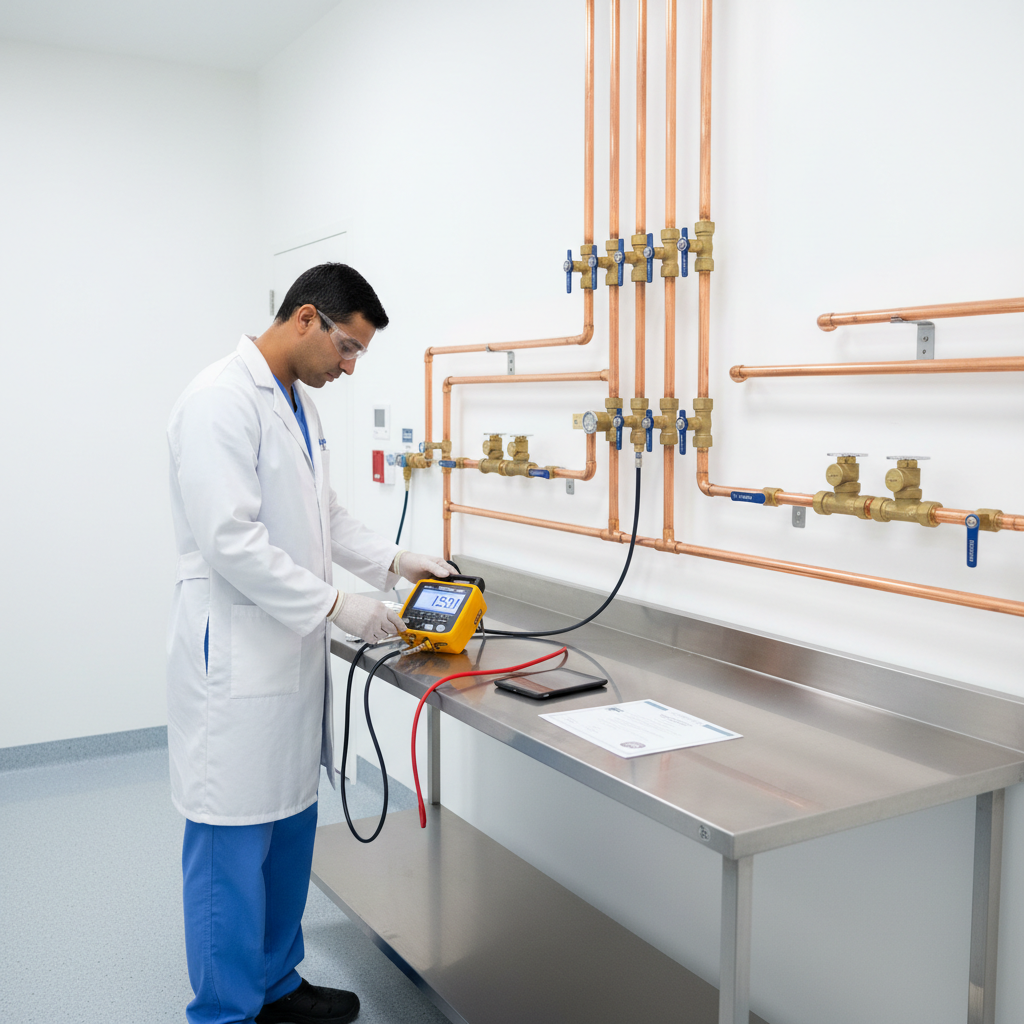
What is Medical Gas System Commissioning?
Medical gas system commissioning is the final, crucial phase of a new construction or major renovation project, governed primarily by NFPA 99 Health Care Facilities Code, Section 5.1.12. It is the formal process by which a system is proven to be fully operational and safe. This goes far beyond simply turning on the gas. It involves a series of detailed tests performed by a qualified ASSE 6030 Certified Medical Gas Verifier to ensure the system is free from defects, contaminants, and cross-connections. Only after successful commissioning and verification can a system be cleared for patient use.
Why this matters for compliance: Failure to properly commission a medical gas system per NFPA 99 can result in severe consequences, including project delays, costly remediation, loss of facility accreditation, and most importantly, significant risks to patient safety. Regulatory bodies like The Joint Commission (TJC) and the Centers for Medicare & Medicaid Services (CMS) require strict adherence to these life safety codes.
The Core Components of NFPA 99 Commissioning
NFPA 99 (2024 edition) outlines a multi-stage testing protocol. The verifier must systematically check every component of the medical gas distribution system, from the source equipment to the patient-use terminals.
1. Initial Piping Blowdown
Before any components like valves, alarms, or outlet stations are installed, the raw piping must be thoroughly cleaned. This is achieved by blowing high-volume, oil-free dry nitrogen through the pipes to remove any construction debris, dust, or other particulates that may have accumulated during the installation phase. This initial purge is critical for ensuring the cleanliness of the final gas delivered to the patient.
2. Standing Pressure Tests
Once the piping is purged and all components are installed, the system's integrity must be tested. This involves two key pressure tests:
- Initial Pressure Test: The entire system is pressurized to 1.5 times the standard operating pressure (but not less than 150 psig) for a set duration. Technicians check every joint and connection for leaks using a low-sudsing leak detection solution.
- 24-Hour Standing Pressure Test: After the initial test, the system is subjected to a 24-hour test at a 20% increase over the normal system operating pressure. This verifies that there are no slow, hard-to-detect leaks that could compromise system pressure and purity over time.
3. Cross-Connection Testing
This is arguably the most critical test in the entire commissioning process. A cross-connection, where one gas pipeline is mistakenly connected to another (e.g., Nitrogen connected to an Oxygen outlet), can be fatal. The verifier tests every single outlet for every single gas system to ensure this has not occurred. The process involves pressurizing each gas system individually with nitrogen and checking all other outlets to confirm that no gas is flowing where it shouldn't be.
Verifying Gas Purity and Quality
After confirming the system is leak-free and correctly connected, the final step is to verify the quality and purity of the medical gas itself. This involves a series of sophisticated tests performed at the source and at patient use points.
Particulate Testing
This test confirms the cleanliness of the pipeline. The verifier flows medical air through the pipes and uses a filter to capture any remaining particulates. According to NFPA 99, the amount of particulate matter must not exceed a specified limit, ensuring no construction debris will reach the patient.
Gas Purity Testing
Each gas is tested to ensure it meets the requirements of the United States Pharmacopeia (USP). This confirms the concentration of the gas (e.g., Oxygen is ≥ 99.0%) and checks for the presence of contaminants.
Gas-Specific Verification
The verifier confirms that the gas being delivered from an outlet is indeed the gas specified on the outlet label. This is the final check against a cross-connection and is performed on every outlet in the facility.
Commissioning vs. Verification vs. Certification
These terms are often used interchangeably, but they have distinct meanings in the context of NFPA 99 and ASSE 6000 standards. Understanding the difference is key for facility managers.
| Term | Governing Standard | Description |
|---|---|---|
| Installation | ASSE 6010 | The physical assembly and brazing of the medical gas pipelines and components. Performed by a certified installer. |
| Verification | ASSE 6030 | The process of testing a new or modified system to ensure it meets code requirements. This is a key part of commissioning. |
| Commissioning | NFPA 5.1.12 | The overall process that includes verification, testing of alarms, source equipment, and documenting that the entire system is ready for use. |
| Certification | N/A | The final documentation issued by the verifier that attests the system has passed all tests and is compliant with NFPA 99. |
At Medical Testing Solutions, our technicians hold ASSE 6030 certification for verification and can manage the entire commissioning process from start to finish, providing the final certification documents your facility needs to open.
Choosing a Certified Partner for Commissioning in Plantation
When selecting a company for medical gas commissioning, you must choose a partner with the right credentials and experience. Look for a company whose technicians are ASSE 6030 certified verifiers. This certification is the industry's benchmark for competency in medical gas verification. Medical Testing Solutions is a premier, ASSE-certified provider serving the Plantation and greater Fort Lauderdale area. Our team has the expertise to handle complex commissioning projects for new hospitals, surgery centers, and dental facilities.
We provide comprehensive documentation at the end of the project, which becomes a permanent record for your facility and is essential for accreditation surveys. Beyond commissioning, we offer a full suite of services including annual medical gas inspections and ongoing maintenance to keep your systems safe and compliant for years to come.
Your Partner for Compliance in Plantation, FL
Don't leave patient safety and compliance to chance. Proper medical gas system commissioning is a non-negotiable step for any new healthcare construction in Plantation. The expert team at Medical Testing Solutions is ready to ensure your system is installed, tested, and certified correctly the first time.
Ready to get started on your project? Contact us today for a comprehensive quote or call us at (754) 315-1078 to discuss your commissioning needs.
Frequently Asked Questions
The duration depends on the size and complexity of the facility. A small dental office might take a day, while a new hospital wing could take a week or more. The 24-hour standing pressure test is a required part of this timeline.
If a test fails (e.g., a leak is found or purity is off-spec), the installer (ASSE 6010) must correct the deficiency. The verifier (ASSE 6030) will then re-test that portion of the system until it passes. All corrections and re-tests must be documented.
The facility is ultimately responsible for ensuring commissioning is performed. However, the work itself must be done by a third-party agency, like Medical Testing Solutions, that is certified to the ASSE 6030 standard.
Yes. Any addition of or breach into an existing pipeline system requires re-verification of the affected portions of the system to ensure there are no cross-connections or introduced contaminants.
Request a quote for your facility
Talk with Medical Testing Solutions about your next inspection, repair or equipment request.