Skip to content
    New: Medical Gas Outlet Retrofit & Rebuild Matrix — cross-reference legacy Chemetron, Ohio Diamond, Puritan-Bennett & more →
    ASSE Certified 24/7
    Medical Gas Service
    Compliance & Standards

    Medical Gas System Commissioning in Miramar FL: A Guide

    Medical Testing SolutionsSeptember 27, 20267 min read
    Share
    Medical Gas System Commissioning in Miramar FL: A Guide

    Medical Gas System Commissioning in Miramar, FL: An NFPA 99-Compliant Guide for New Construction

    For any new healthcare facility in Miramar, Florida, the activation of your medical gas system is a critical milestone. This is not a simple "flip the switch" moment. It's a highly regulated process known as commissioning, governed by stringent safety codes to ensure the system is safe for patient use. Proper commissioning is the final, crucial step that validates the entire installation, from the source equipment to the patient outlets. This guide will walk you through the essential requirements for medical gas system commissioning in Miramar, focusing on the NFPA 99 5.1.12 standard, so you can understand what's required for a compliant, patient-safe facility from day one.

    What is Medical Gas System Commissioning?

    Commissioning is the comprehensive process of testing and documenting that a newly installed or modified medical gas system performs according to its design intent and, most importantly, meets the rigorous safety standards set by the National Fire Protection Association (NFPA). It is a specialized form of medical gas verification performed by a third-party agency, like Medical Testing Solutions, to ensure there are no errors from the installation phase.

    The commissioning process, as defined in NFPA 99, Chapter 5.1.12, "Final Performance Verification," is the ultimate quality control check. It happens after the installer has completed their initial tests and certified the system is ready. An ASSE 6030 certified verifier then conducts a series of independent tests to confirm the system's integrity, purity, and correct connections before it can be used for patient care.

    Why is Commissioning Non-Negotiable?

    • Patient Safety: The primary goal is to prevent patient harm. A cross-connection, contaminants, or incorrect gas concentration can have catastrophic consequences.
    • Regulatory Compliance: Commissioning is mandated by NFPA 99, which is adopted by law in Florida and enforced by the Authority Having Jurisdiction (AHJ), such as local building departments or the Agency for Health Care Administration (AHCA).
    • Facility Accreditation: Organizations like The Joint Commission (TJC) require documentation of proper system commissioning for accreditation.

    Why this matters for compliance: Failure to properly commission a medical gas system can result in a delayed facility opening, costly rework, and significant legal liability. It is a mandatory step to receive a certificate of occupancy for any healthcare facility in Miramar.

    The Core Components of NFPA 99 5.1.12 Commissioning

    The final verification process is multi-faceted, focusing on three critical areas: preventing cross-connections, ensuring gas purity, and verifying system cleanliness. A certified ASSE 6030 technician from a company like Medical Testing Solutions performs these tests.

    1. Standing Pressure Test & Cross-Connection Prevention

    This is perhaps the most critical test. Its purpose is to confirm that the gas-specific outlets are connected to the correct source pipeline.

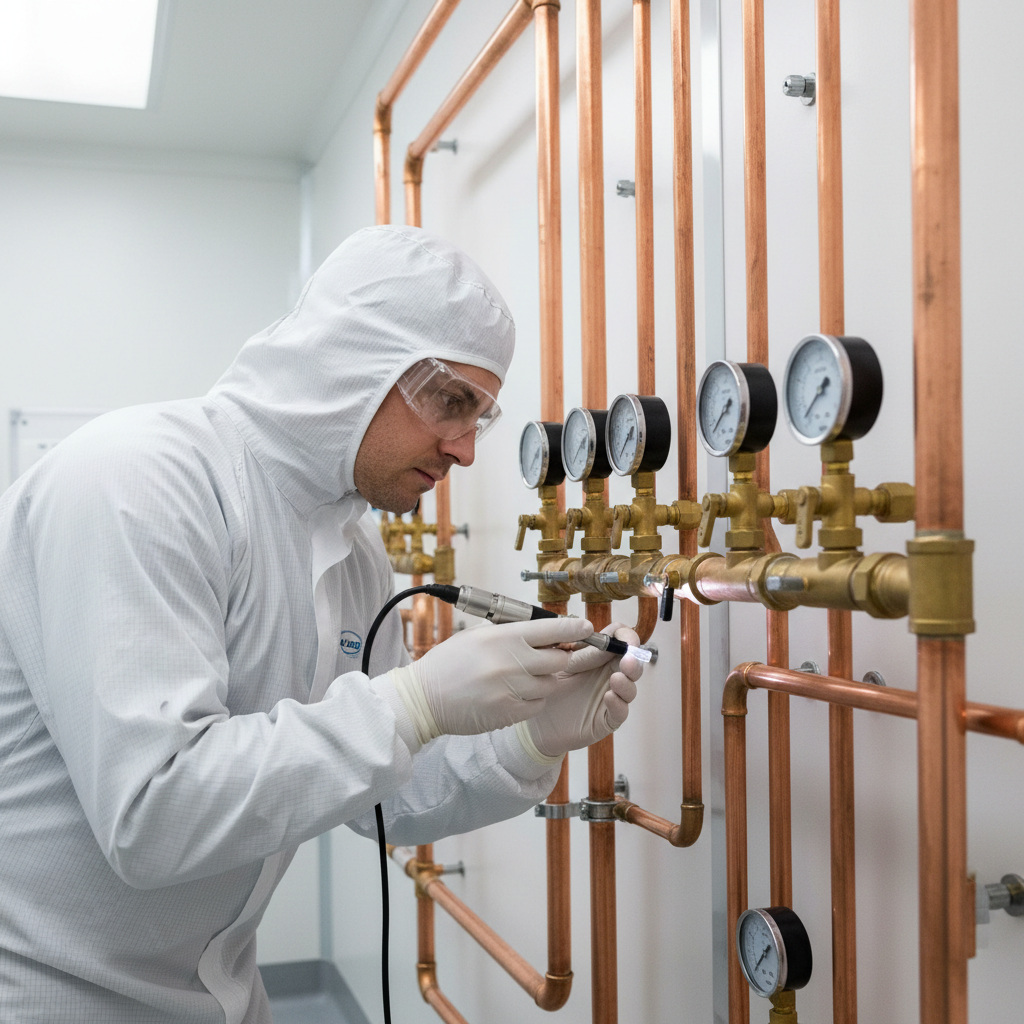
    • Procedure: The system is pressurized with oil-free, dry nitrogen to a specific level. The verifier then checks each outlet individually to ensure that only the intended gas line is pressurized. For example, when the oxygen line is pressurized, a test gauge at an oxygen outlet should show pressure, but a gauge at a medical air or vacuum outlet should show zero.
    • NFPA 99 Requirement: This test verifies that "each gas-specific outlet is supplied by the proper gas" (NFPA 99 5.1.12.3.8). A failure here indicates a cross-connection, a life-threatening installation error that must be corrected immediately.

    2. Particulate Testing

    This test ensures the internal surfaces of the piping are clean and free of construction debris.

    • Procedure: A high volume of nitrogen is purged through the system at a high velocity. At the furthest outlet from the source, the gas is passed through a white, 1-micrometer filter for at least 30 seconds.
    • NFPA 99 Requirement: The verifier then visually inspects the filter for any particulate matter. Per NFPA 99 5.1.12.3.6, there should be no discoloration on the filter and no visible particulates. The presence of debris indicates the system was not properly cleaned by the installer and must be re-purged.

    3. Gas Purity & Concentration Testing

    Once the system is proven to be clean and correctly connected, the final step is to introduce the source gases and verify their purity at each outlet.

    • Procedure: The verifier uses calibrated gas-specific analyzers to measure the concentration and purity of the gas at each outlet. For example, oxygen outlets must deliver >99% pure oxygen.
    • NFPA 99 Requirement: NFPA 99 5.1.12.3.7 outlines the specific purity requirements for each medical gas. This test confirms that the correct gas is not only in the right pipe but also meets medical-grade specifications.

    Commissioning vs. Installation: Understanding the Roles

    It's crucial to understand the separation of duties between the installer and the verifier. This separation is a key principle of the NFPA 99 code to ensure unbiased, third-party validation.

    RoleASSE CertificationPrimary ResponsibilityNFPA 99 Reference
    InstallerASSE 6010Brazes piping, installs source equipment, performs initial pressure tests, and provides documentation that the system is ready for verification.NFPA 99 5.1.10
    VerifierASSE 6030Performs the final performance verification (commissioning), confirms system integrity and purity, and provides the official certification document.NFPA 99 5.1.12

    Medical Testing Solutions is one of the few companies in the Miramar area qualified to provide both medical gas installation services with ASSE 6010 certified personnel and third-party verification and commissioning with our team of ASSE 6030 certified verifiers.

    The Commissioning Process Step-by-Step

    For a new construction project in Miramar, the commissioning process generally follows these steps:

    1. Installation Completion: The ASSE 6010 installer completes all piping, component installation, and their own required initial tests.
    2. Scheduling Verification: The general contractor or facility manager schedules the third-party verification with an ASSE 6030 certified company like MTS.
    3. Initial Standing Pressure Test: The verifier pressurizes each line individually with nitrogen to test for leaks and initial cross-connections.
    4. Blowing Down & Particulate Test: Each line is purged at a high flow rate to remove any potential debris from the installation process, followed by the particulate filter test.
    5. Individual Cross-Connection Test: Each gas is introduced into its respective line, one at a time, and every outlet is tested to ensure the correct gas is present and only that gas.
    6. Purity & Concentration Analysis: The verifier tests the gas from outlets with specialized equipment to ensure it meets USP purity standards.
    7. Alarm & Component Testing: All system alarms (pressure switches, master alarms, area alarms) and major components (manifolds, pumps, compressors) are tested to ensure they function as designed.
    8. Labeling Verification: The verifier confirms that all pipes and outlets are labeled correctly according to the code.
    9. Final Documentation: Upon successful completion of all tests, the verifier provides a comprehensive report. This document is required by the AHJ to certify the system for patient use.

    Choosing a Certified Verifier in Miramar, FL

    When selecting a partner for your medical gas system commissioning, credentials are paramount. You need a company with a deep, proven understanding of NFPA and ASSE standards.

    • Look for ASSE 6030 Certification: This is the gold standard for a Medical Gas Verifier. Ask for credentials.
    • Request Project History: Inquire about their experience with similar facilities in South Florida.
    • Ensure They Are a True Third Party: The verifier must be independent of the installer to provide unbiased testing.

    Medical Testing Solutions provides comprehensive medical gas certification and commissioning services throughout Miramar and Broward County. Our technicians are ASSE 6030 certified and possess decades of experience ensuring facilities meet the highest standards of safety and compliance.

    Get Your New Facility Commissioned Right

    Proper medical gas system commissioning is a foundational requirement for patient safety and regulatory approval in any new Miramar healthcare facility. It's a complex process that demands certified expertise. Don't leave this critical step to chance. Partner with a trusted, certified expert to ensure your system is compliant, safe, and ready for service from day one.

    If you are planning a new construction or renovation project, contact the experts at Medical Testing Solutions today. We provide detailed quotes and expert consultation for all your medical gas needs, from installation to final verification.

    Ready to ensure your project's success? Request a quote online or call us at (754) 315-1078 to speak with a commissioning specialist.

    Frequently Asked Questions

    The duration depends on the size and complexity of the facility. A small dental office might take a day, while a large hospital floor could take several days to a week. The key is coordinating the testing after the installer is 100% complete.

    If a failure occurs (e.g., a cross-connection or particulate contamination), the verifier will halt the process and document the deficiency. The original installer is then responsible for correcting the issue. The verifier will return to re-test the affected portion of the system.

    Typically, the mechanical contractor or the medical gas installer is responsible for providing the high-pressure nitrogen cylinders required for the initial pressure tests and purges.

    No. NFPA 99 requires the final verification to be performed by a party other than the installer to ensure an unbiased, third-party assessment of the system's integrity and safety.

    This article is provided for educational purposes and reflects industry standards as of publication. Always verify against current NFPA 99, CGA, and AHJ requirements. Medical Testing Solutions is ASSE-certified and ready to help — contact us for facility-specific guidance.

    Request a quote for your facility

    Talk with Medical Testing Solutions about your next inspection, repair or equipment request.

    Get a quote in 1 business day

    I agree to receive text messages from Medical Testing Solutions, L.L.C. at the phone number provided, including informational and marketing messages. Consent is not a condition of purchase. Message frequency varies. Message & data rates may apply. Reply STOP to opt out or HELP for help. See our Privacy Policy and Messaging Terms.

    Prefer to talk? Call (754) 315-1078

    Related articles