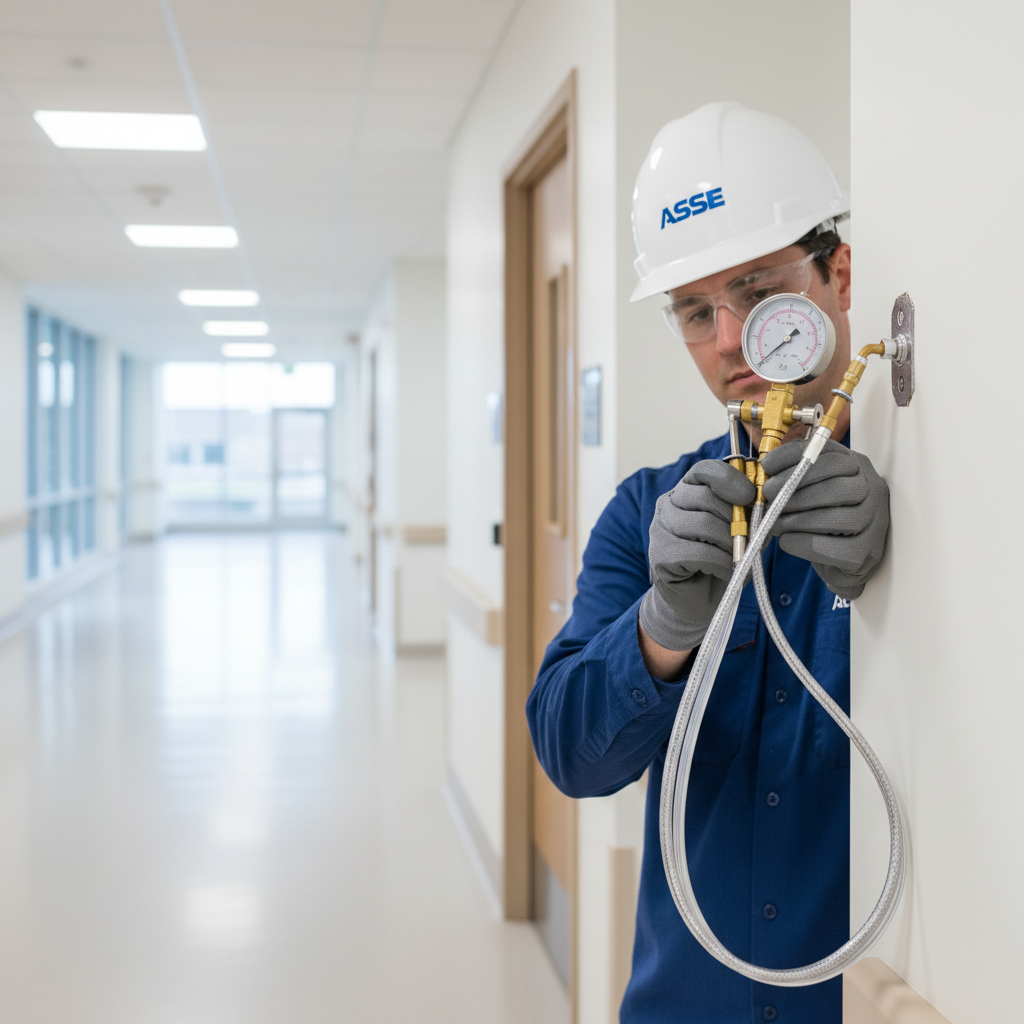
Medical Gas System Commissioning in Hialeah FL: A Guide
Medical Testing SolutionsSeptember 28, 20266 min read
Share
Understanding Medical Gas System Commissioning in Hialeah, FL
For any new construction or major renovation of a healthcare facility in Hialeah, Florida, medical gas system commissioning is a critical and non-negotiable process. Commissioning is the final, exhaustive review that ensures a newly installed or modified medical gas piping system is safe, effective, and compliant before it can be used for patient care. Governed primarily by the National Fire Protection Association's standard, NFPA 99, Health Care Facilities Code, this process verifies that the system was installed correctly, is free of contaminants, and delivers the correct gas to the correct outlets. This guide will walk you through the essential steps of commissioning as required by NFPA 99, specifically section 5.1.12, helping facility managers and construction supervisors in Hialeah ensure a smooth, compliant, and safe system turnover.
The Role of the ASSE 6030 Certified Medical Gas Verifier
The entire commissioning process is overseen by a party other than the installer: a qualified ASSE 6030 Certified Medical Gas Systems Verifier. This third-party verification is a core principle of the NFPA 99 code. The verifier must be an individual or agency with a deep understanding of medical gas systems, testing procedures, and the applicable codes. At Medical Testing Solutions, our team includes ASSE 6030 certified professionals who provide unbiased, expert medical gas verification services across South Florida, including Hialeah. The verifier is responsible for conducting or witnessing a series of crucial tests to certify that the system is patient-ready.
Why this matters for compliance: NFPA 99, section 5.1.12.3.1.2, explicitly states that "The tests required by 5.1.12.3 shall be conducted by a party other than the installing contractor." This ensures an impartial assessment of the system's safety and integrity, which is a foundational requirement for receiving a certificate of occupancy and passing Joint Commission surveys.
Initial Verification: Pre-Test System Checks
Before the verifier begins the official testing sequence, the installer must perform their own initial pressure tests and prepare the system. The verifier will first confirm these steps have been completed and documented.
Installer's Initial Blowdown and Pressure Test
Initial Blowdown: After the piping is installed, the installer must perform a preliminary blowdown with oil-free, dry nitrogen to remove any large debris from the lines.
Initial Pressure Test: The installer then conducts a 24-hour standing pressure test (per NFPA 99, 5.1.12.2.6) to check for leaks. The system is pressurized to 1.5 times the working pressure (but not less than 150 psig) and must hold that pressure without loss for 24 hours.
The verifier will review the installer's documentation for these tests before proceeding. This initial step is performed by the ASSE 6010 certified installation team; it's the verifier's job to confirm it was done correctly.
Core Commissioning Tests (NFPA 99 5.1.12.3)
Once the initial checks are satisfactory, the ASSE 6030 Verifier begins the series of tests that form the heart of the commissioning process. These tests are performed in a specific sequence.
1. Cross-Connection Test
This test confirms that gas-specific outlets are connected only to the pipeline for that specific gas. Each system is pressurized individually with nitrogen, and every outlet in the facility is checked to ensure pressure is present only at the outlets corresponding to the pressurized system. Any cross-connection is a critical failure that could lead to catastrophic patient outcomes. A cross-connection must be corrected and the system re-tested before proceeding.
2. Valve and Alarm Testing
Every zone valve and source valve is tested to ensure it operates correctly and that the associated area alarm and master alarm panels function as designed.
Valve Operation: Verifying the valve closes completely and isolates the intended zone.
Alarm Function: Ensuring that when a zone valve is closed or system pressure deviates from the norm, the correct alarm panel activates with the correct visual and audible signals. This includes testing pressure switches and sensors.
This test ensures the internal surfaces of the pipelines are free from construction debris. A high-volume flow of nitrogen is passed through the system and directed through a white 0.45-micron filter for at least one minute. The filter is then visually inspected for any contaminants. According to NFPA 99, there should be no discoloration on the filter and no more than a few scattered fibers. A failed test requires the system to be re-cleaned and re-tested.
4. Piping Purity Test
After passing the particulate test, the system undergoes a purity test to check for contaminants, primarily brazing byproducts like copper oxides. The test measures the concentration of total non-methane hydrocarbons (TNMHC) and halogenated hydrocarbons.
Contaminant
NFPA 99 Limit
Description
Total Non-Methane Hydrocarbons (TNMHC)
< 25 ppm
Measures residual oils or greases.
Halogenated Hydrocarbons
< 2 ppm
Measures residual cleaning solvents.
Dew Point
< -30°C at 50 psig
Ensures the system is dry to prevent water contamination.
5. Final Gas Concentration & Purity Verification
The final step is to introduce the source gas into each respective system and verify its concentration and purity at the outlet. The verifier will test at least one outlet in each zone to confirm the gas is what it's supposed to be and meets USP (United States Pharmacopeia) standards for medical use.
Oxygen: > 99% O2
Nitrous Oxide: > 99% N2O
Medical Air: 19.5% - 23.5% O2
Any incorrect gas concentration is a critical failure. This is why a third-party like Medical Testing Solutions is so important, our sole focus is verifying the safety and compliance established by the medical gas installation team.
Final Report and System Certification
Upon successful completion of all tests, the ASSE 6030 Verifier provides a detailed written report. This report documents the results of every test for every outlet, valve, and alarm panel in the facility. It serves as the official medical gas certification document, allowing the healthcare facility in Hialeah to place the system into service. This documentation is essential for regulatory bodies like the Joint Commission and the Florida Agency for Health Care Administration (AHCA).
Medical Testing Solutions provides comprehensive, audit-proof documentation that facilities can rely on for years to come.
Your Partner for Compliant Medical Gas Systems in Hialeah
Ensuring your medical gas system is commissioned correctly is not just about checking a box, it's about guaranteeing patient safety and securing your facility's license to operate. The process is technical, code-driven, and requires a certified expert.
For new construction and renovation projects in Hialeah and across South Florida, trust the ASSE-certified experts at Medical Testing Solutions. We provide thorough, independent medical gas system commissioning to ensure your facility is 100% compliant and patient-ready.
Ready to schedule your system verification? Request a quote online or call us at (754) 315-1078 today.
Frequently Asked Questions
It is the final testing and verification process for newly installed medical gas systems, as required by NFPA 99. An ASSE 6030 Verifier performs a series of tests for cross-connections, purity, particulate, and alarm function to ensure the system is safe for patient use before it is put into service.
Only an ASSE 6030 Certified Medical Gas Systems Verifier who is independent of the installation contractor can perform the final verification. This ensures an unbiased and accurate assessment of the system's compliance and safety.
The duration depends on the size and complexity of the facility. A small dental clinic might take a day, while a new hospital wing in Hialeah could take several days to a week to test every single outlet, valve, and alarm.
If any part of the commissioning fails (e.g., a cross-connection test or purity test), the installer must correct the deficiency. The ASSE 6030 Verifier will then re-test the affected portion of the system until it meets the strict requirements of NFPA 99.
Commissioning is not optional; it is a mandatory requirement under NFPA 99, Chapter 5. Without a successful verification report from an ASSE 6030 Verifier, a healthcare facility cannot legally use its medical gas system, potentially delaying the opening of a new building or renovated wing.
Commissioning (Verification) is performed once on new or modified systems before they are placed into service. Annual medical gas inspections are performed every year on existing systems to ensure they continue to operate safely and meet code requirements over time.
Request a quote for your facility
Talk with Medical Testing Solutions about your next inspection, repair or equipment request.