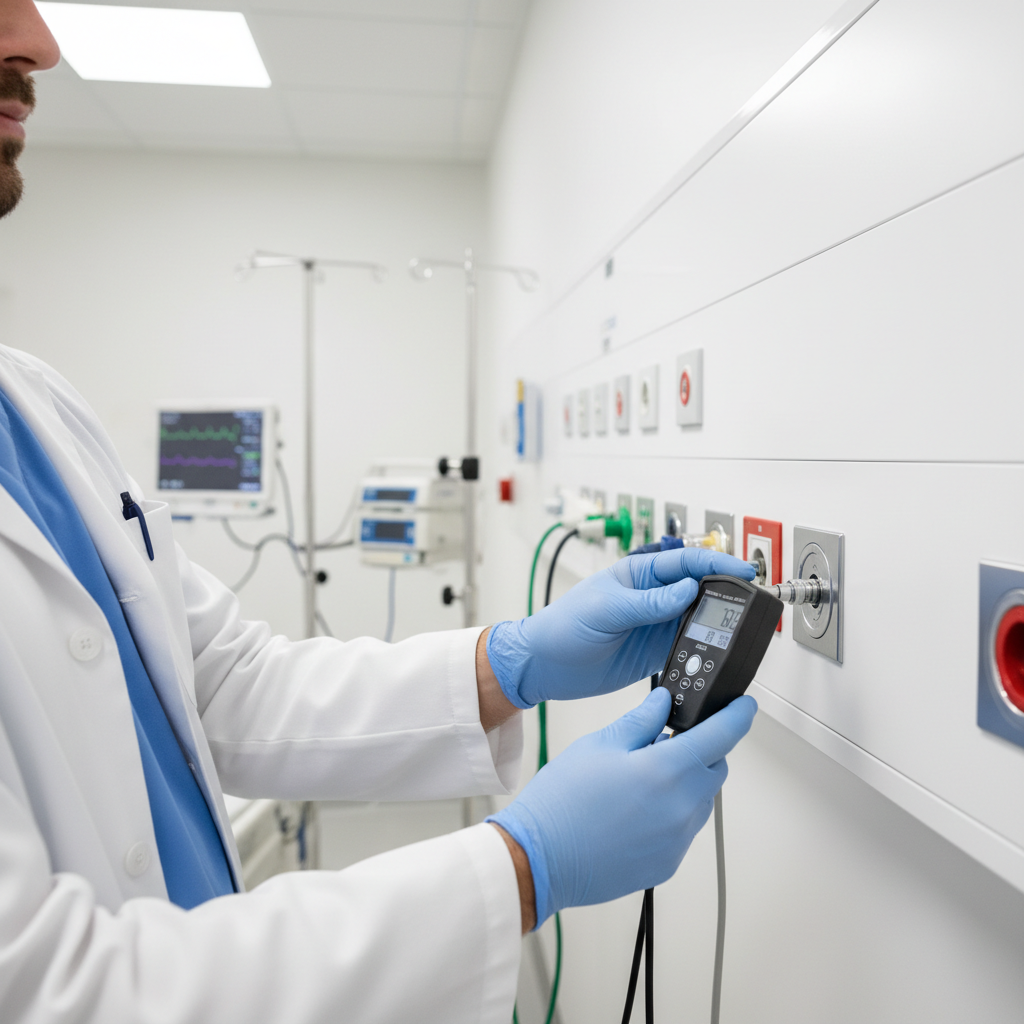
Medical Gas System Commissioning in Delray Beach: An NFPA 99 Compliance Guide
For any new construction or renovation project in a Delray Beach healthcare facility, the proper commissioning of medical gas systems is not just a final checklist item, it's a critical patient safety and regulatory mandate. A newly installed medical gas pipeline is considered an extension of the patient's respiratory system. Before it can be used, it must be rigorously tested and verified to be clean, correct, and free of any potential hazards. This process, known as commissioning, is governed by stringent codes, primarily NFPA 99, the Health Care Facilities Code. This guide will walk you through the essential requirements for medical gas system commissioning in Delray Beach, FL, explaining the key tests and why they are non-negotiable for any healthcare facility.
What is Medical Gas System Commissioning?
Medical gas system commissioning is the final phase of a new installation, where the system is comprehensively tested to ensure it is safe and ready for patient use. This isn't a simple leak check; it's a formal process performed by a qualified third-party, like Medical Testing Solutions, to verify that the system meets the exacting standards of NFPA 99. The goal is to confirm three core principles: gas identity, gas purity, and the absence of physical contaminants or cross-connections.
The commissioning process culminates in a formal certification of the system. Without this medical gas certification, the system cannot legally be placed into service. The entire procedure is outlined in NFPA 99, Chapter 5, specifically section 5.1.12, which details the requirements for "Piped Gas and Vacuum Systems Level 1."
The Commissioning Team: Roles and Qualifications
A successful commissioning process involves several key players, each with distinct responsibilities:
- The Installer (ASSE 6010 Certified): This is the tradesperson or company responsible for the physical medical gas installation. They must hold an ASSE 6010 Medical Gas Systems Installer certification. Their work must be precise, following the design specifications and adhering to proper brazing techniques and cleanliness standards.
- The Verifier (ASSE 6030 Certified): This is the independent third-party inspector who performs the final commissioning tests. They must hold an ASSE 6030 Medical Gas Systems Verifier certification. This individual cannot be an employee of the installer. This separation of duties is crucial for unbiased verification. Medical Testing Solutions provides ASSE 6030 certified verification services across South Florida.
- The Project Engineer/Designer: This party is responsible for the overall system design, ensuring it meets the facility's needs and complies with all applicable codes.
Key Commissioning Tests per NFPA 99 5.1.12
NFPA 99 mandates a specific sequence of tests to verify a new medical gas system. These tests are designed to be performed in a logical order, with each step building on the last. A failure at any stage requires corrective action and re-testing.
1. Initial Piping Blow-Down
Before any components like zone valves or outlets are installed, the piping network must be thoroughly cleaned. This is achieved by blowing large volumes of oil-free, dry nitrogen through the pipes. The goal is to remove any construction debris, dust, or other particulates that may have accumulated during installation.
2. Standing Pressure Test
Once the piping is clean and sealed, a standing pressure test (or "leak test") is performed. The system is pressurized with nitrogen to 1.25 times the normal operating pressure (but not less than 150 psig). The system is then left to stand for 24 hours. The pressure cannot drop by more than 5 psig over this period. This test confirms the integrity of every joint and connection in the system.
Why this matters for compliance: A leak in a medical gas system can be catastrophic. For oxygen, it creates a severe fire hazard. For other gases, it can lead to a loss of pressure and failure to deliver the required therapy to patients. This 24-hour test is a non-negotiable NFPA 99 requirement to ensure a sealed, safe system.
3. Cross-Connection Testing
This is one of the most critical tests in the entire process. Its purpose is to ensure that the gas intended for a specific outlet is the only gas present at that outlet. For example, it confirms that oxygen lines are not accidentally connected to medical air outlets. Each gas system is pressurized individually with nitrogen, and every single outlet in the facility is checked to ensure pressure is present only at the outlets for that specific gas. This test prevents potentially fatal medical errors.
4. Particulate Testing
Even after the initial blow-down, microscopic particulates can remain. A particulate test is performed at each outlet to ensure the gas delivered to the patient is clean. A special filter is used to capture any particles while flowing 1000 liters of gas through the outlet. The filter is then visually inspected for any evidence of contamination. Per NFPA 99, there should be no discoloration on the filter.
5. System Purity Testing
After confirming the pipes are clean and correctly connected, the final step is to test the purity of the gas itself. This test verifies that the gas being delivered meets the stringent requirements of USP (United States Pharmacopeia). Samples are taken from the source equipment and from the outlets to test for:
- Dew Point: Measures the moisture content. Excessive moisture can corrode equipment and support microbial growth.
- Concentration: Ensures the gas is at the correct percentage (e.g., Oxygen ≥ 99.0%).
- Contaminants: Tests for the presence of other gases or vapors, such as carbon monoxide or carbon dioxide.
Comparing Commissioning, Verification, and Certification
These terms are often used interchangeably, but they have distinct meanings in the context of NFPA 99.
| Term | Definition | Performed By | Standard |
|---|---|---|---|
| Installation | The physical assembly and brazing of the pipeline system. | ASSE 6010 Installer | NFPA 99, 5.1.10 |
| Verification | The process of performing the battery of tests (pressure, purity, etc.) on the completed installation. | ASSE 6030 Verifier | NFPA 99, 5.1.12 |
| Certification | The formal, written documentation issued by the Verifier stating that the system has passed all tests and is compliant. | ASSE 6030 Verifier | NFPA 99, 5.1.12.3.8 |
| Commissioning | The overall process that encompasses installation, verification, and certification to bring the system into service. | All Parties | NFPA 99, Chapter 3 |
Choosing a Verifier in Delray Beach
When selecting a company for medical gas system commissioning in Delray Beach, credentials are paramount. You must choose a company that is independent of the installer and employs ASSE 6030 Certified Verifiers. Medical Testing Solutions has been serving the South Florida healthcare community for years, with a team of ASSE-certified professionals who understand the nuances of NFPA 99.
When vetting a verifier, ask for:
- Proof of current ASSE 6030 certification for the specific technician who will be on-site.
- A list of recently completed projects of similar scope.
- A sample of their final certification documentation.
Beyond commissioning, MTS provides a full suite of services, including annual medical gas inspections and preventative maintenance programs to ensure your facility remains compliant and safe for the life of the system.