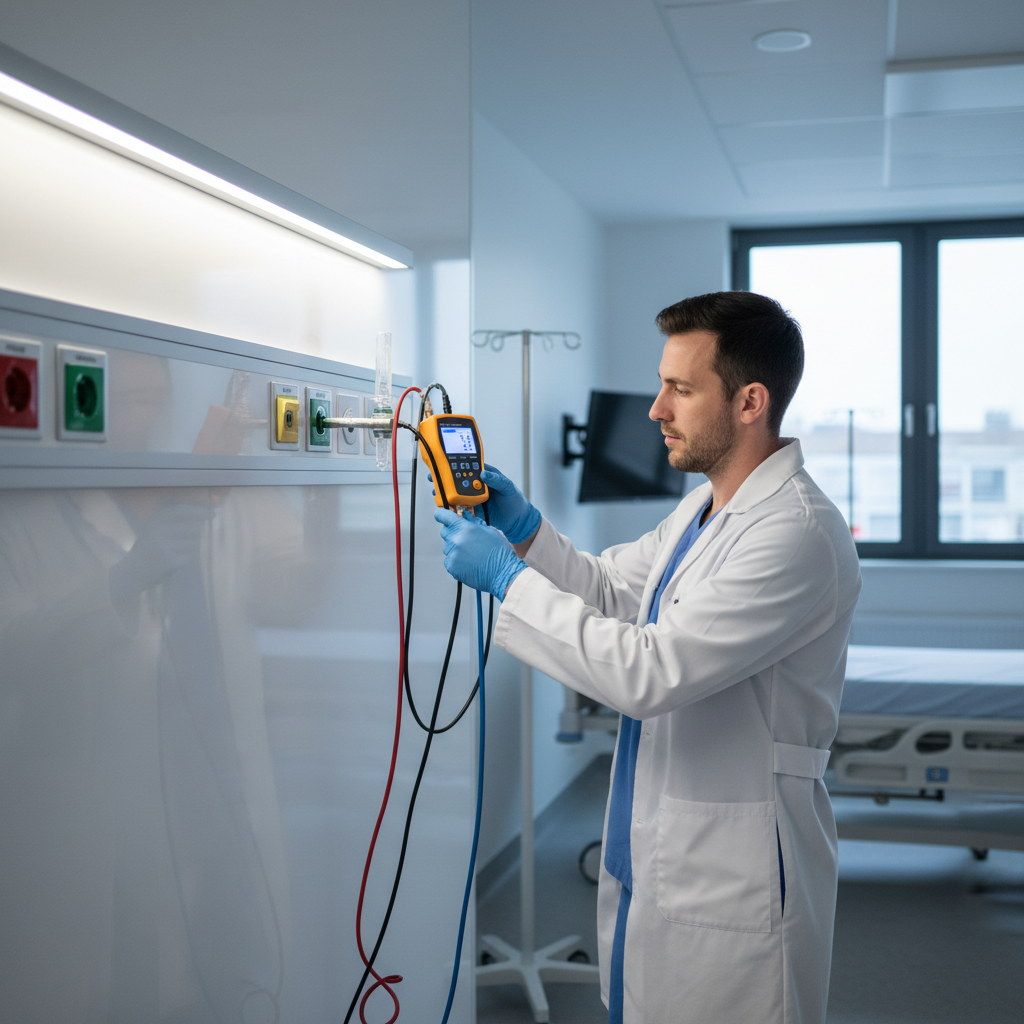
What is Medical Gas System Commissioning? A Primer for Davie Facilities
Commissioning a medical gas system is the final, crucial step before a new or modified system can be safely used for patient care in your Davie, FL healthcare facility. Defined under NFPA 99, Health Care Facilities Code, section 5.1.12, commissioning is a comprehensive process of inspection, testing, and verification. It ensures that the entire system, from the source equipment to the patient-use terminals, is installed correctly, functions as designed, and delivers pure, uncontaminated medical gas.
This guide will walk you through the critical phases of commissioning, explaining why each test is necessary for NFPA 99 compliance and patient safety. You will learn about the roles of ASSE 6030 Verifiers, the specific tests conducted, and how Medical Testing Solutions ensures your facility meets these stringent requirements.
The Role of the ASSE 6030 Certified Medical Gas Verifier
Commissioning isn't a job for just any contractor; it must be performed by a party that is technically competent and experienced in the field of medical gas and vacuum system testing. Per NFPA 99, this individual must be certified to the ASSE 6030 Medical Gas Systems Verifier standard. This certification ensures the technician possesses the knowledge and skill to perform the required battery of tests accurately and document the results for the facility and any Authorities Having Jurisdiction (AHJ).
An ASSE 6030 Verifier acts as an independent, third-party validator of the installer's work. They are responsible for the final system verification after the installer (often an ASSE 6010 certified professional) has completed their own initial tests. At Medical Testing Solutions, our team includes ASSE 6030 certified verifiers who provide comprehensive medical gas verification services across South Florida.
Why this matters for compliance: Using an uncertified individual for verification can lead to an immediate failure of inspection by the AHJ, causing costly project delays and requiring a complete re-verification by a certified professional. It is a non-negotiable requirement for compliance and patient safety.
Phase 1: Pre-Commissioning Documentation and System Review
Before any physical testing begins, the verifier conducts a thorough review of all system documentation. This includes:
- As-built Drawings: Confirming that the installed system matches the final approved plans.
- Installer-Performed Tests: Reviewing the initial pressure tests and blow-down reports provided by the installation contractor.
- Equipment Specifications: Ensuring all source equipment, alarms, and components meet the specified requirements and NFPA 99 standards.
This phase is critical for identifying any potential discrepancies or issues before they can cause a test failure. It sets the stage for a smooth and efficient verification process.
Phase 2: Initial System Verification & Cross-Connection Testing
The most critical safety test during commissioning is the initial cross-connection test. This test ensures that the gas intended for a specific outlet is the only gas present in that pipeline. A cross-connection, for instance, between oxygen and nitrogen, could have catastrophic consequences for a patient.
The Process:
- System Pressurization: Each individual medical gas system is pressurized with a source of oil-free, dry nitrogen to a specific pressure (e.g., 50 psig).
- Outlet-by-Outlet Check: The verifier then proceeds to every single medical gas outlet in the facility, one by one.
- Verification: At each outlet, the verifier confirms that pressure is present only at the outlets for the system currently under pressure. For example, if the oxygen system is pressurized with nitrogen, there should be no pressure at any of the medical air or vacuum outlets.
This painstaking process is repeated for every single gas and vacuum system in the facility. It is the fundamental test for ensuring system integrity and is a core part of our medical gas certification protocol.