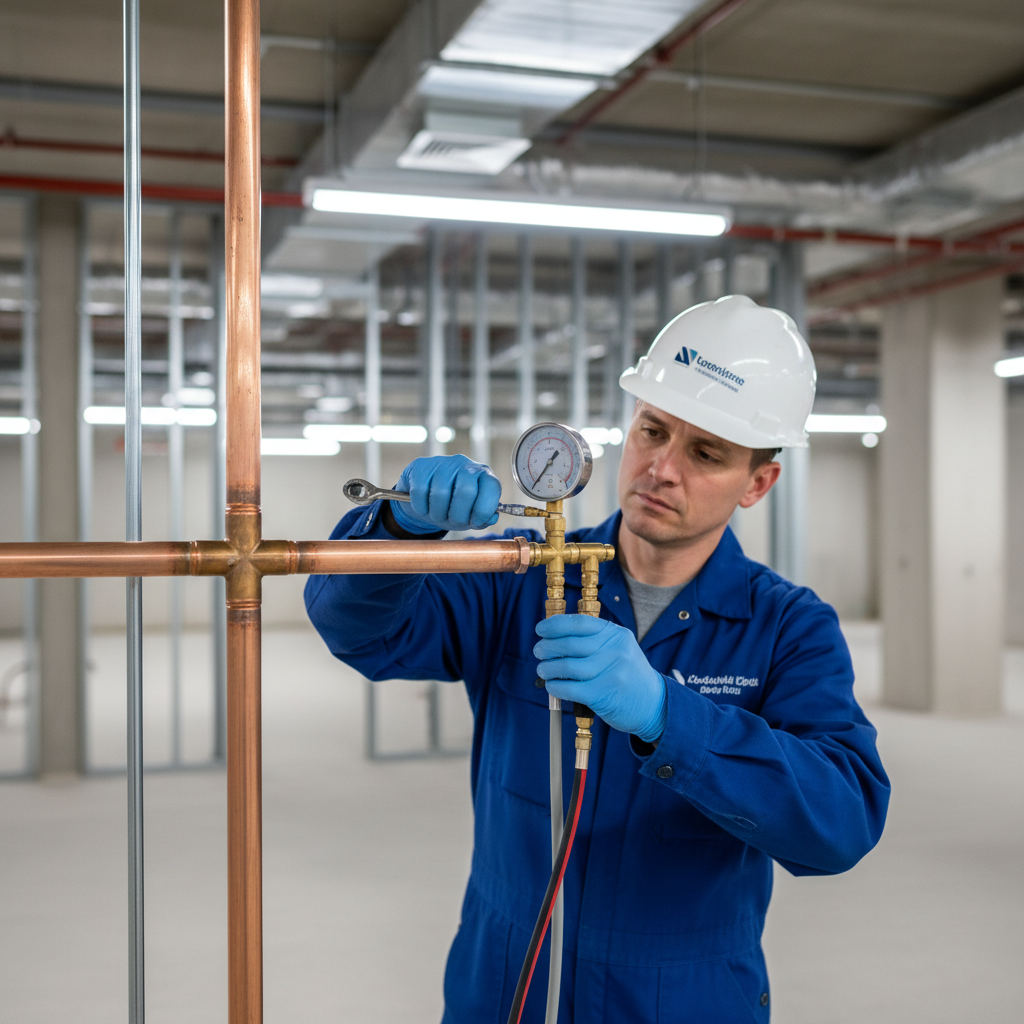
Medical Gas System Commissioning in Aventura, FL: An NFPA 99 Compliance Guide for New Construction
For any new healthcare facility construction in Aventura, Florida, one of the final and most critical milestones before opening your doors is the commissioning of your medical gas system. This isn't just a line item on a punch list; it's a fundamental patient safety and compliance requirement mandated by NFPA 99, the Health Care Facilities Code. Proper commissioning ensures your system is clean, correct, and ready for patient use. This guide explains the essential steps involved in medical gas system commissioning, specifically focusing on the verification process outlined in NFPA 99, section 5.1.12, to ensure your facility is safe, compliant, and prepared for its grand opening.
What is Medical Gas System Commissioning?
Commissioning is the comprehensive process of ensuring all components and systems of a building are designed, installed, tested, and capable of being operated and maintained according to the owner's operational needs. For medical gas systems, this culminates in a final verification performed by a qualified ASSE 6030 Certified Medical Gas Verifier. This verification is the official "stamp of approval" confirming that the newly installed piping network is safe for patient use. It involves a series of rigorous tests to validate the system's integrity, purity, and functionality, from the source equipment to the patient-use terminals.
Without this final verification, a facility cannot legally administer medical gases. At Medical Testing Solutions, our ASSE 6030 certified technicians provide the expert medical gas verification required to get your Aventura facility commissioned and operational.
The "Big Three" of Commissioning: Particulate, Purity, and Cross-Connection
NFPA 99 5.1.12 outlines a detailed sequence of tests required for final verification. While the full process is extensive, three tests form the core of the commissioning process for a new system: particulate testing, purity testing, and cross-connection testing. These procedures verify that the gas being delivered is the correct gas, at the correct pressure, and free from contaminants.
1. Particulate Testing (NFPA 99: 5.1.12.3.7)
Objective: To ensure the piping distribution system is free from construction debris and other particulate matter.
During installation, dust, dirt, brazing slag, and other contaminants can be introduced into the pipes. Particulate testing verifies that the initial purging and blowing out of the lines were effective. The test is performed by flowing high-volume, high-velocity medical air or nitrogen through the system and capturing any particulates on a clean, white filter. The filter is then examined under magnification. The presence of significant particulate matter indicates a problem that must be resolved before proceeding.
Why this matters for compliance: A contaminated system can deliver harmful debris directly to a patient's lungs or foul sensitive medical equipment like ventilators and anesthesia machines. Passing a particulate test is a non-negotiable step in proving the system is clean and safe.
2. Purity Testing (NFPA 99: 5.1.12.3.8)
Objective: To confirm the medical gas meets the specific purity requirements outlined in the United States Pharmacopeia (USP).
The verifier uses specialized instruments to analyze the gas from each source and a sample of outlets throughout the facility. This test checks for:
- Gas Concentration: Ensures Oxygen is ≥99% O2, Nitrous Oxide is ≥99% N2O, etc.
- Contaminants: Detects the presence of carbon monoxide, carbon dioxide, moisture (dew point), and total volatile hydrocarbons.
Each gas has a specific set of acceptable limits for these contaminants. For example, medical air must have a dew point of 39°F (4°C) at 50 psi and minimal levels of CO, CO2, and hydrocarbons.
3. Cross-Connection Testing (NFPA 99: 5.1.12.3.3)
Objective: To guarantee that the gas delivered at an outlet is the gas specified on the outlet label.
A cross-connection is one of the most dangerous errors that can occur during installation, where, for instance, a terminal labeled "Oxygen" is mistakenly connected to the nitrous oxide pipeline. The results of such a mix-up can be catastrophic.
The test is conducted by pressurizing each gas system, one at a time, and checking every outlet in the facility to confirm that only the outlets corresponding to that specific gas are receiving pressure. This systematic process ensures 100% certainty that there are no crossed lines anywhere in the building.
The Full Commissioning Verification Sequence
While the "big three" are critical, they are part of a larger, mandatory testing sequence. A certified ASSE 6030 verifier must perform and document all steps in the correct order.
- Initial Blowdown: Lines are cleaned with high-velocity nitrogen after brazing.
- Initial Pressure Test: Verifies the basic integrity of the piping after installation.
- Cross-Connection Test: Confirms individual pipelines are not interconnected.
- Piping Purge Test: A final purge to ensure cleanliness before sealing the system.
- Standing Pressure Test: A 24-hour test to check for leaks.
- Particulate Test: As described above, to ensure no debris remains.
- Purity Test: As described above, to verify gas quality.
- Final Tie-In Test: Verifies integrity after the source equipment is connected.
- Labeling and Marking: Verifies all pipes, outlets, and zone valves are correctly labeled.
- Alarm & Warning System Testing: Ensures all master, area, and local alarms function correctly.
ASSE 6010 vs. ASSE 6030: Installer vs. Verifier
It's important to understand the different roles involved in bringing a medical gas system online, as defined by the ASSE 6000 series standards.
| Credential | Role & Responsibility | Governing Standard | Scope of Work |
|---|---|---|---|
| ASSE 6010 Certified Installer | A tradesperson qualified to braze and install medical gas and vacuum piping systems. | NFPA 99, 5.1.10.11.10 | Responsible for the physical assembly and medical gas installation of the pipeline network. They must work under a quality assurance program. |
| ASSE 6030 Certified Verifier | An independent, third-party agent responsible for conducting the final inspection and testing (commissioning). | NFPA 99, 5.1.12.3.1.2 | Performs the full battery of commissioning tests. The verifier cannot be an employee of the installing contractor to ensure unbiased results. Medical Testing Solutions provides this service. |
Preparing Your Aventura Facility for Commissioning
To ensure a smooth commissioning process, facility managers and construction supervisors should:
- Hire Qualified Professionals: Ensure your mechanical contractor employs ASSE 6010 certified installers from the start.
- Coordinate Schedules: The verification process requires dedicated access to the facility. The ASSE 6030 verifier will need to work systematically through every room with a medical gas outlet.
- Provide System Access: Ensure all medical gas source equipment, manifolds, and alarm panels are accessible and powered on for testing.
- Maintain Documentation: Keep the installer's documentation, including brazing records and initial pressure test results, on file for the verifier's review.
Proper planning prevents costly delays and ensures your project stays on schedule.