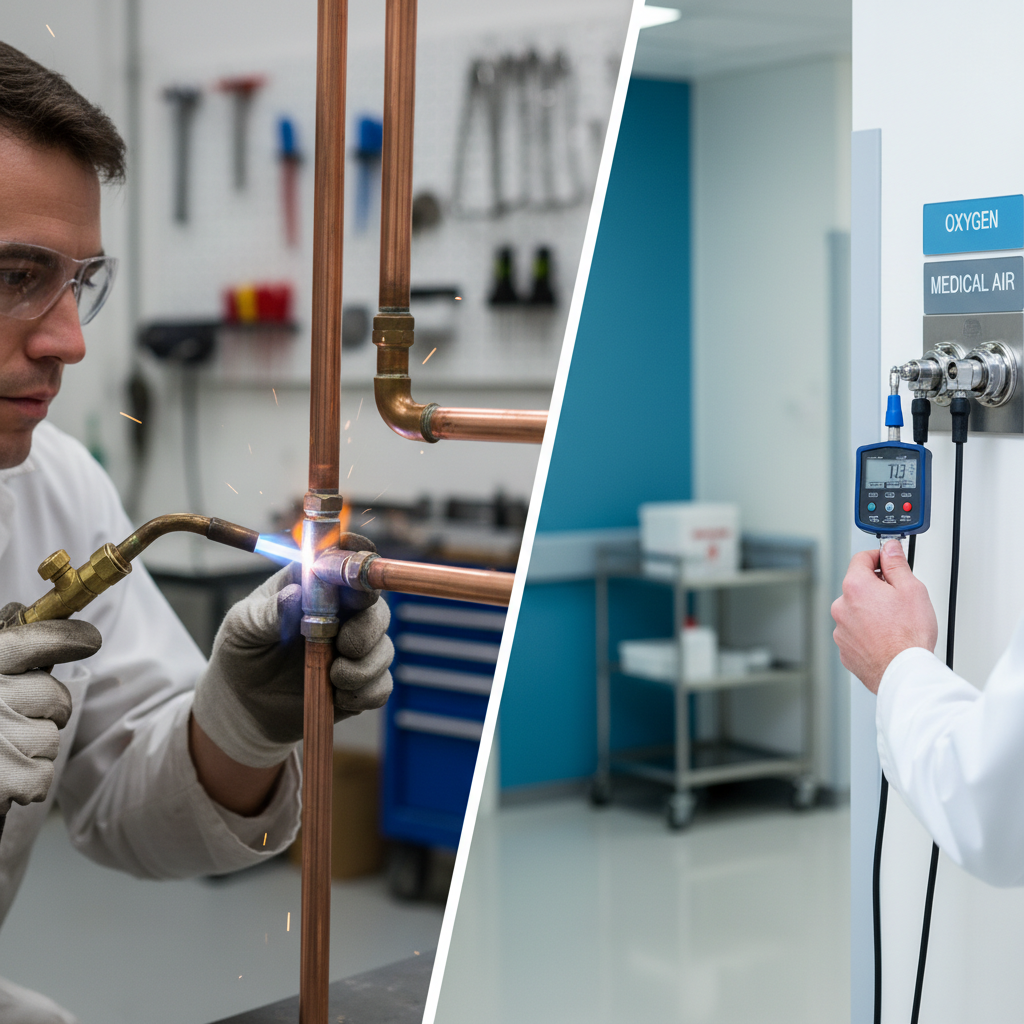
Understanding the Core Difference: Installation vs. Brazing
The fundamental distinction between a "medical gas plumber" and a "medical gas installer" comes down to the specific tasks they are certified to perform. While both work on medical gas systems, their roles are defined by different credentials and, critically, different phases of a project.
- Medical Gas Installer (ASSE 6010 Certified): This is a professional who can physically install medical gas piping and its various components, such as inlets, outlets, and zone valve boxes. Their primary skill, and the one that requires rigorous certification, is brazing. Brazing is a process of joining copper pipes using a filler metal that melts at a high temperature. For medical gas systems, this process must be incredibly precise and clean to prevent contamination, as outlined in NFPA 99.
- Medical Gas Plumber: This term is often used more broadly and can be misleading. A standard plumber, even a licensed one, is typically not certified to braze medical gas lines unless they hold a specific ASSE 6010 credential. A "plumber" in the context of medical gas might handle tasks that don't involve brazing, such as connecting fixtures, performing certain repairs on non-gas-carrying components, or working on plumbing systems adjacent to medical gas infrastructure. However, for the core installation work, the ASSE 6010 certification is non-negotiable.
In short: almost all ASSE 6010 medical gas installers are expert brazers, but not all plumbers are certified medical gas installers.
Roles & Responsibilities: A Detailed Breakdown
Let's break down who does what during the lifecycle of a medical gas system in a hospital, dental clinic, or surgical center.
The Medical Gas Installer (ASSE 6010)
A professional holding an ASSE 6010 Medical Gas Systems Installer certification is responsible for the hands-on assembly of the piping network. Their job is governed by the stringent requirements of NFPA 99, the Health Care Facilities Code.
Key Responsibilities:
- Installation of Piping: Laying out and installing the copper piping that transports gases like oxygen, nitrous oxide, and medical air from the source equipment (manifolds, tanks) to patient rooms and operating theaters.
- Brazing: Performing the critical task of joining pipe sections. This must be done using a nitrogen purge to prevent oxidation inside the pipe, which could be harmful to patients.
- Component Placement: Installing key system components like zone valve boxes, area alarms, and pressure switches.
- Initial System Integrity Tests: Performing initial pressure tests on the newly installed piping to check for leaks before the final verification process.
The Medical Gas Verifier (ASSE 6030)
This is where a crucial third party enters the picture. After an installer completes their work, a certified Medical Gas Verifier is required. This independent expert, holding an ASSE 6030 Medical Gas Systems Verifier credential, ensures the system is safe and ready for patient use.
Key Responsibilities:
- Cross-Connection Testing: Verifying that the correct gas is flowing from each designated outlet.
- Purity Testing: Ensuring the gas meets specific purity standards (e.g., Oxygen 99% USP).
- Pressure & Flow Tests: Confirming the system maintains proper operating pressures and flow rates at each outlet.
- Alarm Testing: Ensuring all local and master alarms function correctly.
At Medical Testing Solutions, our team includes ASSE 6030 certified verifiers who provide this essential final check, ensuring that any work done by an installer meets the highest standards for safety and medical gas verification.
What About a "Plumber"?
A traditional plumber's role might intersect with a medical gas system in a few ways, but they must have the proper credentials for specific tasks:
- Pipe Support & Hangers: They might install the support systems for the pipes, but not the pipes themselves unless 6010 certified.
- Repairs (with caution): A plumber with an ASSE 6040 Medical Gas Maintenance credential* may perform repairs on existing systems. This is a separate certification from installation.
- Medical Vacuum & WAGD Systems: These systems are often installed by ASSE 6010 installers, as they are part of the overall medical gas infrastructure, but maintenance may fall under a 6040-certified technician.
Why this matters for compliance: Using an uncertified plumber or installer for medical gas work is a major violation of NFPA 99. It can lead to failed inspections, costly rework, and most importantly, it poses a direct and serious risk to patient safety. Fines and liability in these cases can be catastrophic for a facility.
Certification Deep Dive: ASSE 6000 Series
The ASSE 6000 Series of standards provides the framework for medical gas personnel certification. It's the gold standard for ensuring competence and safety.
| ASSE Standard | Credential Holder | Core Responsibility |
|---|---|---|
| ASSE 6010 | Medical Gas Installer | Brazing and installation of new medical gas and vacuum piping systems. |
| ASSE 6020 | Medical Gas Inspector | Inspects the installation for compliance with plans and codes (often a municipal role). |
| ASSE 6030 | Medical Gas Verifier | Performs final system testing for safety, purity, and proper function. |
| ASSE 6040 | Medical Gas Maintenance | Performs maintenance and repairs on existing medical gas systems. |
Choosing a professional with the correct ASSE certification is paramount. Medical Testing Solutions, for example, performs medical gas installation services using only ASSE 6010 certified installers, followed by a rigorous check by our ASSE 6030 verifiers.