Understanding the Foundation: Why Medical Gas Piping Standards Matter
In a healthcare facility, medical gas is a life-sustaining utility, as critical as electricity or water. The piping that distributes oxygen, nitrous oxide, medical air, and other gases is the circulatory system of the hospital. Unlike a standard plumbing system, the stakes are exponentially higher. Contamination, leaks, or incorrect gas delivery can have catastrophic consequences for patient safety. This is why a robust framework of codes and standards, primarily the National Fire Protection Association's NFPA 99, Health Care Facilities Code, governs every aspect of medical gas and vacuum system installation. A compliant system isn't just about passing an inspection; it's about ensuring patient life safety.
This guide provides a definitive overview of the core material and process requirements for medical gas piping. We will explore the specifics of why Type L copper tubing is mandated, the critical steps for proper brazing, and the non-negotiable requirement for a continuous nitrogen purge during the brazing process. For facility managers, construction professionals, and medical gas installers, mastering these standards is essential for delivering safe, reliable, and compliant medical gas systems. You will learn the what, why, and how behind the standards that protect patients and facilities.
Decoding Copper: Why NFPA 99 Mandates Type K or L
The backbone of any medical gas system is the piping itself. NFPA 99 is unequivocal in its requirements, specifying the use of seamless copper tube. Specifically, the code mandates either Type K or Type L copper, which must be hard-drawn and manufactured to the ASTM B819 standard for "Seamless Copper Tube for Medical Gas Systems."
Type K vs. Type L vs. Type M: A Critical Comparison
Not all copper tubing is created equal. The "Type" designation (K, L, M) refers to the thickness of the pipe wall. Type M is the thinnest, followed by L, with K being the thickest. While all three are used in domestic water plumbing, NFPA 99 strictly prohibits the use of Type M for pressurized medical gas applications due to its thin wall, which makes it more susceptible to damage and leaks over time.
Here’s a comparison of the key differences:
| Feature | Type K | Type L | Type M |
|---|---|---|---|
| Wall Thickness | Thickest | Medium | Thinnest |
| NFPA 99 Med Gas Use | Permitted | Permitted | Prohibited |
| Common Application | Underground lines, high-pressure | Standard for medical gas distribution | Domestic water, drainage (NOT for med gas) |
| Durability & Pressure Rating | Highest | High | Lower |
| Cost | Highest | Moderate | Lowest |
While Type K is permitted, Type L is the industry standard for the vast majority of medical gas installations due to its excellent balance of strength, durability, and cost-effectiveness. It provides a significant margin of safety and longevity required for a critical life support system.
The ASTM B819 Standard: Cleaner Than Clean
Beyond wall thickness, the ASTM B819 standard adds another layer of safety. This specification requires that the copper tube be specially cleaned by the manufacturer to reduce the level of interior surface contaminants. Each tube is then capped or plugged at the factory to maintain this cleanliness until the moment of installation. This factory cleaning process is vital for preventing the introduction of oils, greases, or other particulates into the system that could otherwise compromise gas purity or pose a fire hazard in an oxygen-rich environment.
Why this matters for compliance: Using anything other than hard-drawn Type K or L copper tube cleaned to the ASTM B819 standard is an immediate violation of NFPA 99 (see section 5.1.10.1). During an ASSE 6030 verification, the verifier will confirm the correct materials have been used. Using the wrong type of pipe, such as Type M or standard plumbing copper, would result in a failed verification and require a complete, and costly, system replacement. Medical Testing Solutions provides thorough verification services to ensure your project meets every code requirement.
Brazing: The Art and Science of Joining Pipe
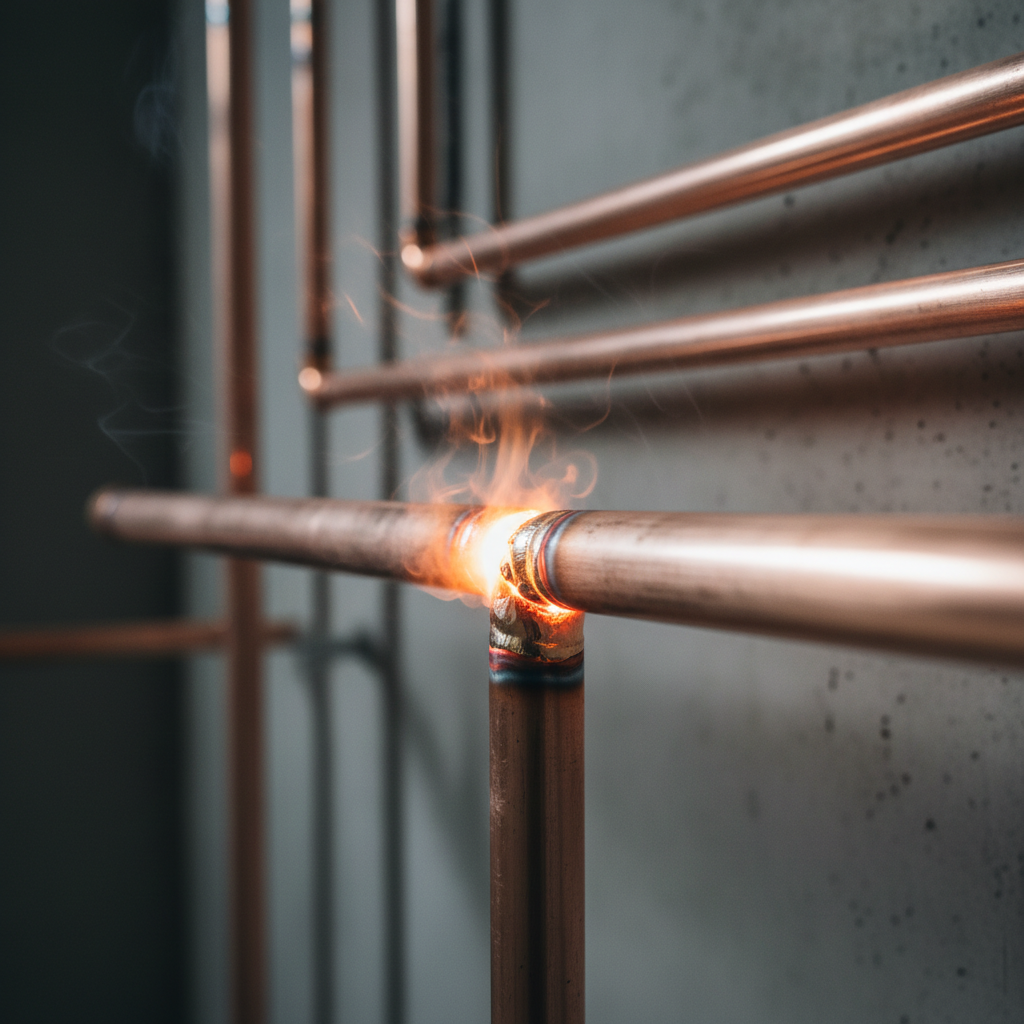
Brazing is the only method permitted by NFPA 99 to join copper tubing in a medical gas system. Soldering is strictly forbidden. Brazing creates a much stronger, more reliable joint capable of withstanding the higher pressures and temperatures associated with medical gas systems.
The process involves heating the copper tube and fitting to a specific temperature and introducing a brazing filler metal (alloy), which melts and is drawn into the capillary space between the tube and fitting. As it cools, it forms a solid, permanent, and leak-proof bond.
The Critical Nitrogen Purge (NFPA 99, 5.1.10.4.3)
This is perhaps the most critical step in the entire installation process. During brazing, the copper is heated to temperatures exceeding 1,300°F (700°C). When copper is heated in the presence of oxygen (from the ambient air), it creates a layer of dark, flaky cupric oxide on the inside surface of the pipe. If allowed to form, this scale will flake off and be carried downstream, where it can clog equipment, contaminate the gas, or create a dangerous particulate fire hazard in oxygen-enriched atmospheres.
To prevent this, a continuous purge of oil-free, dry nitrogen must be maintained through the piping during the entire heating and cooling cycle. The inert nitrogen displaces the oxygen, preventing oxidation from ever occurring. The result is a clean, smooth internal surface.
Key steps for a proper nitrogen purge:
- Source: Use oil-free, dry nitrogen (NF Type). The cylinder must have a pressure regulator.
- Flow Rate: The flow must be gentle but steady. Too high a flow can create turbulence and pull oxygen into the joint. A flow meter is essential to maintain the correct rate.
- Continuity: The purge must be maintained continuously before, during, and after the braze, until the joint has cooled sufficiently.
ASSE 6010 Certification: The Mark of a Professional
Brazing for a medical gas system is not a task for a standard plumber. NFPA 99 mandates that all installers be certified to the ASSE 6010 Medical Gas Systems Installer standard. This certification ensures that the individual has been trained and has passed both written and practical examinations on every aspect of medical gas system installation, including:
- Proper pipe handling and preparation
- Understanding of NFPA 99 code
- Correct brazing technique
- Proper nitrogen purge procedures
- System testing requirements
Hiring an uncertified installer is a major risk. At Medical Testing Solutions, our team includes ASSE 6010 certified professionals to handle complex medical gas installation projects, guaranteeing compliance and safety from the start.