Medical Gas Piping Installation in Winston-Salem NC: A Complete Guide to NFPA 99 Compliance
Proper medical gas piping installation is not just a construction detail, it's a critical component of patient safety and facility compliance. For hospitals, ambulatory surgery centers (ASCs), dental clinics, and veterinary practices in Winston-Salem, NC, ensuring that oxygen, nitrous oxide, medical air, and other gas systems are installed correctly is paramount. This guide provides a definitive overview of the process, materials, and standards involved, specifically focusing on the use of Type L copper piping as mandated by NFPA 99. You will learn the key requirements for design, installation, and verification, empowering you to make informed decisions for your healthcare facility.
At Medical Testing Solutions, our ASSE 6010 certified installers provide compliant medical gas services across North Carolina, ensuring your systems are safe, reliable, and built to the highest industry standards.
Understanding the Foundation: NFPA 99 and ASSE 6000 Standards
NFPA 99, the Health Care Facilities Code, is the cornerstone of medical gas system regulation in the United States. It outlines the minimum requirements for the design, installation, inspection, testing, and maintenance of these life-sustaining systems. For piping, the code is explicit: all medical gas and vacuum systems must use seamless Type L or Type K copper tubing (ASTM B819).
Complementing NFPA 99 is the ASSE 6000 series of standards, which establishes qualifications for the personnel who work on these systems. Key credentials include:
- ASSE 6010 Certified Installer: The credential for professionals qualified to perform the physical installation of medical gas systems.
- ASSE 6030 Certified Verifier: The credential for third-party individuals qualified to inspect and verify the compliance of new or modified systems.
- ASSE 6040 Certified Maintenance Personnel: The credential for staff responsible for the ongoing maintenance and repair of these systems.
Why this matters for compliance: Using uncertified installers not only risks patient safety but also guarantees failure of the mandatory third-party verification (per ASSE 6030). A non-compliant system can lead to costly rework, project delays, and citations from regulatory bodies like The Joint Commission.
The Anatomy of a Medical Gas Piping System
A medical gas pipeline is more than just copper pipes. It's an integrated network that includes a source, a distribution system, and terminal units. A typical installation project in Winston-Salem will involve:
- Source Equipment: Bulk oxygen tanks, manifolds for high-pressure cylinders, medical air compressors, and vacuum pumps.
- Main and Branch Lines: The arteries of the system, typically Type L copper, running from the source to different areas of the facility.
- Zone Valve Boxes: Sectional control valves that allow specific areas (e.g., an operating room, a patient wing) to be isolated for maintenance or in an emergency.
- Area and Master Alarms: Critical warning systems that monitor gas pressure and vacuum levels, alerting staff to any deviations from the norm.
- Terminal Units: The final point of delivery, such as DISS or Chemetron outlets at the patient bedside or on an anesthesia machine.
For a detailed look at the equipment we offer, from alarms to outlets, see our products catalog.
Piping Installation: The ASSE 6010 Process Step-by-Step
A compliant medical gas installation follows a meticulous, documented process overseen by an ASSE 6010 certified professional. The core of this process is ensuring the internal cleanliness of the piping to prevent patient harm.
- Preparation and Cleaning: All copper tubing and fittings must be "plugged or capped" from the manufacturer. Before installation, they must be visually inspected to ensure they are free of debris.
- Cutting and Deburring: Tubing must be cut with a clean, sharp wheel-type cutter. After cutting, the inside edge must be deburred with a sharp, clean tool to remove any filings.
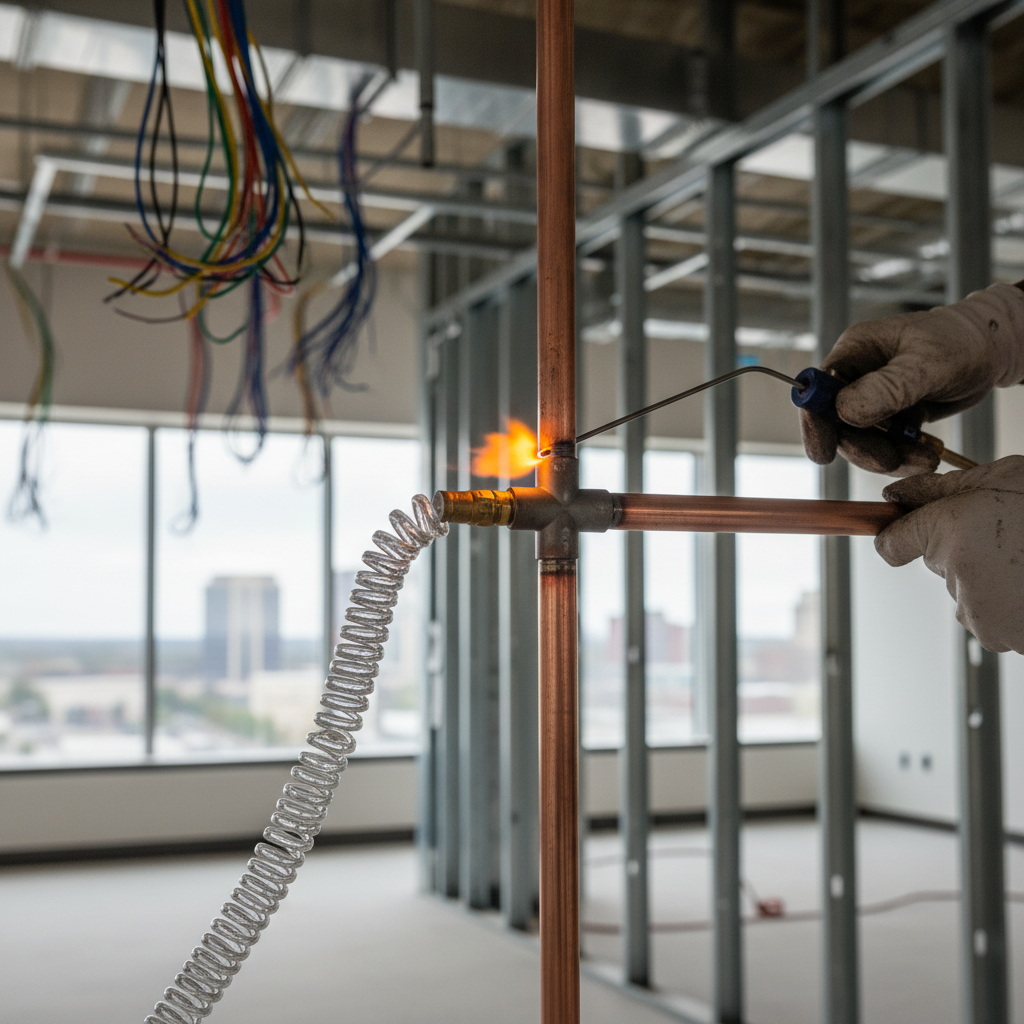
- Brazing with Nitrogen Purge: This is the most critical step. Joints must be brazed (not soldered) using a copper-phosphorus alloy (BCuP series). During the entire brazing process, a continuous, low-velocity purge of oil-free, dry nitrogen (NF) must be maintained within the pipe. This displaces oxygen and prevents the formation of toxic copper oxides on the interior pipe wall.
- Labeling: All piping must be clearly labeled with the gas name and direction of flow at specific intervals and at every valve and junction, per NFPA 99.