Medical Gas Piping Installation in Richmond VA: A Complete Guide
Medical Testing SolutionsSeptember 8, 20266 min read
Share
The Critical Role of Compliant Medical Gas Piping
Medical gas systems are a life-support utility in healthcare. The piping that carries gases like oxygen, medical air, and nitrous oxide from the source equipment to the patient bedside is as critical as the gas itself. In Richmond, VA, ensuring this infrastructure is installed correctly is a matter of patient safety, regulatory compliance, and facility integrity. A properly installed system, compliant with the National Fire Protection Association (NFPA) 99, Health Care Facilities Code, guarantees the purity, pressure, and flow of medical gases, preventing catastrophic failures.
This guide provides a definitive overview of the requirements for medical gas piping installation in the Richmond area. You'll learn about the materials, personnel, procedures, and testing mandated by code to ensure your hospital, ambulatory surgery center (ASC), dental clinic, or veterinary practice meets the highest standards of safety and care. We'll cover everything from selecting the right type of copper tubing to the final ASSE 6030 verification process.
NFPA 99: The Cornerstone of Medical Gas Safety
NFPA 99 is the foundational code governing the installation of medical gas and vacuum systems. It is not a suggestion but a legal requirement adopted by most jurisdictions, including those in Virginia. For piping, the code is exacting, detailing everything from pipe material specifications to brazing procedures and testing protocols.
Key Piping Requirements in NFPA 99 (2024 Edition)
Material: All medical gas piping must be seamless Type L or Type K copper tubing, cleaned for oxygen service and delivered plugged and capped by the manufacturer (ASTM B819 standard).
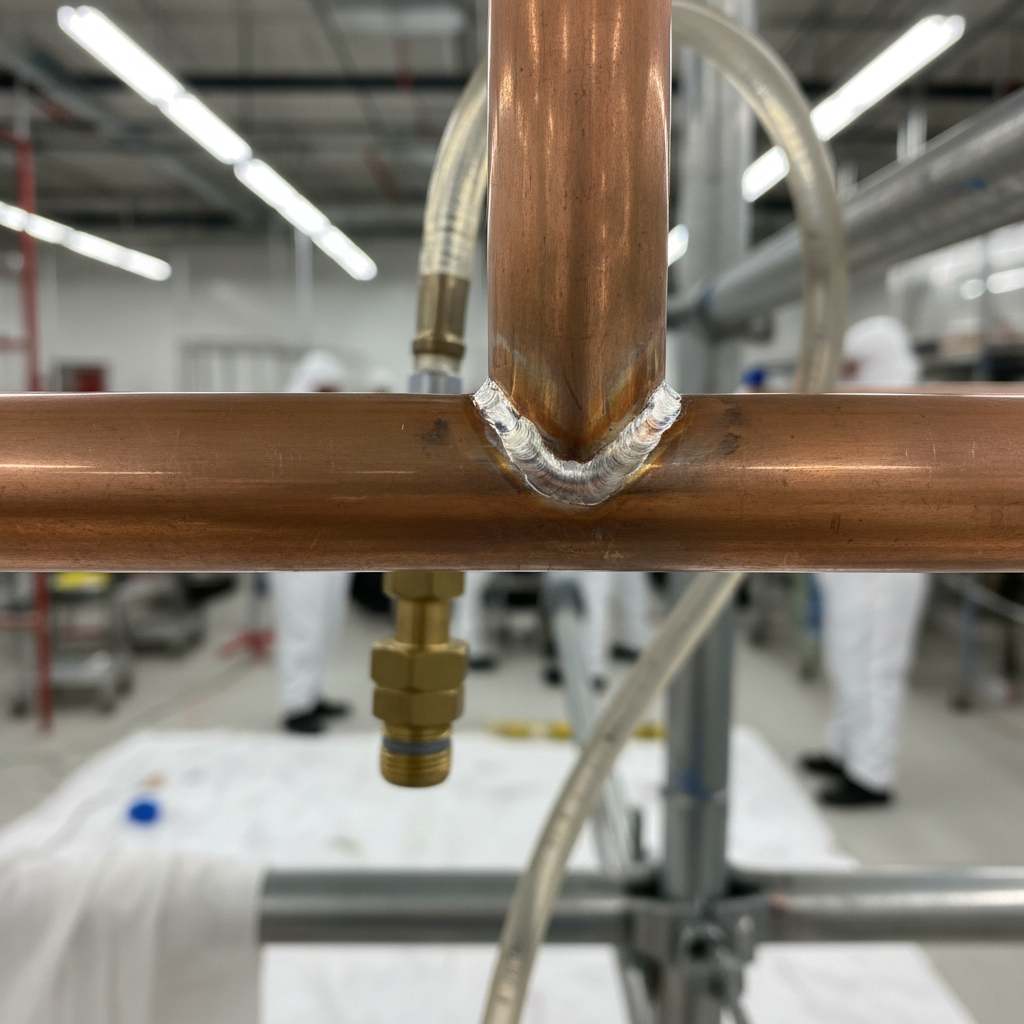
Brazing: Joints must be brazed, not soldered. Brazing alloys must be silver-based, and a continuous purge of oil-free, dry nitrogen must be maintained during the process to prevent interior oxidation (cupric oxide formation).
Installation Support: Piping must be properly supported at specified intervals to prevent sagging and stress on the joints.
Labeling: The pipeline must be clearly labeled with the gas name and flow direction at specific intervals and at every entry/exit point and connection.
Why This Matters for Compliance: Failure to adhere strictly to NFPA 99 during installation can lead to failed inspections, costly rework, project delays, and most importantly, put patients at risk. Regulatory bodies like The Joint Commission (TJC) will cite facilities for non-compliant systems.
Copper Piping: Type L vs. Type K
While both Type L and Type K copper are permitted by NFPA 99, Type L is the overwhelming standard for medical gas distribution lines due to its balance of strength, durability, and cost-effectiveness. Type K, which has a thicker wall, is typically reserved for high-pressure applications or specific situations like underground lines.
Feature
Copper Type L (ASTM B819)
Copper Type K (ASTM B819)
Wall Thickness
Standard
Thicker, more robust
Common Use
Primary choice for medical gas distribution lines
High-pressure cylinder headers, underground runs
Pressure Rating
Excellent, suitable for all medical gas pressures
Higher, offers greater margin of safety
Cost
Less expensive
More expensive
Flexibility
More flexible, easier to work with
More rigid
For nearly all hospital, dental, and veterinary clinic installations in Richmond, Type L copper is the specified and appropriate material.
The ASSE 6010 Certified Installer: Your Most Important Decision
The single most critical factor in a successful medical gas piping installation is the qualification of the personnel performing the work. NFPA 99 mandates that all installations be performed by individuals certified to the ASSE 6010 Medical Gas Systems Installer standard.
An ASSE 6010 certified installer has undergone extensive training and passed a rigorous examination covering:
NFPA 99 and other relevant codes
Piping layout, sizing, and system design principles
Proper brazing techniques, including nitrogen purging
System component knowledge (zone valves, alarms, outlets)
Initial pressure testing and standing pressure tests
Hiring uncertified plumbers or mechanical contractors is a significant risk. They lack the specialized knowledge of brazing, nitrogen purging, and cleanliness required. Medical Testing Solutions employs a team of ASSE 6010 certified installers who ensure every medical gas installation meets the highest standards of quality and compliance.
The Installation Process: A Step-by-Step Overview
A compliant medical gas piping installation follows a meticulous, phased approach:
System Design & Sizing: An engineer or certified professional designs the piping layout and calculates the appropriate pipe sizes to maintain required pressures and flow rates for the facility's specific needs.
Material Handling: Certified Type L copper is carefully handled on-site to prevent contamination. Caps are only removed immediately before brazing.
Piping Rough-In: The ASSE 6010 installers run the copper lines from the source equipment location (e.g., mechanical room) to the points of use, installing in-wall components like zone valve boxes and outlet rough-in plates.
Brazing & Purging: Every joint is brazed while a continuous, low-pressure flow of nitrogen is passed through the pipe. This "purge" displaces oxygen, preventing the formation of toxic cupric oxide flakes inside the pipe that could otherwise endanger patients.
Initial Pressure Test: After installation, the system is subjected to an initial pressure test (typically 150 psi) to check for leaks at the joints.
Piping-to-Component Connection: Once walls are closed, outlets, alarms, and other terminal equipment are connected.
Post-Installation: The Critical ASSE 6030 Verification
Installation is not the final step. Before a new or modified medical gas system can be used for patient care, it must be independently inspected and certified by an ASSE 6030 Medical Gas Verifier. This third-party verification is non-negotiable and ensures the installer has performed their work correctly.
The verifier, who must be from a different company than the installer, performs a battery of tests, including:
Final Pressure Tests: Confirming the system holds pressure with no leaks.
Cross-Connection Test: Ensuring that, for example, pipes labeled for oxygen are not connected to the medical air system.
Purity Test (Particulate & Gas): Verifying the gas delivered at the outlet is the correct gas and is free from contaminants.
Alarm & Valve Tests: Confirming all safety alarms and zone valves function as intended.
Medical Testing Solutions provides comprehensive medical gas verification services in Richmond, VA, ensuring your new installation is safe, compliant, and ready for patient use.
Your Partner for Compliant Medical Gas Systems in Richmond, VA
From initial installation to final verification and ongoing maintenance, a compliant medical gas system is a complex undertaking. It requires certified professionals who understand the codes and the critical nature of their work. At Medical Testing Solutions, our ASSE-certified technicians provide expert installation, verification, and maintenance services for healthcare facilities throughout Virginia.
Don't leave patient safety to chance. Ensure your facility is built on a foundation of quality and compliance. Contact the experts at Medical Testing Solutions today.
Ready to start your project? Request a quote online or call us at (754) 315-1078 to discuss your medical gas piping installation needs in the Richmond area.
Frequently Asked Questions
No. NFPA 99 explicitly requires that installations be performed by individuals holding an ASSE 6010 Medical Gas Systems Installer certification. Standard plumbers lack the specific training in brazing with a nitrogen purge, which is essential for patient safety.
After the initial verification, facilities should have their systems inspected regularly. We recommend annual inspections to ensure continued compliance and safe operation, identifying potential issues before they become critical problems.
Brazing is performed at a much higher temperature than soldering and uses a different, stronger filler material (a silver-based alloy). NFPA 99 prohibits soldering on medical gas lines because the joints are not strong enough and the fluxes can introduce contaminants into the system.
When copper is heated, it reacts with oxygen in the air to form a black, flaky substance called cupric oxide. If this happens inside the pipe, these flakes can be blown into a patient's airway or clog downstream equipment like ventilators. A continuous nitrogen purge displaces all the oxygen, preventing this oxidation from occurring and keeping the pipe interior clean.
Request a quote for your facility
Talk with Medical Testing Solutions about your next inspection, repair or equipment request.