Medical Gas Piping Installation in Myrtle Beach SC: A Guide
Medical Testing SolutionsSeptember 7, 20267 min read
Share
Medical Gas Piping Installation in Myrtle Beach, SC: An Authoritative Guide
Proper medical gas piping installation is not just a construction task; it's a critical component of patient safety and healthcare facility compliance in Myrtle Beach, SC. These complex systems, delivering life-supporting gases like oxygen, nitrogen, and medical air, demand meticulous adherence to strict codes, particularly NFPA 99, the Health Care Facilities Code. This guide provides a definitive overview of the installation process, from selecting the right materials to final verification, ensuring your facility meets the highest standards of safety and functionality. You will learn the key requirements, the roles of certified personnel, and how to ensure your project is a success.
At Medical Testing Solutions, we specialize in providing ASSE 6010 certified medical gas installation and ASSE 6030 verification, ensuring your system is built right and operates safely from day one.
Understanding the Foundation: NFPA 99 Requirements
The National Fire Protection Association (NFPA) 99 is the cornerstone of medical gas system design and installation. It establishes criteria for levels of health care services to minimize the hazards of fire, explosion, and electricity. For medical gas piping, several chapters are paramount.
System Categories (CAT)
NFPA 99 categorizes systems based on the risk to patients if the equipment fails. These categories determine the specific design, installation, and testing requirements:
Category 1: Systems where failure is likely to cause major injury or death. This applies to hospitals, ambulatory surgery centers (ASCs), and critical care areas.
Category 2: Systems where failure is likely to cause minor injury.
Category 3: Systems where failure is not likely to cause injury but rather patient discomfort.
Myrtle Beach hospitals and surgery centers will almost always fall under Category 1 requirements, demanding the most stringent installation and verification protocols.
Why this matters for compliance: Failure to comply with NFPA 99 can result in project delays, costly rework, and denied accreditation from bodies like The Joint Commission. More importantly, it can create significant patient safety risks.
The Right Material: Why Copper Type L is the Standard
For medical gas distribution, the material of choice is seamless copper tubing, specifically Type K or Type L. NFPA 99 (Chapter 5) mandates that this tubing be hard-drawn and identified as "ACR" (for air conditioning and refrigeration), "OXY," or "MED."
Type L (Hard-Drawn): This is the most common type used for medical gas piping runs within walls and ceilings. It offers a robust balance of strength and durability.
Type K (Hard-Drawn): Thicker-walled and more durable than Type L, Type K is typically reserved for more demanding applications, such as underground lines or main supply lines.
All piping must be cleaned for oxygen service by the manufacturer and delivered capped and sealed to prevent contamination before installation.
The Brazing Process: More Than Just Joining Pipes
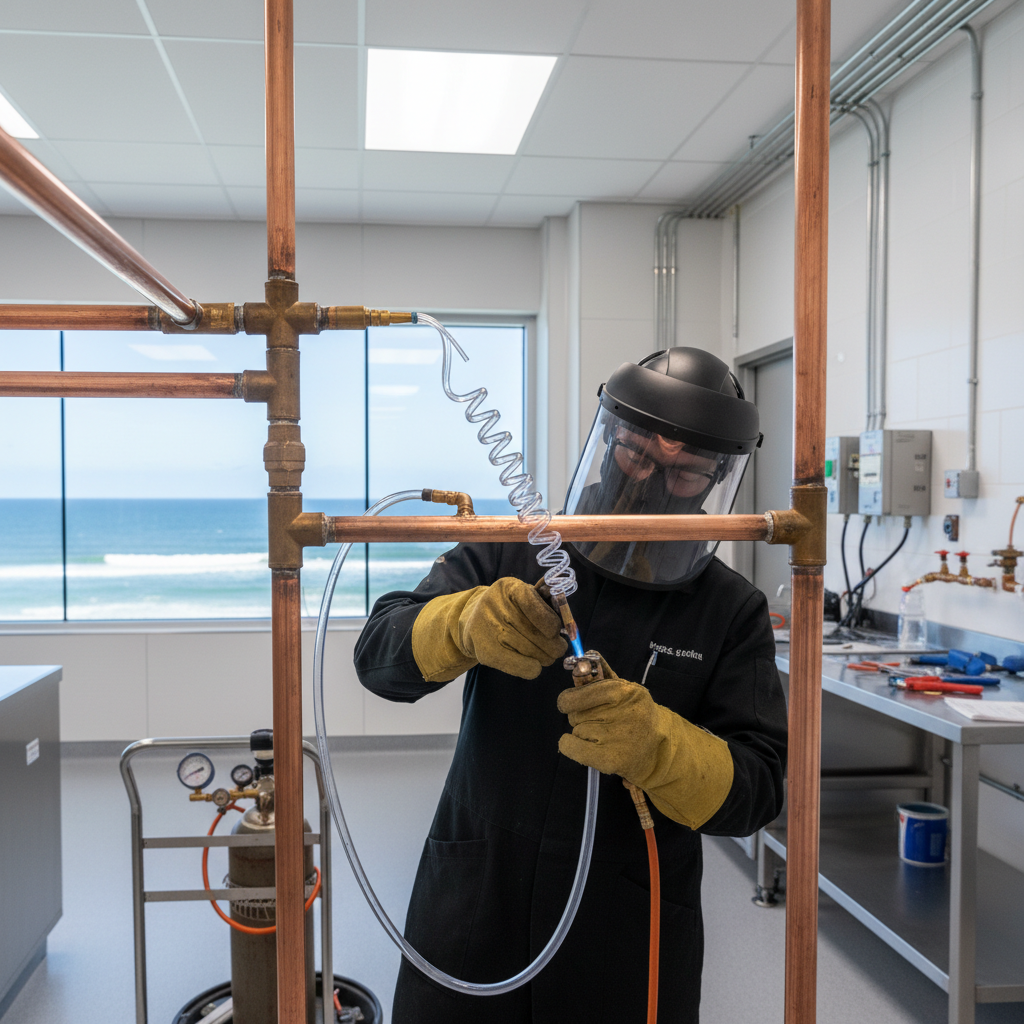
Joining copper pipes in a medical gas system is a highly specialized process known as brazing. This is not standard plumbing soldering. The process, outlined in NFPA 99, 5.1.10.4, is critical to system integrity.
Brazing Alloy: Joints must be brazed using a filler metal (BCuP series) that is free of flux and cadmium.
Nitrogen Purge: During brazing, the interior of the pipe must be continuously purged with oil-free, dry nitrogen. This inert gas displaces oxygen, preventing the formation of copper oxides on the inside of the pipe. These dark, flaky oxides could later break free, contaminating the gas stream and posing a severe risk to patients.
Certified Installers: The brazing must be performed by an individual qualified under the ASSE 6010 Standard, a credential that verifies their ability to perform these critical tasks safely and correctly.
The Role of ASSE 6000 Series Certified Personnel
The American Society of Sanitary Engineering (ASSE) 6000 series provides professional qualifications for individuals involved with medical gas systems. Hiring credentialed professionals is non-negotiable for a compliant installation.
ASSE 6010 Certified Installer: The credential for the professional performing the physical installation, including the critical brazing process.
ASSE 6030 Certified Verifier: After installation is complete, a third-party verifier must inspect and test the entire system. This is a crucial step before the system can be used for patient care. The verifier cannot be the same company that performed the installation.
ASSE 6040 Certified Maintenance Personnel: For ongoing system integrity, this certification covers the knowledge required for proper medical gas maintenance services.
Medical Testing Solutions employs a team of fully certified professionals to handle all aspects of installation, verification, and maintenance, providing a seamless continuum of compliance for your Myrtle Beach facility.
Installation Steps for a Medical Gas System
While every project is unique, a typical medical gas piping installation in a hospital, dental clinic, or veterinary practice follows a structured process:
System Design & Sizing: Engineers design the piping layout and size it based on the facility's needs and NFPA 99 requirements.
Material Handling: Certified tubing and components are carefully received and stored to prevent contamination.
Pipe Routing & Support: Installers route the copper piping according to the design, ensuring proper support and labeling per NFPA standards.
Brazing & Joining: ASSE 6010 installers join the pipes using the nitrogen purge brazing technique.
Initial Pressure Test: An initial pressure test is performed by the installer to check for leaks before closing up walls.
Third-Party Verification: Once the system is fully installed, an ASSE 6030 verifier conducts a battery of tests. This includes verifying pressures, checking for cross-connections, testing gas purity and concentration, and ensuring alarms are functional. Learn more about the medical gas verification process.
Comparing Key Installation Standards
Standard
Focus Area
Key Requirement for Installation
NFPA 99
Overall safety code for healthcare facilities, including medical gas systems.
Mandates system categories, pipe materials (Type K/L copper), and brazing with nitrogen purge.
ASSE 6010
Professional qualification standard for medical gas systems installers.
Requires installers to pass a rigorous written and practical exam on NFPA 99 installation rules.
CGA
Compressed Gas Association standards for gas handling and safety.
Provides guidelines for gas cylinders, labeling (e.g., CGA V-9), and fittings.
Medical Gas Piping in Specialized Facilities
While the core principles of NFPA 99 apply broadly, different facility types in Myrtle Beach have unique considerations.
Hospitals and ASCs
These facilities require the full scope of medical gases, oxygen, medical air, vacuum, nitrous oxide, and potentially nitrogen or carbon dioxide. The systems are complex, with multiple zone valve boxes and alarm panels to isolate different areas during emergencies or maintenance. Strict adherence to Category 1 standards is mandatory.
Dental Offices
Dental clinics primarily use nitrous oxide and oxygen for patient sedation, as well as medical air and vacuum. While often less complex than hospital systems, installations must still meet NFPA 99 requirements. Proper alarm systems and ventilation are critical. If your office uses sedation equipment, ensuring your flowmeters are working correctly is also key to patient safety. You can learn more about dental flowmeter repair and calibration.
Veterinary Clinics
Veterinary practices use oxygen and vacuum systems for anesthesia and critical care. While not always held to the same human-patient standards, adhering to NFPA 99 principles is a best practice for animal safety and staff protection. Our team is experienced in designing and installing systems for veterinary anesthesia equipment.
Your Partner for Compliant Installation in Myrtle Beach
Ensuring your medical gas piping is installed correctly from the start is the single most important factor in the long-term safety and reliability of your system. It prevents costly future repairs, ensures compliance with accrediting agencies, and, most importantly, protects your patients and staff.
The team at Medical Testing Solutions brings decades of expertise and the necessary ASSE certifications to every project. We are your trusted partner for compliant medical gas services in Myrtle Beach and beyond.
Ready to start your project? Contact us today for a comprehensive quote or call us at (754) 315-1078 to discuss your facility's specific needs.
Frequently Asked Questions
Only installers with an ASSE 6010 certification are qualified to perform medical gas piping installation. This ensures they have been trained and tested on the specific requirements of NFPA 99.
The continuous flow of nitrogen gas inside the pipe displaces oxygen during the high-heat brazing process. This prevents the formation of harmful copper oxide flakes, which could otherwise contaminate the gas stream and endanger patients.
After the initial ASSE 6030 verification, facilities should have their systems inspected regularly. We recommend annual medical gas inspections to ensure ongoing safety and compliance.
Both are seamless copper tubes suitable for medical gas. Type K has a thicker wall than Type L, making it more durable for demanding applications like underground mains. Type L is the standard for most above-ground interior piping.
Request a quote for your facility
Talk with Medical Testing Solutions about your next inspection, repair or equipment request.