Medical Gas Piping Installation in Greenville SC: A Guide
Medical Gas Piping Installation in Greenville, SC: An Authoritative Guide for Healthcare Facilities
Proper medical gas piping installation is not merely a construction task; it's a critical component of patient safety and facility compliance. For hospitals, ambulatory surgical centers (ASCs), dental clinics, and veterinary practices in Greenville, South Carolina, ensuring that piped oxygen, nitrous oxide, medical air, and other gases are delivered correctly is paramount. An improperly installed system can lead to catastrophic failures, compromising patient outcomes and exposing facilities to significant legal and regulatory risks. This guide provides an authoritative overview of the medical gas piping installation process, focusing on NFPA 99 requirements, the use of Type L copper piping, and the essential verification steps to ensure a safe, compliant system.
Understanding the Foundation: NFPA 99 and ASSE 6000 Standards
The National Fire Protection Association (NFPA) 99, Health Care Facilities Code, is the cornerstone of medical gas system regulation in the United States. It outlines the minimum requirements for the design, installation, inspection, testing, and maintenance of these life-sustaining systems. For installers, the American Society of Sanitary Engineering (ASSE) 6000 series provides the personnel credentials required to perform this work. Specifically, ASSE 6010 certification is required for medical gas systems installers.
Key NFPA 99 requirements for piping include:
- Material: Tubing must be seamless copper, specifically Type K or Type L. It must be hard-drawn ACR/MED tube, cleaned for oxygen service by the manufacturer, and capped or plugged to maintain cleanliness.
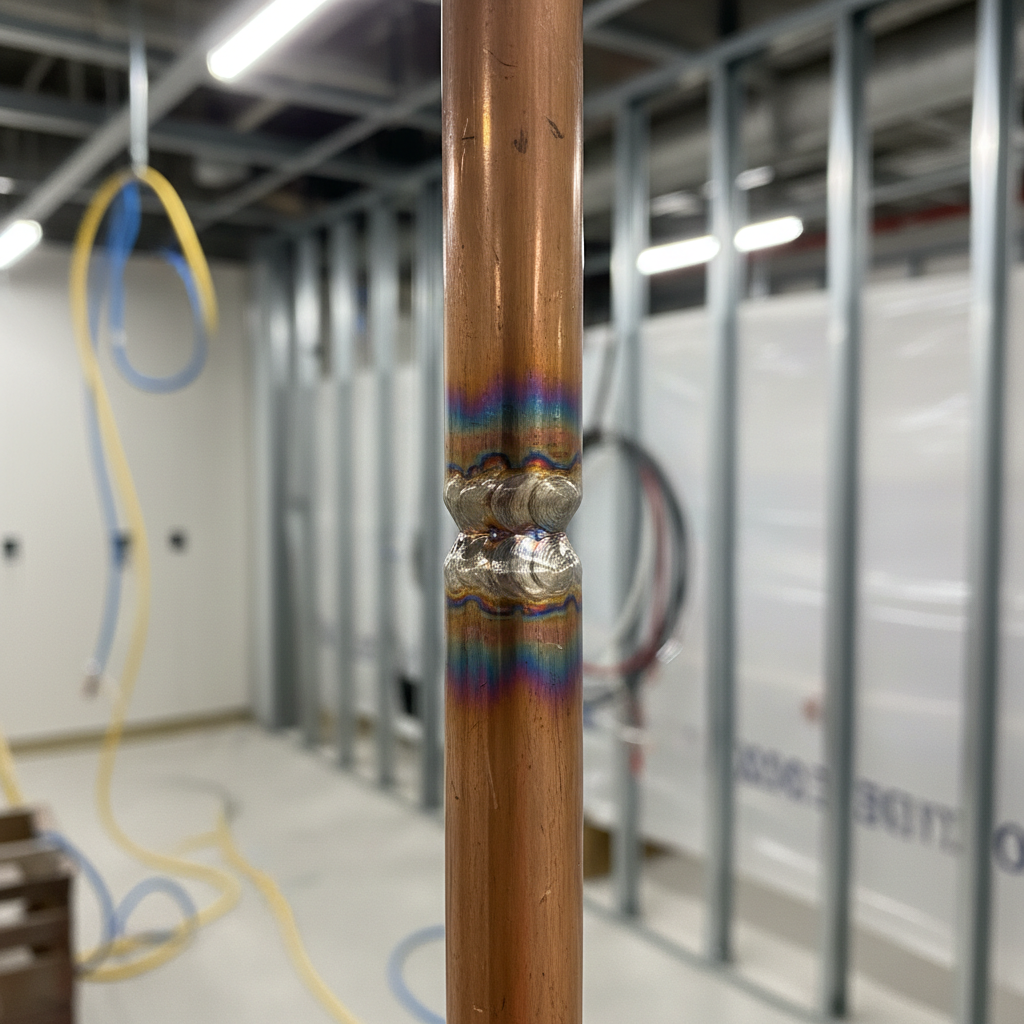
- Brazing: Joints in copper tubing must be brazed using a specific brazing alloy (BCuP series) that is free of flux. During brazing, an inert gas like nitrogen must be continuously purged through the pipe to prevent oxidation and scaling inside, which could otherwise introduce contaminants into the system.
- System Pressures: The system must be designed to handle specific pressures for each gas, which dictates pipe sizing and component selection.
Why This Matters for Compliance: Adherence to NFPA 99 is not optional. The Joint Commission, CMS, and other accrediting bodies survey for compliance with this code. Non-compliance can lead to costly remediation, facility shutdowns, and a finding of immediate jeopardy to patient safety. Working with an ASSE 6010 certified installer like Medical Testing Solutions ensures the work is done right the first time.
Copper Piping: Why Type L is the Standard
NFPA 99 permits both Type K and Type L seamless copper tubing for medical gas systems. While both are suitable, Type L is far more common in practice for above-ground installations due to its balance of strength, durability, and cost-effectiveness.
Here’s a comparison:
| Tubing Type | Wall Thickness | Typical Application | Key Characteristics |
|---|---|---|---|
| Type L | Standard | Most medical gas plumbing (above ground) | Offers excellent pressure rating and durability for hospital, dental, and ASC use. The industry standard. |
| Type K | Thickest | Underground supply lines, high-pressure areas | Provides maximum strength and corrosion resistance. Often required for main lines buried beneath a facility. |
| Type M | Thinnest | NOT PERMITTED for medical gas | Suitable for general domestic water plumbing only. It lacks the wall thickness to safely handle medical gas pressures. |
For any medical gas installation project in Greenville, specifying and verifying the use of correct, cleaned, and capped Type L (or K) copper is a fundamental first step.
The Medical Gas Piping Installation Process
A compliant installation is a multi-stage process that requires meticulous planning and execution by certified professionals. Medical Testing Solutions follows a rigorous procedure rooted in NFPA 99 and ASSE 6010 best practices.
- Design and Planning: The process begins with a detailed review of the facility's architectural plans and clinical needs. Pipe sizes are calculated based on flow rate requirements and distance from the source equipment (manifolds, tanks, etc.).
- Material Handling: All piping, valves, and fittings are received, inspected for damage, and verified as cleaned for oxygen service. They are kept capped and sealed until the moment of installation to prevent contamination.
- Piping Rough-In: ASSE 6010 certified installers run the copper lines from the source to the point of use. All joints are brazed using the nitrogen purge technique. Pipe supports and hangers are installed at specified intervals to prevent sagging and stress.
- Initial Pressure Test: After the piping is installed but before it is concealed by walls, a preliminary pressure test is conducted. The system is pressurized with nitrogen to 150 psi (or 1.5 times the system working pressure) and monitored for 24 hours to detect any leaks in the brazed joints.
- Component Installation: Once the piping passes the initial test, wall outlets, zone valve boxes, and alarm panels are installed.
- Cross-Connection Test: Before final verification, a critical test is performed to ensure that gas-specific connections are correct throughout the system. This prevents, for example, oxygen from being delivered through a medical air outlet.
- Final Verification (ASSE 6030): This is the final and most crucial step. A third-party ASSE 6030 Certified Medical Gas Verifier must inspect and test the entire system. This includes verifying pressures, checking for purity and contaminants, and confirming that all alarms and components function correctly. Medical Testing Solutions provides comprehensive medical gas verification services to ensure your system is 100% compliant and patient-ready.
Common Applications in Greenville Healthcare Facilities
- Hospitals & ASCs: These facilities require a full range of gases, including Oxygen, Medical Air, Vacuum, Nitrous Oxide, and Waste Anesthetic Gas Disposal (WAGD). Piping systems are complex, often involving isolated power systems in wet procedure locations, which require specialized Line Isolation Monitor (LIM) testing.
- Dental Offices: Sedation dentistry practices in Greenville rely on precisely installed Nitrous Oxide and Oxygen systems. Proper installation is key for patient safety and for protecting staff from chronic exposure to unscavenged gas.
- Veterinary Clinics: Similar to dental offices, veterinary surgical suites require Oxygen, Vacuum, and often WAGD systems to ensure the safety of both the animal patients and the veterinary staff.
FAQs about Medical Gas Piping Installation
Q: Who can install medical gas piping in South Carolina?A: Only technicians holding an ASSE 6010 Medical Gas Systems Installer certification are qualified. This ensures they have been trained and tested on the specific procedures and safety protocols outlined in NFPA 99.
Q: How do you prevent contamination inside the pipes during installation?A: The primary method is a continuous nitrogen purge during the brazing of every joint. This inert gas displaces oxygen inside the pipe, preventing the formation of copper oxide flakes that could otherwise contaminate the gas stream and harm patients.
Q: What is the difference between installation and verification?A: Installation (per ASSE 6010) is the physical act of putting the piping system together. Verification (per ASSE 6030) is the final inspection and testing process performed by a separate, unbiased party to confirm the system was installed correctly, is safe, and meets all NFPA 99 requirements.
Q: How often does a medical gas system need to be inspected after installation?A: After the initial verification, all medical gas systems require ongoing maintenance and inspection. NFPA 99 mandates annual medical gas inspections of all central supply systems, alarms, and outlets to ensure continued safe operation.
Q: Can existing walls be opened to run new medical gas lines?A: Yes, retrofitting existing facilities is a common project. It requires careful planning to manage infection control (ICRA) and to minimize disruption to patient care. The new piping must then be tested and verified just like a new installation.
Your Partner for Compliant Installation in Greenville, SC
Choosing a qualified, certified partner is the most important decision for your medical gas piping project. Medical Testing Solutions provides end-to-end services for healthcare facilities in Greenville and across the Southeast. Our team of ASSE-certified technicians ensures that every installation, from a single dental operatory to a new hospital wing, is completed with a focus on safety, compliance, and clinical excellence. We handle the entire process, from initial design consultation to final third-party verification.
Don't compromise on patient safety. If you are planning a renovation, expansion, or new construction project, contact our team for a consultation.
Ready to start your project? Request a quote online or call us at (754) 315-1078 to speak with a medical gas system specialist today.This article is provided for educational purposes and reflects industry standards as of publication. Always verify against current NFPA 99, CGA, and AHJ requirements. Medical Testing Solutions is ASSE-certified and ready to help — contact us for facility-specific guidance.
Need Medical Gas Services?
Contact our certified team for inspections, verifications, installations, and more.
Get a Free Quote