Medical Gas Piping Installation in Covington, KY: A Compliance Guide for Healthcare Facilities
Proper medical gas piping installation is not just a construction detail, it's a critical component of patient safety and facility compliance in Covington, Kentucky. From hospitals and ambulatory surgery centers (ASCs) to dental and veterinary clinics, the pipes delivering oxygen, nitrous oxide, medical air, and other gases are a lifeline. A flawless installation, compliant with the National Fire Protection Association (NFPA) 99 Health Care Facilities Code, is non-negotiable. This guide provides a definitive overview of the materials, procedures, and certifications required for a safe and compliant medical gas distribution system. You will learn the specific requirements for copper piping, the brazing process, and the multi-step verification needed to ensure your system is fit for patient use.
The Foundation: NFPA 99 and ASSE 6000 Standards
The cornerstone of any medical gas project is a deep understanding of the governing codes. NFPA 99 is the primary standard, outlining the risk-based requirements for all aspects of medical gas and vacuum systems. For installations, it specifies everything from pipe material and joining methods to testing and verification protocols.
Complementing NFPA 99 is the ASSE (American Society of Sanitary Engineering) 6000 series of standards. These standards establish the professional qualifications for the personnel who work on these critical systems. For an installation project in Covington, you will encounter:
- ASSE 6010 Certified Installers: The only personnel qualified to perform the physical installation of medical gas piping.
- ASSE 6020 Certified Inspectors: Professionals who inspect the installation.
- ASSE 6030 Certified Verifiers: Technicians responsible for the final, in-depth system testing before it can be used for patients.
- ASSE 6040 Certified Maintenance Personnel: Individuals qualified to maintain the systems post-installation.
Why this matters for compliance: Using uncertified personnel for installation is a direct violation of NFPA 99 and can result in failed inspections, costly rework, and significant delays in accreditation for your facility. Always insist on seeing ASSE credentials.
Pipe Material: Why Type L Copper is the Standard
NFPA 99 (Chapter 5) is explicit about the materials for medical gas piping. The overwhelming standard is seamless copper tubing, designated as Type K or Type L.
- Type L: The most common choice for medical gas systems due to its excellent balance of strength, durability, and cost-effectiveness. It is required to be hard-drawn temper.
- Type K: Thicker-walled and more robust, Type K is typically reserved for more demanding applications, such as underground lines or high-pressure nitrogen source piping.
All piping must be cleaned for oxygen service by the manufacturer and delivered to the job site capped and sealed to prevent contamination. The pipes must be clearly labeled by the manufacturer with their type (e.g., "ACR/MED Type L"). Using standard plumbing-grade copper is a serious violation that can introduce contaminants into the system.
The Art and Science of Brazing
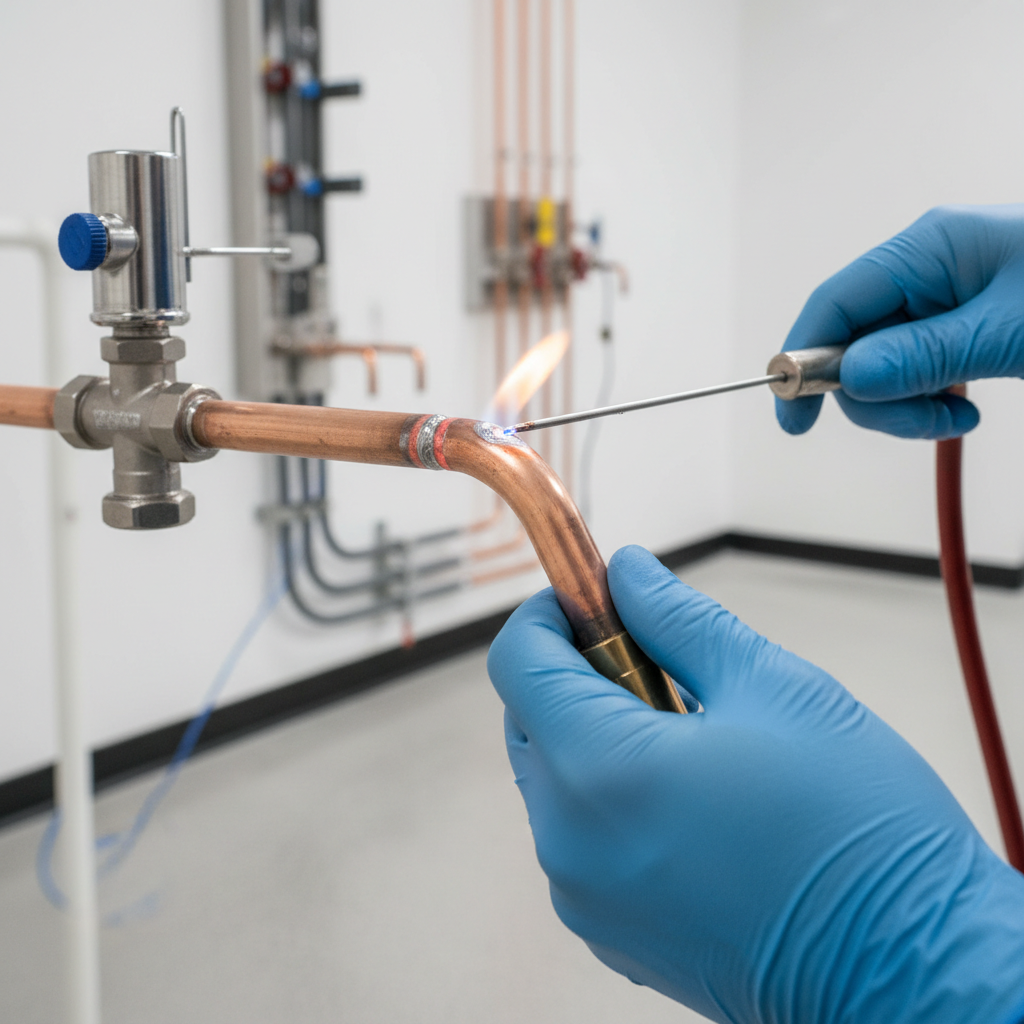
Joining sections of copper pipe is one of the most critical phases of medical gas installation. Unlike plumbing, which uses solder, medical gas piping must be brazed. This high-temperature process creates a much stronger and more reliable joint.
Key requirements for brazing under NFPA 99 include:
- Nitrogen Purge: During brazing, a continuous flow of oil-free, dry nitrogen must be maintained within the pipe. This "purge" displaces oxygen, preventing the formation of copper oxides (cupric oxide) on the interior surface. These black, flaky contaminants can dislodge and compromise downstream equipment or even reach the patient.
- Brazing Alloy: The filler material used must be a brazing alloy that is free of cadmium and has a melting point above 1000°F. Alloys like BCuP-5 are common.
- Proper Technique: The joint must be heated evenly to the correct temperature to allow the brazing alloy to be drawn into the capillary space of the fitting, creating a full, sealed joint.
Any joint that is not properly purged or shows signs of overheating must be cut out and replaced.