Medical Gas Piping Installation in Charlotte, NC: A Guide
Medical Testing SolutionsSeptember 5, 20265 min read
Share
What is Medical Gas Piping?
Medical gas piping is a critical infrastructure component in healthcare facilities, delivering life-saving gases like oxygen, medical air, and nitrous oxide from source equipment to patient rooms and operating theaters. Unlike standard plumbing, these systems are governed by stringent codes, primarily NFPA 99, the Health Care Facilities Code. This post explains the process, standards, and requirements for a compliant medical gas piping installation in Charlotte, NC, focusing on the use of Type L copper tubing as mandated for these applications.
The Role of NFPA 99 in Medical Gas Installations
NFPA 99 is the cornerstone document for medical gas systems. It outlines the minimum criteria for the design, installation, inspection, testing, and maintenance of these systems. For piping specifically, it mandates the use of seamless copper tubing, designated as Type K or Type L. Type L is the most commonly used for its balance of strength and workability.
Key NFPA 99 requirements for piping include:
Material: Seamless ASTM B819 Type L or K copper medical gas tubing.
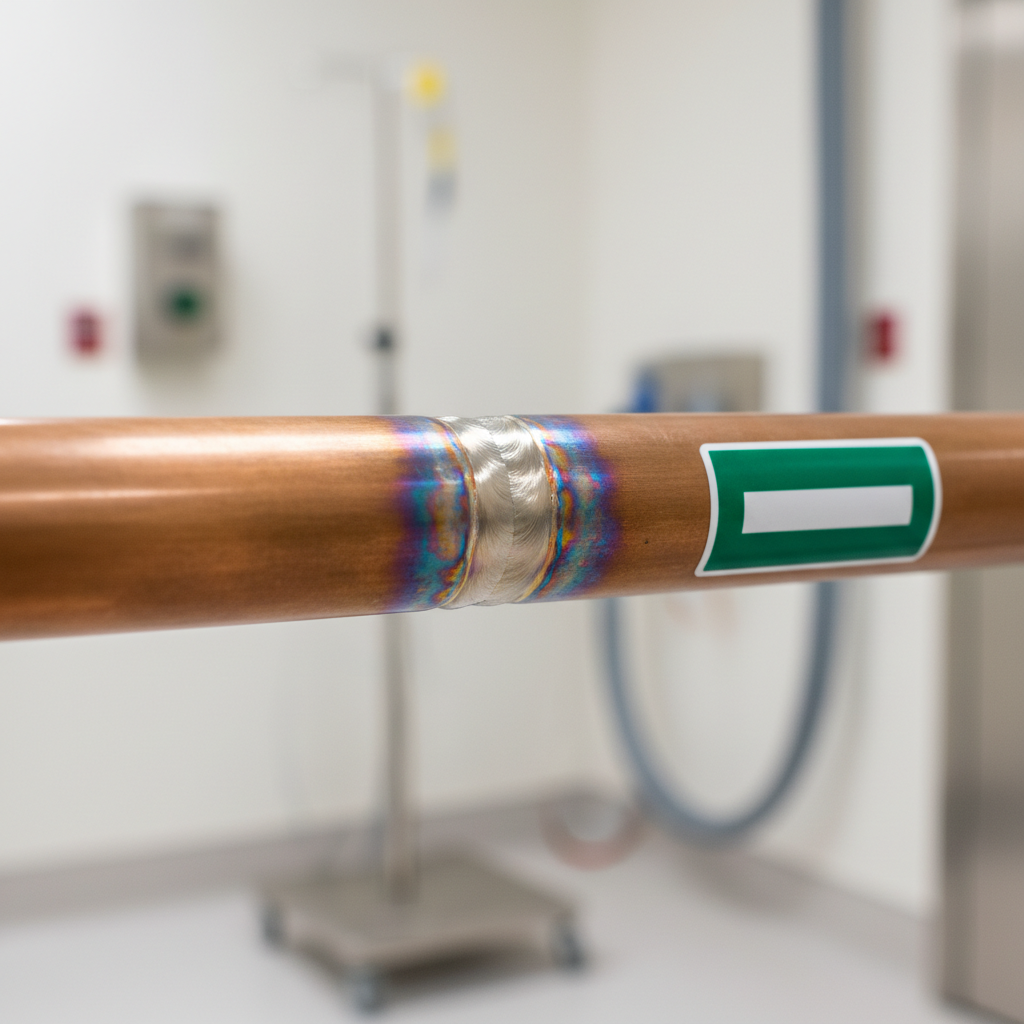
Brazing: Joints must be brazed, not soldered, using a specific brazing alloy (e.g., BCuP series) under a continuous nitrogen purge (NFPA 99, 5.1.10.4.3). This prevents the formation of copper oxides inside the pipe, which could otherwise be blown into the patient's lungs.
Labeling: Pipes must be properly labeled with the gas name and direction of flow at specific intervals (NFPA 99, 5.1.11).
Support: Hangers and supports must be spaced correctly to prevent sagging and stress on the joints.
Why this matters for compliance: Failure to adhere to NFPA 99 isn't just a technical error; it can render a facility’s system non-compliant, jeopardize patient safety, and lead to costly rework. It is the legal standard for healthcare facilities.
ASSE 6010 Certified Installation: The Gold Standard
The American Society of Sanitary Engineering (ASSE) provides crucial personnel certifications for working on medical gas systems. An ASSE 6010 Certified Installer is a professional who has demonstrated competence in all aspects of medical gas system installation, including brazing, purging, and understanding the intricate details of NFPA 99.
At Medical Testing Solutions, our team includes ASSE 6010 certified technicians who ensure every installation meets the highest standards of safety and compliance. When you hire an ASSE 6010 certified installer, you are ensuring the work is done correctly the first time.
The Installation Process: From Design to Verification
A typical medical gas piping project in Charlotte follows several key phases:
Design & Sizing: The system must be appropriately sized to meet the facility's peak demand, accounting for pressure drops over long pipe runs.
Material Inspection: All copper tubing and fittings are inspected upon arrival to ensure they are clean, capped, and certified for medical gas use.
Installation & Brazing: Pipes are run through walls and ceilings. Every joint is meticulously brazed with a nitrogen purge flowing to prevent internal oxidation.
Initial Pressure Testing: After installation, the system is subjected to an initial pressure test (typically 1.5 times the working pressure) to check for leaks.
Third-Party Verification: This is a mandatory final step. An ASSE 6030 Certified Verifier, who must be independent of the installation company, performs a battery of tests to confirm the system is safe and compliant. This includes tests for purity, pressure, and cross-connection.
Medical Testing Solutions provides both ASSE 6010 installation services and independent ASSE 6030 verification to ensure your project is seamless from start to finish.
Piping Requirements for Different Facility Types
While all facilities must follow NFPA 99, the scale and complexity of the installation can vary.
Facility Type
Common Gases
Key Considerations
Hospitals
O2, Med Air, Vac, N2O, WAGD
Large bulk storage systems, extensive piping networks, multiple zones and alarms.
Ambulatory Surgery Centers (ASCs)
O2, Med Air, Vac, N2O
Smaller scale than hospitals, but with similar critical care requirements in operating rooms.
Dental Clinics
O2, N2O, Vac
Often use smaller, cylinder-based sources. Focus on sedation systems and compatibility with equipment like dental flowmeters.
We cannot overstate the importance of correct brazing technique. When copper is heated to the temperatures required for brazing (over 1,100°F), the surface rapidly oxidizes if exposed to oxygen. This creates a black, flaky scale (cupric oxide) on the inside of the pipe. This scale can later dislodge and contaminate the entire system, harming patients and damaging expensive medical equipment.
To prevent this, ASSE 6010 installers flow a low-pressure stream of oil-free, dry nitrogen through the pipes during brazing. This inert gas displaces the oxygen, ensuring the brazed joint is smooth and clean on the inside.
Your Partner for Compliant Installation in Charlotte
Ensuring your medical gas piping is installed correctly is the first step in providing a safe environment for patients and staff. At Medical Testing Solutions, we provide expert, ASSE 6010 certified installation services for hospitals, surgery centers, and dental clinics across Charlotte and the Carolinas. Our commitment is to safety, compliance, and quality.
Ready to start your next project? Contact us today for a consultation or to request a quote. Call us at (754) 315-1078 to speak with a medical gas specialist.
Frequently Asked Questions
Both are seamless copper tubes suitable for medical gas. Type K has a thicker wall than Type L and is required for certain high-pressure applications, but Type L is the standard for most medical gas distribution lines within a facility.
Solder melts at a much lower temperature and lacks the structural strength of a brazed joint. More importantly, the fluxes required for soldering can contaminate the system. NFPA 99 explicitly prohibits soldering.
After the initial verification, all medical gas systems require annual inspections to ensure continued safety, performance, and compliance.
No. Medical gas piping installation must be performed by an ASSE 6010 certified professional to be compliant with NFPA 99 and local codes. The final system must also be approved by an ASSE 6030 verifier.
Request a quote for your facility
Talk with Medical Testing Solutions about your next inspection, repair or equipment request.