Medical Gas Installation in Rock Hill SC: Your Turnkey Guide
Medical Testing SolutionsJune 22, 20267 min read
Share
Proper medical gas installation is the bedrock of patient safety in any healthcare facility. From a major hospital to a local dental clinic in Rock Hill, South Carolina, the network of pipes delivering oxygen, medical air, and nitrous oxide must be flawlessly designed, installed, and verified. A single mistake, a leaky joint, a contaminated pipe, or a cross-connection, can have catastrophic consequences. That's why understanding the turnkey installation process, governed by strict codes like NFPA 99, is non-negotiable for facility managers and administrators.
This comprehensive guide details the entire lifecycle of a medical gas installation projet. We will explore the critical design and engineering phase, the step-by-step installation process performed by ASSE 6010 certified technicians, and the final medical gas system verification to ensure safety and compliance. By the end, you'll have a clear roadmap for your next project in Rock Hill.
What is a Turnkey Medical Gas Installation?
A turnkey medical gas installation is an end-to-end solution where a single, qualified partner manages every aspect of the project. Instead of juggling separate architects, engineering consultants, equipment vendors, and installation crews, you have one point of contact responsible for delivering a fully compliant, operational system. This integrated approach encompasses design, engineering, material procurement, installation, and final verification.
The benefits of a turnkey solution include:
Streamlined Communication: One team, one point of contact. This eliminates the miscommunication and blame-shifting that can plague multi-vendor projects.
Total Accountability: The turnkey partner is wholly responsible for the project's success, from initial drawings to the final verifier's report.
Cost and Schedule Control: An integrated process allows for better planning, bulk material purchasing, and efficient scheduling, minimizing delays and cost overruns.
Guaranteed Compliance: A seasoned turnkey provider, like Medical Testing Solutions, lives and breathes the relevant codes and standards, ensuring every step is documented and compliant.
Core Components of a Medical Gas System
A medical gas system is more than just pipes in the walls. It's a complex network comprising three main areas:
Source Equipment
The "lungs" of the system, this equipment generates or stores the medical gases. It includes:
Manifolds: High-pressure cylinders of gases like oxygen or nitrogen are connected to a manifold, which regulates pressure and ensures a continuous supply.
Medical Air Compressors: Specialized, oil-free compressors generate clean, dry medical air that meets stringent purity standards.
Vacuum Pumps: Create the suction needed for surgical and respiratory procedures.
The Piping Distribution Network
This is the circulatory system that transports gases from the source to the patient. It consists of:
Copper Piping: Seamless, non-arsencial copper tubing (Type K or L) is the only material permitted by NFPA 99 for medical gas distribution.
Zone Valve Boxes: These allow specific areas or "zones" of the facility to be shut off for maintenance or in an emergency without disrupting the entire building.
Alarms: Master and area alarms provide audible and visual warnings of pressure drops, high pressure, or other system failures, as mandated by NFPA 99.
Patient-Facing Terminals
These are the points of use where medical staff connect equipment for patient care.
Outlets and Inlets: Gas-specific outlets (e.g., DISS, Ohmeda, Chemetron) prevent the accidental connection of the wrong gas line.
Flowmeters and Regulators: Control the flow rate and pressure of gas delivered to the patient.
The Installation Process: A Step-by-Step Guide
Executing a compliant medical gas installation requires precision, expertise, and strict adherence to code. The process should only be carried out by ASSE 6010 certified medical gas installers who specialize in this work.
Step 1: Design & Engineering
Before any pipe is cut, a detailed plan must be developed. This plan considers the facility type, number of beds/operatories, and future expansion needs. An engineer will map out the entire piping system, calculate pipe sizes to ensure proper flow and pressure, and specify all components in accordance with NFPA 99, Chapter 5.
Step 2: Piping Assembly & Brazing
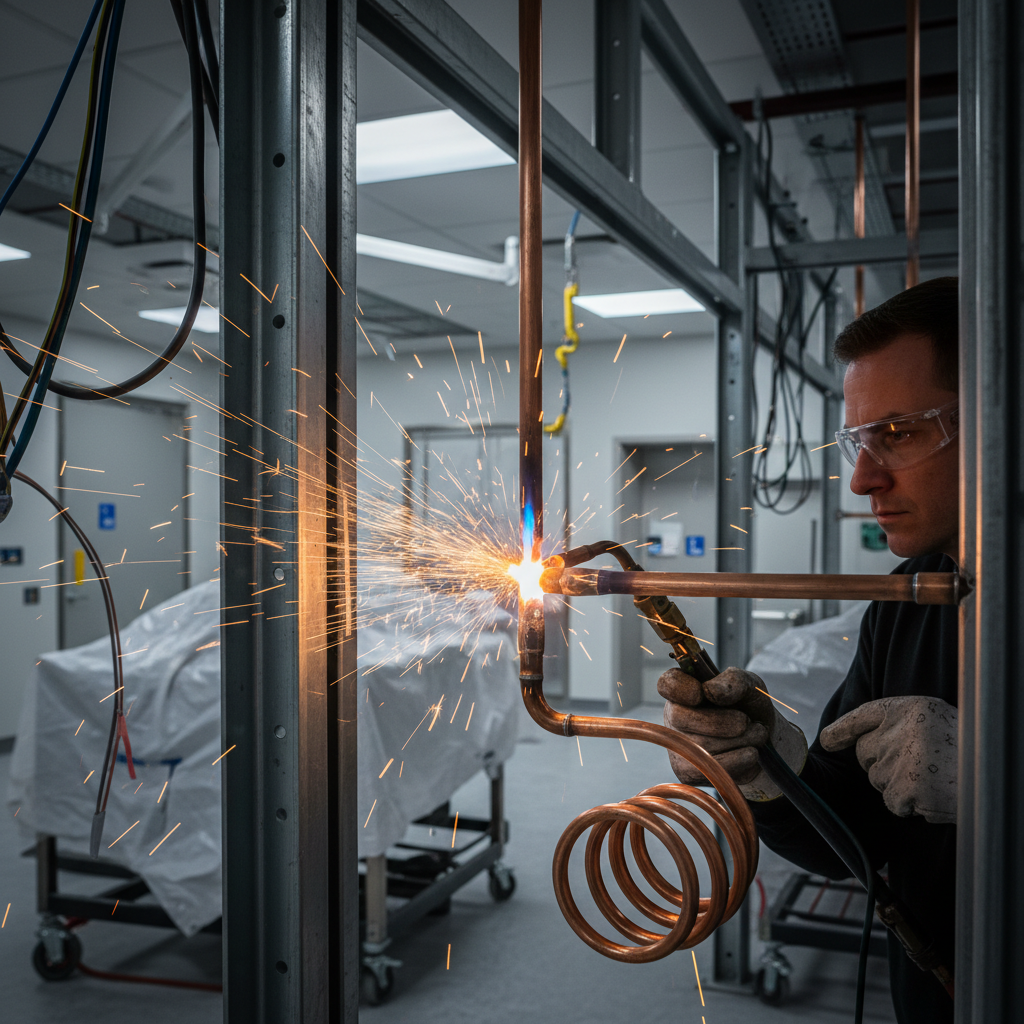
This is the most critical hands-on phase. Installers cut and fit the copper piping according to the design. To join the pipes, they use brazing, a high-temperature soldering process. Per NFPA 99 (5.1.10.11), this process must be performed with a continuous nitrogen purge flowing through the pipe. This purge displaces oxygen, preventing the formation of toxic cupric oxide on the pipe's interior, which could later flake off and harm a patient.
Why this matters for compliance: The requirement for brazing to be performed by an ASSE 6050-certified technician with a nitrogen purge is a cornerstone of NFPA 99. Failure to do so properly is a leading cause of installation failures and contamination, posing a direct threat to patient safety. Medical Testing Solutions ensures all our installers hold the necessary ASSE credentials.
Step 3: Component Installation
Once the piping network is in place, installers mount the zone valve boxes, alarm panels, and outlets. Each component must be securely installed, labeled, and connected to the correct pipeline.
Step 4: Initial Installer Testing
After assembly, the installer performs several initial tests. These include blowing out the lines with nitrogen to remove any particulate matter and conducting a standing pressure test (often at 150 psi) to check for leaks in the piping joints before the walls are closed up.
Compliance Deep Dive: Key Standards for Installation
Navigating the web of codes can be confusing. Here’s a breakdown of the essential standards governing medical gas installation in Rock Hill.
Standard
Governs...
Key Requirement for Installation
NFPA 99 (2024 Ed.)
Overall design, installation, testing, and maintenance of medical gas systems.
Chapter 5: Piped Gas and Vacuum Systems. Defines risk categories, material requirements (Type K/L copper), and brazing procedures (nitrogen purge).
ASSE Series 6000
Personnel certification for installers, verifiers, and maintenance personnel.
ASSE 6010: Medical Gas Systems Installer certification. Ensures tradespeople have the proven knowledge and skill to build systems safely.
CGA Publications
Safe handling, storage, and use of compressed gases.
Provides detailed guidelines for source equipment, cylinder storage, and connections.
The Final Step: ASSE 6030 System Verification
An installation is not complete until it has been thoroughly tested and verified by an independent, third-party agency. As a facility owner, you cannot simply trust that the installation was done correctly; it must be proven. This process, known as ASSE 6030 Verification, is a non-negotiable step before the system can be used for patient care.
A certified verifier, like the team at Medical Testing Solutions, will perform a battery of over 20 tests, including:
Cross-Connection Test: Confirms that a gas connected to one outlet does not flow to any other outlet.
Purity Test: Ensures the gas delivered at the outlet is the correct gas and meets USP purity requirements.
Particulate Test: Verifies the piping is free from construction debris.
Alarm Testing: Confirms that all master and area alarms function correctly.
Only after the system passes every test will the verifier issue a certificate, allowing the system to be put into service.
Choosing Your Medical Gas Installer in Rock Hill, SC
When selecting a partner for your project, it's crucial to look beyond a simple plumbing license. Your installer must have specialized expertise.
Key qualifications to demand:
ASSE 6010 Certified Personnel: Ask for proof of certification for the individuals who will be on your job site.
Proven Experience: A track record of successful installations in facilities similar to yours in South Carolina.
Turnkey Capability: The ability to manage the project from design to final sign-off.
Strong References: Speak to their past clients.
Long-Term Support: Once installed, your system will need ongoing service. A good partner will also offer a robust preventative medical gas maintenance plan.
Your Partner for Compliant Installation in Rock Hill
A medical gas system is a critical life-support utility. Its proper installation is a complex task that leaves no room for error. By partnering with a certified, experienced, turnkey provider, you ensure your Rock Hill facility is built on a foundation of safety and compliance.
Ready to start your project? Contact the certified experts at Medical Testing Solutions for a comprehensive, turnkey quote for your medical gas installation needs. Call us at +1 (754) 315-1078 or request your quote online today.
'''
Frequently Asked Questions
The timeline depends on project size and complexity, but a typical installation for a small to medium-sized facility can range from a few weeks to several months, including design, installation, and final verification.
NFPA 99, Health Care Facilities Code, is the master standard. It dictates the requirements for design, installation, testing, and maintenance of medical gas systems to ensure patient safety.
An ASSE 6010 certified installer has been trained and tested on the specific procedures for installing medical gas systems per NFPA 99. This certification ensures they have the expertise to braze, assemble, and install the piping network correctly to prevent leaks, contamination, or cross-connections.
Installation (per ASSE 6010) is the physical construction of the piping system. Verification (per ASSE 6030) is the subsequent third-party testing process that confirms the system was installed correctly, is safe for patient use, and meets all NFPA 99 requirements.
Yes. We provide turnkey medical gas installation for a variety of healthcare facilities, including hospitals, surgery centers, and dental practices, ensuring your nitrous oxide and oxygen systems are fully compliant and safe.
Request a quote for your facility
Talk with Medical Testing Solutions about your next inspection, repair or equipment request.