A properly installed medical gas system is not a luxury, it's a fundamental component of patient safety and a legal requirement for healthcare facilities. For project managers and administrators in Roanoke, VA, navigating the complexities of a new medical gas installation can be daunting. From stringent code requirements to specialized personnel certifications, every step is critical. This guide provides a definitive overview of the medical gas installation process, from initial design to final verification. You will learn about the critical role of ASSE 6010 certification, how to navigate NFPA 99 standards, and what to expect from a turnkey installation provider like Medical Testing Solutions, ensuring your project is completed safely, on time, and in full compliance.
Medical Gas Installation in Roanoke, VA: Your Turnkey Guide
What is a Medical Gas Piping System?
A medical gas piping system is a network of hidden infrastructure crucial for delivering life-sustaining gases directly to patient care areas. It's the circulatory system of a healthcare facility. These systems are centrally supplied and piped to various outlets, alarms, and valves throughout the building.
Gases and Systems Covered
Medical gas systems deliver several primary gases, each with its own dedicated piping network:
- Oxygen (O2): Supports respiration.
- Medical Air (MedAir): A specialized, clean compressed air for patient respiratory support.
- Nitrous Oxide (N2O): Anesthetic and analgesic gas.
- Nitrogen (N2): Used to power surgical tools.
- Carbon Dioxide (CO2): Used for insufflation during surgery.
- Waste Anesthetic Gas Disposal (WAGD): Safely removes exhaled anesthetic gases from the clinical environment.
- Medical Vacuum (VAC): Used for suctioning and aspiration procedures.
Key Components of a Medical Gas System
- Source Equipment: The heart of the system, including air compressors, vacuum pumps, and high-pressure cylinder manifolds.
- Alarms: Master alarms, area alarms, and local alarms that monitor pressure and system status, as required by NFPA 99.
- Zone Valve Boxes: Allow specific areas of the facility to be isolated for maintenance or in an emergency without shutting down the entire system.
- Outlets/Terminals: Gas-specific connection points in patient rooms, operating suites, and other treatment areas.
Why ASSE 6010 Certification is Non-Negotiable for Installers
You wouldn't hire an unlicensed electrician to wire your facility, and the same principle applies with greater urgency to medical gas piping. The American Society of Sanitary Engineering (ASSE) 6000 series provides the definitive standard for medical gas personnel. For installation, ASSE 6010 certification is essential.
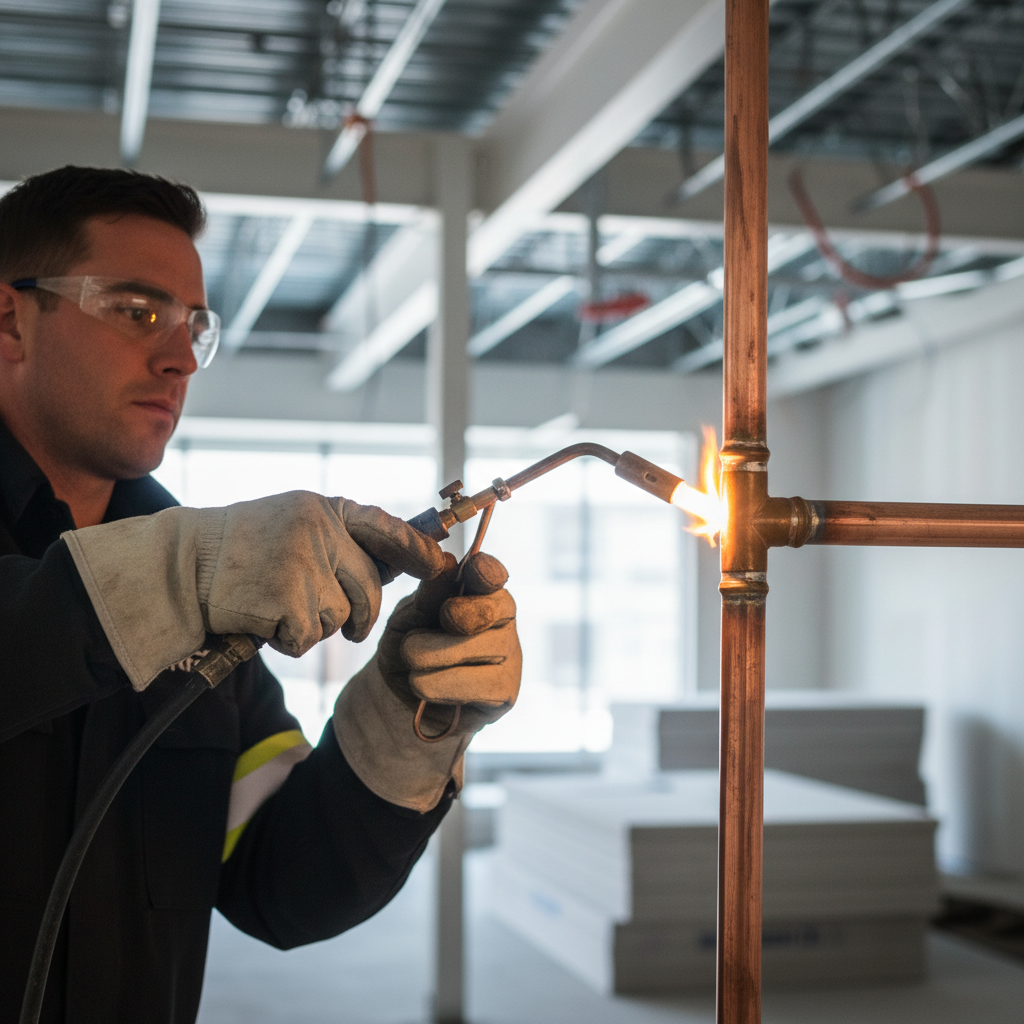
An ASSE 6010 certified medical gas installer has undergone rigorous training and passed a comprehensive examination covering all aspects of system installation, including the specific, meticulous process of brazing. Brazing is a high-temperature joining process used to connect the copper pipes. When done improperly, it can introduce contaminants into the pipeline, create leaks, or cause catastrophic failures.
Why this matters for compliance: NFPA 99 (2018 edition, Section 5.1.10.11.10.1) explicitly requires that brazing procedures and the brazers themselves be qualified in accordance with the American Welding Society (AWS) B2.2, Standard for Brazing Procedure and Performance Qualification. The ASSE 6010 certification includes this qualification. Using uncertified personnel is a direct violation of code and places patients at extreme risk.
Our Turnkey Medical Gas Installation Process
At Medical Testing Solutions, we provide a complete design-build solution for medical gas installation projects in the Roanoke, VA area. Our turnkey process ensures a single point of responsibility and a seamless path from blueprint to operation.
- 1. Consultation & Design-Build: We collaborate with your architects, engineers, and general contractor to design a system that is efficient, scalable, and fully compliant with NFPA 99. Our design-build approach streamlines the project, reducing delays and communication gaps.
- 2. Code-Compliant Piping Installation: Our ASSE 6010 certified team installs all piping using meticulously cleaned, ASTM B819 Type L copper tubing. Every joint is brazed in a nitrogen-purged environment to prevent oxidation and internal contamination.
- 3. Source Equipment & Alarm Integration: We install and connect all central supply equipment, including manifolds, compressors, and vacuum pumps. We also wire and configure the complete master and area alarm systems per code requirements.
- 4. Pre-Verification & System Testing: Before the third-party verifier arrives, we conduct our own rigorous tests, including initial pressure testing, to ensure the system is ready for its final inspection.
- 5. Coordination of Final Verification: The final, crucial step is the independent, third-party inspection. We manage and coordinate the ASSE 6030 medical gas verification, ensuring the verifier has everything they need to conduct their tests efficiently.
Navigating NFPA 99 Codes and Standards
The National Fire Protection Association's NFPA 99, Health Care Facilities Code, is the foundational legal document governing medical gas systems. It is not a set of guidelines; it is the law in most jurisdictions, including Virginia.
System Categories (Cat 1, 2, 3)
NFPA 99 categorizes systems based on the risk to patients if the system fails. This risk assessment dictates the design, installation, and testing requirements.
| Feature | Category 1 | Category 2 | Category 3 |
|---|---|---|---|
| Risk if Failed | Death or serious injury | Minor injury | Discomfort or no injury |
| Typical Application | Operating Rooms, ICUs, ERs | Inpatient rooms, recovery areas | Labs, analysis stations |
| Required Verification | ASSE 6030 Verifier (Third-Party) | ASSE 6030 Verifier (Third-Party) | Installer may perform tests |
| Required Alarms | Master, Area, and Local | Area and Local | Local as needed |
Brazing and Joint Integrity
NFPA 99 is extremely specific about brazing. It requires a continuous nitrogen purge during the process to prevent the formation of cupric oxide (soot) on the interior pipe wall. This black powder can be dislodged and carried into the gas stream, potentially harming patients or damaging sensitive equipment like anesthesia machines.
Common Challenges in Roanoke Medical Gas Installations
Every project has unique challenges. With decades of experience, MTS is adept at solving them.
- Retrofitting Older Facilities: Many hospitals and clinics in the Roanoke valley are in older buildings. Retrofitting a new medical gas system requires careful planning to work around existing infrastructure without disrupting ongoing patient care. We specialize in phased installations to keep critical areas operational.
- Ensuring Material Purity: The supply chain for medical-grade copper and components must be rigorously managed. We ensure every piece of pipe, every fitting, and every valve meets or exceeds ASTM B819 standards, arriving on-site capped and cleaned.
- Coordination with Other Trades: A medical gas installation doesn't happen in a vacuum. It requires tight coordination with plumbers, electricians, and HVAC technicians. Our project managers are experts in this coordination, preventing costly delays.
The Critical Role of the ASSE 6030 Medical Gas Verifier
After the installation is complete, the system cannot be used until it has been inspected and certified by an independent third-party. This is the job of an ASSE 6030 Medical Gas Verifier. The verifier performs a series of about 20 different tests to ensure the system is safe and compliant. These include:
- Purity & Particulate Tests: Ensuring the gas delivered is the correct gas and free of contaminants.
- Pressure & Flow Tests: Confirming all outlets provide the correct pressure and flow rate.
- Alarm Testing: Verifying that every alarm condition (e.g., high pressure, low pressure) functions correctly.
- Cross-Connection Tests: Ensuring that, for example, the oxygen pipeline is not connected to a medical air outlet.
It is a critical conflict of interest for an installation company to verify its own work. At Medical Testing Solutions, we facilitate this process to prepare your facility for its final system certification.
Beyond Installation: Annual Inspections and Maintenance
Once your system is certified and operational, the responsibility for compliance continues. NFPA 99 requires regular inspections and maintenance to ensure the system remains safe and reliable throughout its lifecycle. A robust preventative maintenance plan is the best way to protect your investment and ensure patient safety. Consider scheduling Annual medical gas system inspections with a certified provider.
Your Partner for Compliant Medical Gas Systems in Roanoke, VA
Installing a medical gas system is a high-stakes project that leaves no room for error. Partnering with a certified, experienced, and professional company is the only way to ensure the safety of your patients and the compliance of your facility. Medical Testing Solutions is your trusted partner for turnkey medical gas installation in Roanoke and the surrounding Virginia area.
Don't compromise on safety or expertise. Contact our team of specialists today to discuss your project. Request a quote online or call us directly at +1 (754) 315-1078. '''
Frequently Asked Questions
Request a quote for your facility
Talk with Medical Testing Solutions about your next inspection, repair or equipment request.