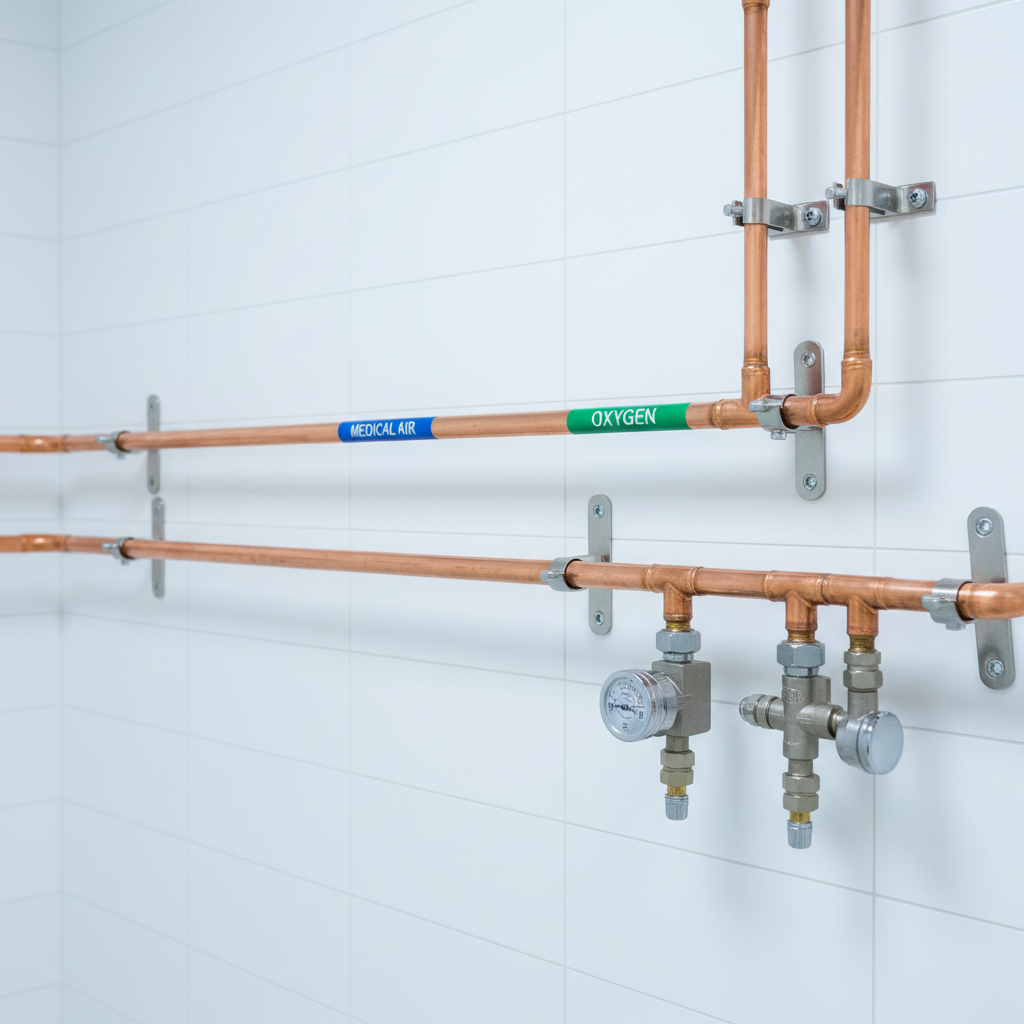
Medical Gas Installation Raleigh NC: A Guide to Turnkey Piping Systems
Medical Testing SolutionsJune 22, 20268 min read
Share
Medical gas systems are a lifeline in any modern healthcare facility, delivering vital gases like oxygen, medical air, and nitrous oxide to patient rooms, operating theaters, and recovery areas. The design, installation, and maintenance of these systems are governed by stringent codes to ensure patient safety. For any hospital administrator, facility manager, or construction contractor in Raleigh, NC, understanding the complexities of a medical gas installation is not just a technical requirement, it's a critical responsibility.
This comprehensive guide provides a definitive look at the turnkey medical gas installation process. We will explore the essential components, break down the governing codes and standards like NFPA 99 and ASSE 6000, and outline the step-by-step process from initial design to final verification. You will learn what qualifications to demand from an installer and how to ensure your facility's system is built for safety and long-term compliance.
What is a Medical Gas Pipeline System (MGPS)?
A Medical Gas Pipeline System (MGPS) is a permanently installed network of pipes designed to transport specific medical gases and vacuum from a central supply source to various terminal units throughout a healthcare facility. Unlike standard plumbing, these systems are subject to specialized standards due to the critical nature of their function.
Core Components of an MGPS
A typical system consists of three main parts:
Source Equipment: This is the heart of the system. It includes bulk oxygen tanks, medical air compressors, vacuum pumps, and manifolds for cylinder backups. This equipment must have its own dedicated space and meet specific NFPA 99 requirements for monitoring and alarms.
Pipeline Network: This is the distribution network of pipes, valves, and fittings that carries the gases from the source to where they are needed. The material, size, and joining methods for this piping are strictly defined.
Terminal Units: These are the outlets (or inlets for vacuum) in patient rooms, operating suites, and other treatment areas where medical staff connect equipment. They are gas-specific to prevent dangerous cross-connections.
Common Medical Gases
Each gas has a unique role and corresponding system requirements:
Oxygen (O2): Used for respiration and life support.
Medical Air: A purified, compressed air supply used for respiratory applications.
Nitrous Oxide (N2O): An anesthetic and analgesic agent, commonly used in dental and minor surgical procedures.
Carbon Dioxide (CO2): Used for insufflation during certain surgeries.
Vacuum: Used for suctioning fluids and waste.
The Critical Role of ASSE 6000 and NFPA 99 Compliance
The safety of a medical gas system hinges on absolute adherence to established codes and standards. In the United States, the two most important documents are NFPA 99 (the Health Care Facilities Code) and the ASSE/IAPMO/ANSI 6000 series of standards for medical gas personnel.
Understanding NFPA 99: The Health Care Facilities Code
NFPA 99 is the foundational code that establishes the minimum criteria for the installation, performance, and inspection of healthcare facility systems, including gas and vacuum. Chapter 5, "Gas and Vacuum Systems," is the primary reference for anyone involved in medical gas installation. It dictates everything from material specifications and brazing procedures to testing protocols and risk assessment.
Why this matters for compliance: Failure to comply with NFPA 99 can result in project delays, failed inspections, costly rework, citations from accreditation bodies like The Joint Commission, and most importantly, extreme risk to patient safety. Using uncertified personnel for installation is a direct violation of NFPA 99 (Section 5.1.14.2.1.2) and can lead to catastrophic failures and severe legal liability.
ASSE 6000 Series: Certifications for Personnel
While NFPA 99 defines what needs to be done, the ASSE 6000 series defines the qualifications for the people who do the work. It ensures that every individual who installs, verifies, or maintains an MGPS is a trained, tested, and certified professional. Key certifications include:
ASSE 6010 Medical Gas Systems Installer: The essential credential for anyone physically installing and brazing the pipeline. An ASSE 6010 certified installer has passed a rigorous written exam and a practical brazing test, proving their ability to build a compliant system.
ASSE 6030 Medical Gas Systems Verifier: A certified verifier is an independent third party responsible for inspecting and testing a newly installed or modified system to confirm it is safe and compliant before it is used for patient care. Medical gas verification is a mandatory final step.
ASSE 6040 Medical Gas Systems Maintenance Personnel: This certification is for facility staff who perform routine maintenance on the system after it is up and running.
When hiring a company for your medical gas installation in Raleigh, NC, demanding proof of ASSE 6010 certification for every installer on the job is non-negotiable.
The Turnkey Medical Gas Installation Process
A turnkey installation provides a seamless, end-to-end solution, managed by a single expert team. This approach minimizes complexity and ensures accountability throughout the project.
Step 1: Design and Engineering
The process begins with a detailed assessment of the facility's needs. This involves:
Load Calculations: Determining the required gas flow and capacity for each area.
System Sizing: Correctly sizing pipes, source equipment, and alarms.
Blueprint Creation: Developing detailed drawings that map the entire pipeline network, which architects and engineers use for construction.
Step 2: Sourcing and Pre-Fabrication
Only materials specifically designated for medical gas use are permitted. NFPA 99 requires seamless copper tubing (Type K or L) cleaned for oxygen service. A professional installer like Medical Testing Solutions can source all compliant components, from pipes and fittings to alarms and source equipment, available through our products catalog.
Step 3: Installation and Brazing
This is where certified expertise is paramount. ASSE 6010 installers begin routing the copper piping according to the approved design. All joints must be brazed, a high-temperature joining process. Per NFPA 99, brazing must be performed while continuously purging the interior of the pipe with oil-free, dry nitrogen to prevent the formation of toxic oxides on the interior pipe surface.
Step 4: Initial Piping Tests
Once the piping is in place, the installer performs initial tests to ensure the network is sound. This includes blowing the lines out with nitrogen to remove any particulate matter and conducting an initial pressure test to check for leaks.
Step 5: Third-Party Verification (ASSE 6030)
Before any terminal outlet can be used, a certified ASSE 6030 Verifier must conduct a series of rigorous tests on the entire system. This is a crucial, unbiased check to ensure safety. The verification process includes:
Checking for cross-connections
Verifying correct gas-specific labeling
Testing for system purity and quality
Confirming correct operational pressures and flow rates
Testing all warning and alarm systems
Medical Testing Solutions is a leading provider of independent medical gas verification services, ensuring your new installation meets every requirement for patient use.
Choosing the Right Medical Gas Installer in Raleigh, NC
Selecting your installation partner is the single most important decision in this process. A cheaper, unqualified contractor can expose your facility to immense risk.
Certified vs. Uncertified Installer Comparison
Feature
Certified Installer (MTS)
Uncertified Contractor
Certification
ASSE 6010 Certified Installers
No recognized med gas credentials
NFPA 99 Knowledge
Deep, tested knowledge of code
Superficial or no understanding
Brazing Technique
Proper nitrogen purge, clean joints
Risk of oxidation, poor quality
Verification
Welcomes and plans for 3rd-party test
May resist or be unaware of need
Long-Term Liability
Insured, stands behind work
High risk of failure, liability shifts to you
Common Applications for Medical Gas Systems
Hospitals and Surgical Centers: The most complex systems, requiring a full range of gases and vacuum for operating rooms, ICU, and patient floors.
Dental and Oral Surgery Offices: Primarily use oxygen and nitrous oxide for patient sedation. The proper function of these systems, including dental flowmeter equipment, is critical for patient safety.
Veterinary Clinics: Similar to human healthcare, requiring oxygen and often anesthetic gas evacuation systems. We provide specialized veterinary anesthesia equipment.
Outpatient & Care Facilities: From small clinics to large long-term care homes, these facilities require properly installed systems for patient care and emergency response.
Your responsibility for the medical gas system doesn't end after installation. NFPA 99 requires a regular maintenance program and periodic inspections to ensure the system remains safe and compliant. Engaging a qualified service provider like Medical Testing Solutions for ongoing support is the best way to protect your investment and ensure continued patient safety. We provide comprehensive maintenance services and perform the required annual medical gas inspections.
Your Partner for Compliant Medical Gas Installation in Raleigh
Choosing a certified, experienced, and professional partner for your medical gas installation is a decision that impacts patient safety, regulatory compliance, and your facility's operational integrity for decades. Don't leave it to chance.
For a turnkey medical gas installation in the Raleigh area that's fully compliant and handled by ASSE 6010 certified experts, contact Medical Testing Solutions. Our team is ready to manage your project from design to final verification, ensuring a safe and reliable system. Call us today at +1 (754) 315-1078 or request a quote online to discuss your needs.
'''
Frequently Asked Questions
The most critical credential is an ASSE 6010 Medical Gas Systems Installer certification. This proves the individual is trained and tested on the specific requirements of NFPA 99 for safely and correctly installing medical gas piping.
The timeline varies significantly based on project scope, from a few days for a small clinic renovation to several months for a new hospital wing. Key factors include system size, facility access, and coordination with other trades.
Installation (per ASSE 6010) is the physical act of putting the pipe, components, and source equipment in place. Verification (per ASSE 6030) is a mandatory, independent, third-party inspection and testing process that occurs after installation is complete to ensure the system is safe and compliant before it is used for patient care.
No. NFPA 99 requires the use of seamless copper tube designated as Type K or Type L (ACR). It must be cleaned for oxygen service by the manufacturer and capped or plugged to maintain cleanliness until installation.
A turnkey installation covers the entire project lifecycle from start to finish. This typically includes system design and engineering, material procurement, certified installation and brazing, all required pressure tests, and coordination of the final ASSE 6030 third-party verification.
Request a quote for your facility
Talk with Medical Testing Solutions about your next inspection, repair or equipment request.