Medical gas systems are a critical life-support utility in any healthcare environment, from large hospitals to outpatient surgical centers and dental clinics. A properly installed system is not a luxury, it's a fundamental requirement for patient safety and regulatory compliance. For facility managers and construction project leaders in Newport News, VA, understanding the complexities of a turnkey medical gas installation is paramount. This guide provides a definitive overview of the entire process, from design and planning to final verification. You will learn about the essential codes and standards, the roles of certified professionals, and how to ensure your project is completed safely, on budget, and in full compliance with NFPA 99 and ASSE 6000 series standards.
Turnkey Medical Gas Installation in Newport News, VA
What is a Medical Gas Piping System?
A medical gas pipeline system (MGPS) is a purpose-built network designed to deliver specific, high-purity gases from a central supply source to various points of use throughout a healthcare facility. Unlike standard plumbing or HVAC piping, these systems are subject to stringent regulations due to their direct impact on patient care.
Gases Involved
Medical gas systems can carry a variety of gases, including:
- Oxygen (O2): Used for respiration and life support.
- Medical Air (MA): A purified, compressed air supply used for patient respiration and to power surgical tools.
- Nitrous Oxide (N2O): An anesthetic and analgesic agent, commonly used in dental and surgical settings.
- Nitrogen (N2): Used to power surgical devices.
- Carbon Dioxide (CO2): Used for insufflation during minimally invasive surgeries.
- Medical Vacuum (VAC): A suction system used to remove fluids and debris from the patient's airway or surgical site.
Key Components
A complete system involves more than just pipes. The main components include:
- Source Equipment: Manifolds, compressors, vacuum pumps, and bulk storage tanks.
- Piping Network: A dedicated network of seamless copper tubing (Type K or L) used to transport the gases.
- Valves: Zone and in-line valves that allow sections of the system to be isolated for maintenance or emergencies.
- Outlets/Terminals: Gas-specific connection points in patient rooms, operating suites, and procedure areas.
- Alarm Systems: Master and area alarms that monitor system pressure and operational status, alerting staff to potential issues as required by NFPA 99.
The Critical Role of ASSE 6010 Certified Installers
The most critical factor in a successful medical gas installation is the personnel performing the work. NFPA 99 mandates that any individual installing medical gas systems must be qualified. This qualification is demonstrated through certification to ASSE 6010, Professional Qualification Standard for Medical Gas Systems Installers.
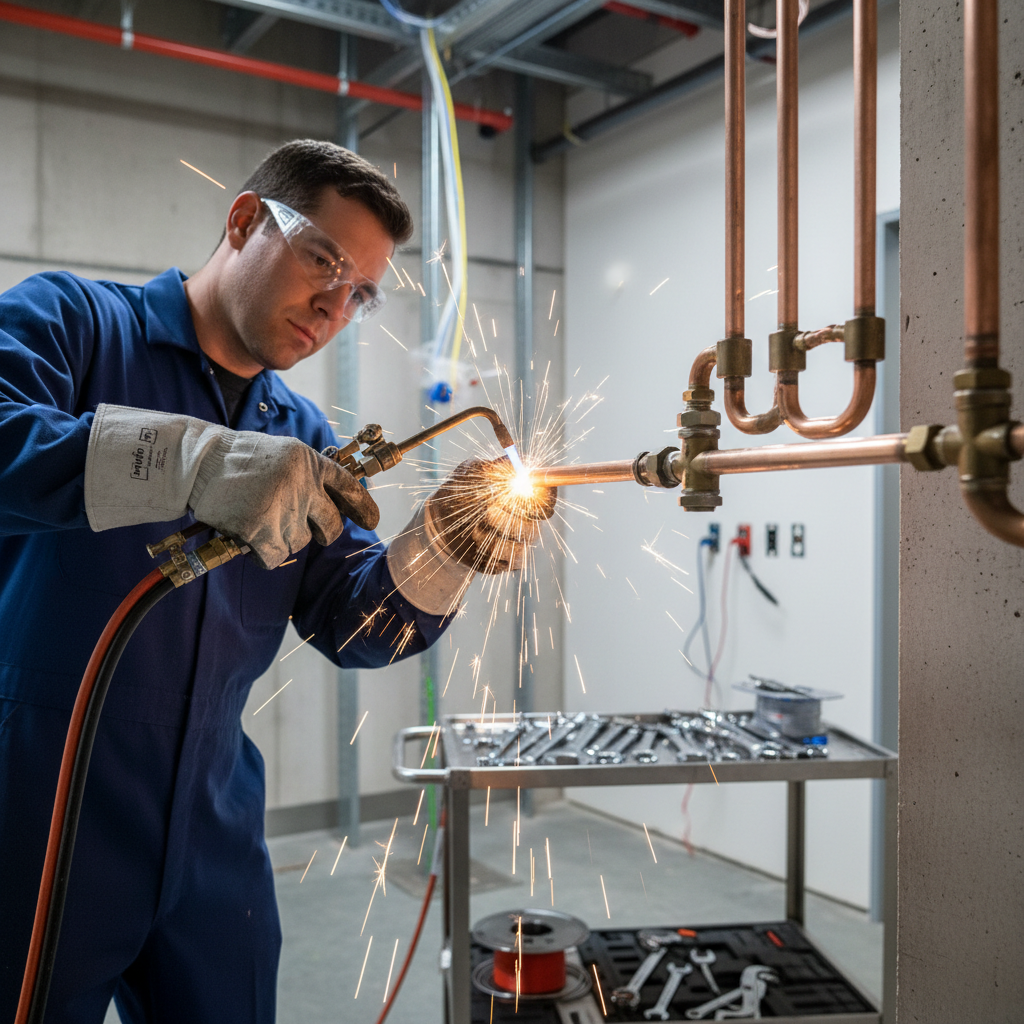
An ASSE 6010 certified installer has undergone extensive training and passed a rigorous examination covering all aspects of system installation, including practical brazing. Brazing, the process of joining copper pipes and fittings, is a crucial skill. According to NFPA 99 (Section 5.1.10.11), all brazing procedures must be performed by individuals qualified under the standard. Improper brazing can lead to leaks, system contamination, or catastrophic failures. Medical Testing Solutions employs a team of fully licensed and ASSE 6010 certified technicians, ensuring every joint is perfect and every system is secure.
The Medical Gas Installation Process: A Step-by-Step Overview
A turnkey installation provides a seamless experience from concept to completion. The process generally follows these key phases:
- Design and Planning: The process begins with a detailed assessment of the facility's needs. Engineers create blueprints that map out the piping runs, outlet locations, and source equipment specifications, ensuring compliance with all relevant codes.
- Material Selection and Sourcing: All materials, especially the copper tubing and fittings, must be medical-grade, cleaned for oxygen service, and properly stored to prevent contamination before installation.
- Piping Installation and Brazing: Certified installers run the copper lines according to the design plans. Every joint is meticulously brazed while purging the lines with oil-free, dry nitrogen to prevent internal oxidation and scaling.
- Initial Verification: Once the piping is in place, the installer performs initial pressure tests and blow-downs to check for leaks and remove any particulate matter from the lines.
- Final ASSE 6030 Verification: After the source equipment, alarms, and outlets are installed, a separate, ASSE 6030 certified verifier must conduct a comprehensive battery of tests on the system. This independent verification is non-negotiable and ensures the system is safe for patient use. Learn more about our medical gas verification services.
NFPA 99 Compliance: The Code for Health Care Facilities
NFPA 99, Health Care Facilities Code, is the foundational document governing medical gas systems in the United States. It outlines the minimum requirements for the design, installation, inspection, testing, and maintenance of these crucial systems. The code uses a risk-based approach, categorizing systems based on the potential impact on patient safety if the system were to fail.
- Category 1: Failure of the system is likely to cause major injury or death to patients or caregivers. These systems require the most stringent precautions.
- Category 2: Failure is likely to cause minor injury.
- Category 3: Failure is not likely to cause injury but could cause patient discomfort.
Why this matters for compliance: Failure to adhere to NFPA 99 during installation can result in project delays, costly rework, and failure to obtain occupancy permits. More critically, it poses significant risks to patient safety. Working with an installer who has a deep understanding of the code, like Medical Testing Solutions, is essential for achieving full medical gas certification.
Design-Build vs. Traditional Bid-Build: What's Right for Your Newport News Facility?
Choosing the right project delivery method is crucial. For complex projects like medical gas installation, the design-build approach often offers significant advantages over the traditional design-bid-build model. Medical Testing Solutions specializes in a turnkey, design-build process that streamlines communication and ensures accountability.
| Feature | Design-Build (Turnkey) | Traditional Bid-Build |
|---|---|---|
| Contract | Single contract for design & construction | Multiple contracts (designer, contractor) |
| Accountability | Single point of responsibility | responsibility divided, potential for conflict |
| Timeline | Faster delivery, overlapping phases | Slower, sequential process |
| Communication | Streamlined between owner and team | Can be fragmented |
| Cost | Cost established early, fewer changes | Potential for cost overruns, change orders |
| Risk | Risk is shifted to the design-build firm | Owner assumes significant risk |
Choosing Your Medical Gas Installer in Newport News
Selecting a qualified partner for your medical gas installation is a decision that will impact your facility for decades. Here are key criteria to consider:
- Certifications: The company must employ installers certified to ASSE 6010 and have verifiers certified to ASSE 6030.
- Verifiable Experience: Ask for a portfolio of similar projects completed in Newport News and the wider Virginia area.
- Comprehensive Insurance: Ensure they carry adequate liability insurance specific to medical gas work.
- Turnkey Capability: A provider who can handle everything from design and installation to final verification and ongoing maintenance simplifies the process. Check out our comprehensive medical gas installation services for more details.
- Deep Code Knowledge: Your partner must be an expert in NFPA 99 and other relevant standards.
Our Turnkey Installation Services
At Medical Testing Solutions, we provide comprehensive, turnkey medical gas installation services for hospitals, surgery centers, and dental clinics throughout Newport News, VA. Our design-build approach ensures your project is managed efficiently from start to finish. Beyond initial installation and verification, we provide full lifecycle support, including preventative medical gas maintenance services and annual medical gas inspections to keep your systems compliant and operating safely for years to come.
Frequently Asked Questions
Request a quote for your facility
Talk with Medical Testing Solutions about your next inspection, repair or equipment request.