Turnkey Medical Gas Installation in Greensboro, NC: A Compliance Guide
Medical Testing SolutionsJune 21, 20269 min read
Share
Medical gas systems are the lifeblood of a modern healthcare facility. From oxygen and medical air delivered to a patient's bedside to the nitrogen powering surgical tools, these systems are integral to patient care and safety. But their installation is not a standard plumbing or HVAC job. It is a highly specialized discipline governed by stringent codes, requiring certified professionals to ensure the system is built, tested, and commissioned for safe patient use. This is particularly true for facilities in Greensboro and across North Carolina.
This definitive guide walks you through every facet of a professional medical gas installation in Greensboro, NC. We will explore the turnkey installation process, from initial design to final verification. You will learn about the critical codes and standards like NFPA 99, the importance of ASSE 6010 certified installers, and what to look for when choosing a partner for your next project, be it a new hospital wing, a dental clinic, or a surgery center.
What is a "Turnkey" Medical Gas Installation?
A turnkey medical gas installation provides a healthcare facility with a single point of contact and responsibility for the entire project lifecycle. Instead of sourcing separate engineers, project managers, installers, and verifiers, a turnkey provider like Medical Testing Solutions manages the process from start to finish. This integrated approach minimizes communication errors, ensures accountability, and streamlines project delivery.
Beyond Just Pipes: The Design-Build Advantage
The design-build model is a core component of the turnkey approach. In this model, the same entity that designs the medical gas system also installs it. This creates a seamless workflow where the designers have an intimate understanding of real-world installation challenges, and the installers have direct access to the engineering team. This synergy is crucial for navigating complex building geometries, coordinating with other trades (electrical, plumbing), and ensuring the final system is efficient, scalable, and fully compliant.
The Role of the ASSE 6010 Certified Installer
The cornerstone of any compliant installation is the personnel building it. The American Society of Sanitary Engineering (ASSE) 6010 credential is the national standard for Medical Gas Systems Installers. An ASSE 6010 certified individual has undergone extensive training and passed rigorous written and practical exams, including a demonstration of their brazing technique. This certification is a facility's primary assurance that the person connecting the life-sustaining gas lines is a qualified professional.
From Blueprint to Patient-Ready: The Full Scope
A turnkey project includes:
System Design & Engineering: Creating blueprints that meet clinical needs and NFPA 99 requirements.
Material & Equipment Sourcing: Procuring compliant pipe, fittings, alarms, and source equipment like manifolds and compressors.
Project Management: Coordinating all on-site activities and timelines.
Installation: Physical installation of the piping network by ASSE 6010 certified installers.
Verification: Coordinating the mandatory independent medical gas verification by an ASSE 6030 certified verifier.
Documentation & Handover: Providing complete as-built drawings and system documentation for facility management and future maintenance.
Core Components of a Medical Gas Piping System
A medical gas system is more than just copper tubing. It is an intricate network of specialized components designed to deliver pure, pressure-regulated gas from a central source to the point of use.
Source Equipment
This is where the medical gas supply originates. Depending on the gas, this can include:
Manifolds: High-pressure cylinder banks for gases like oxygen, nitrogen, and nitrous oxide. They automatically switch from the primary bank to the secondary bank when pressure drops.
Medical Air Compressors: Specialized, oil-less compressors with dryers and filters to produce clean, dry medical air that meets USP standards.
Vacuum Pumps: Medical-surgical vacuum pumps that create the suction needed in operating rooms and patient areas.
The Piping Network
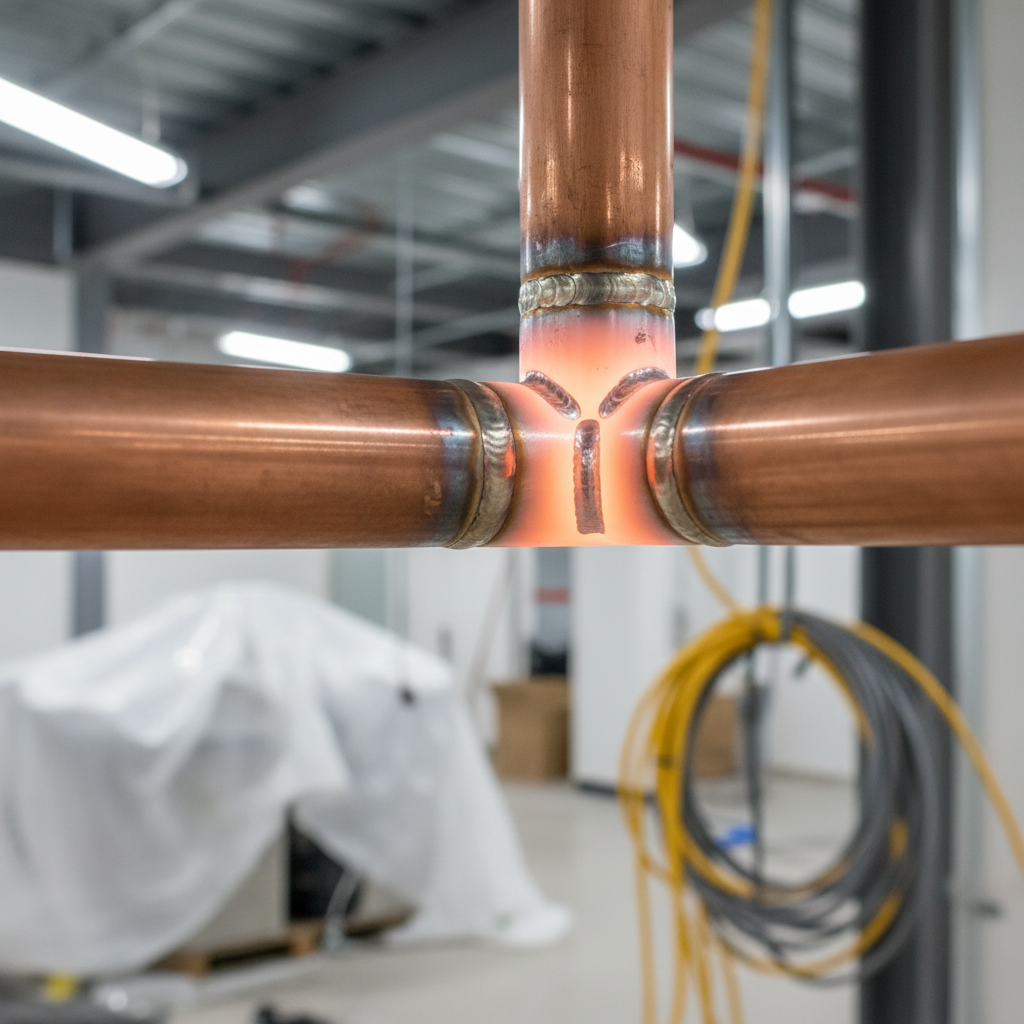
The distribution network is constructed almost exclusively from Type K or L ACR (cleaned and capped) copper tubing. Joints are not soldered; they are brazed at high temperatures using a specific silver alloy. During this process, the pipe interior must be continuously purged with an inert gas like nitrogen to prevent the formation of toxic internal oxides, which could otherwise be delivered to a patient.
Patient & Staff Access Points
Zone Valve Boxes: These are placed in conspicuous locations to allow staff to shut off the flow of gas to a specific area or "zone" of the building in case of an emergency or for maintenance.
Area & Master Alarms: These panels provide audible and visual warnings of system pressure changes or supply switchovers, alerting staff to potential issues.
Outlets/Inlets: These are the final connection points in the patient rooms, operating theaters, and procedure areas. They are gas-specific, meaning an oxygen flowmeter cannot be accidentally plugged into a medical air outlet.
Navigating the Maze of Codes and Standards
Adherence to established codes is non-negotiable in medical gas installation. These standards exist to protect patients and staff and ensure the system functions reliably under all conditions.
NFPA 99: The Health Care Facilities Code Explained
The National Fire Protection Association's NFPA 99 is the foundational code for all healthcare facilities in the United States. Chapter 5, "Gas and Vacuum Systems," outlines the minimum requirements for the design, installation, testing, and maintenance of these critical systems. It dictates everything from what type of pipe to use to the specific testing procedures a verifier must follow.
Why This Matters for Compliance: NFPA 99, Chapter 5, is not a set of recommendations; it's the law of the land for medical gas systems in the U.S. and is legally enforceable in Greensboro. Failure to follow these requirements to the letter can result in catastrophic system failures, patient harm, and immediate loss of facility accreditation from organizations like The Joint Commission. Non-compliance is not an option.
The ASSE 6000 Series: Personnel Certification Standards
NFPA 99 sets the rules for the system, while the ASSE 6000 series sets the standards for the people who work on it. These credentials ensure that every individual involved has proven their competency.
ASSE Credential
Title
Role & Responsibilities
ASSE 6010
Medical Gas Systems Installer
Performs the physical medical gas installation and brazing of the piping network. Must braze a sample for testing to be credentialed.
ASSE 6020
Medical Gas Systems Inspector
A third-party inspector (often a municipal authority) who inspects the installation for compliance with local building codes.
ASSE 6030
Medical Gas Systems Verifier
An independent, third-party agent who performs the final, comprehensive tests on the system before it can be used for patient care.
ASSE 6040
Medical Gas Systems Maintainer
Credentialed personnel who perform routine maintenance and repairs on existing medical gas systems.
The Medical Gas Installation Process: A Step-by-Step Guide
While every project is unique, a compliant installation follows a structured, multi-stage process.
Initial Consultation and System Design: The process begins with our team at Medical Testing Solutions consulting with facility managers, clinicians, and architects to understand the specific needs of the Greensboro facility. We then engineer a system that meets these needs while strictly adhering to NFPA 99 design criteria.
Sourcing Compliant Materials and Equipment: We procure all necessary components, from source equipment to the smallest fittings, ensuring each item is certified for medical gas use and properly cleaned and packaged from the manufacturer.
The Installation and Brazing Process: Our ASSE 6010 certified installers begin the physical installation. Every braze is performed under a nitrogen purge to ensure a clean, oxide-free interior. This is a meticulous process that is foundational to the system's safety.
Initial System Testing by the Installer: Once the piping is complete, the installing company performs its own initial tests, including a pressure test to check for leaks, as required by NFPA 99 before the final verification can begin.
Independent Third-Party Verification (ASSE 6030): This is arguably the most critical step. An independent, ASSE 6030 certified verifier, a company separate from the installer, conducts a battery of over 20 tests. These include checking for cross-connections, ensuring gas purity, verifying alarm functionality, and confirming correct pressure and flow at every single outlet. The system cannot be used for patient care until it passes this third-party verification.
Why ASSE 6010 Certification is Non-Negotiable
For a healthcare facility in Greensboro, requiring ASSE 6010 certification for your installers isn't just best practice; it's a fundamental requirement for risk management and patient safety.
An installer without this credential has not demonstrated their knowledge of the codes or their ability to perform a compliant nitrogen-purged braze. An improper braze can flake oxides into the piping, which can then be delivered to a patient's lungs or clog sensitive equipment like anesthesia machines. By hiring a firm like Medical Testing Solutions, whose installers are all ASSE 6010 certified, you are investing in a proven, tested, and reliable installation that protects your patients, staff, and your facility's legal standing.
Beyond Installation: Long-Term System Health
The project isn't over once the system is verified. Medical gas systems require ongoing attention to ensure they remain safe and compliant for their entire lifespan.
Preventative Maintenance: Source equipment like air compressors and vacuum pumps have regular service intervals. Proactive maintenance prevents costly emergency shutdowns.
Annual Inspections: Regular inspections are key to identifying slow leaks, creeping pressure changes, or malfunctioning gauges before they become serious problems. These annual medical gas inspections are a core part of a facility's safety program.
Future Modifications: When your facility renovates or expands, all modifications to the medical gas system must also be performed by a certified installer and subsequently re-verified.
Choosing Your Medical Gas Installer in Greensboro, NC
Choosing the right partner is a decision with long-term consequences. Here are key questions to ask any potential installation company:
Are all your on-site installers ASSE 6010 certified? Can you provide their credentials?
Can you provide references from similar projects in the Greensboro or greater North Carolina area?
Do you operate under a design-build, turnkey model?
Are you fully licensed and insured for medical gas work in North Carolina?
Beyond installation, do you provide ASSE 6030 verification and long-term maintenance services?
Partnering with a full-service company like Medical Testing Solutions simplifies this process. We not only provide the expert, certified installation but also the independent verification, long-term maintenance, and annual inspections needed to keep your system running safely for decades. It's a continuum of care for your facility's most critical utility.
Frequently Asked Questions
The cost varies significantly based on the size of the facility, the number and type of gases, and the complexity of the design. The total cost includes design, labor, materials, source equipment, and the independent verification service.
The timeline is project-dependent. A small installation may take a few weeks, while a large, new-build hospital project can span many months, often depending on coordination with other construction trades.
Any facility where medical gases are piped from a central source, including hospitals, ambulatory surgery centers, dental offices (for nitrous oxide/oxygen), veterinary clinics, and orthopedic centers.
An installer physically builds the system. A verifier is a mandatory, independent third party who performs final safety and compliance testing. NFPA 99 forbids the installer from verifying their own work to ensure an unbiased assessment.
Yes, Medical Testing Solutions frequently works with dental practices to install and service their nitrous oxide and oxygen systems, ensuring they are safe, compliant, and ready for patient use.
Request a quote for your facility
Talk with Medical Testing Solutions about your next inspection, repair or equipment request.