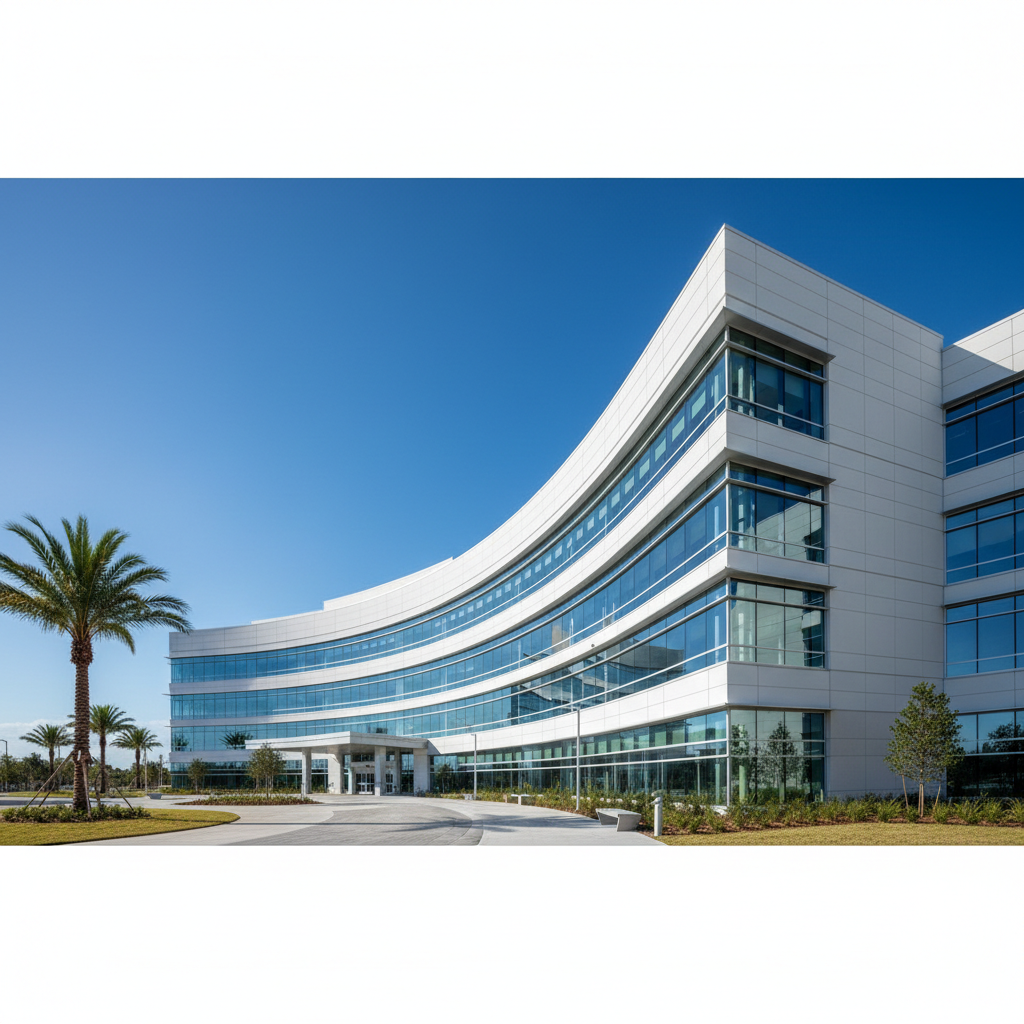
Medical Gas Installation in Fort Lauderdale: A New Construction Guide
Medical Testing SolutionsMay 28, 20267 min read
Share
Building a new healthcare facility or renovating an existing one in Fort Lauderdale is a complex undertaking. Among the most critical systems you will install is the medical gas infrastructure. This network of pipes, outlets, and source equipment is the lifeblood of patient care, delivering oxygen, medical air, and vacuum to operating rooms, patient bedsides, and critical care areas. A compliant, correctly installed system is non-negotiable for patient safety and regulatory approval.
This definitive guide provides a playbook for general contractors, facility managers, and healthcare administrators overseeing new construction projects in Fort Lauderdale and Broward County. You will learn about the key phases of installation, Florida-specific regulatory hurdles (including AHCA and post-hurricane requirements), and how partnering with a local, ASSE-certified firm can dramatically reduce costs and project timelines. Based in the heart of the city, Medical Testing Solutions is uniquely positioned to deliver this expertise. Our headquarters is located at 501 East Las Olas Blvd, Ste 300, Fort Lauderdale, FL 33301.
The Financial Advantage: Using a Fort Lauderdale-Based Verifier
For any major construction project, the budget is paramount. When it comes to the specialized field of medical gas services, selecting a vendor based outside of Florida can inflate your costs by 10-25% before any work even begins. These expenses come from line items that have nothing to do with the quality of the service:
Travel Fees: Paying for flights or mileage for technicians to travel from out of state.
Lodging Costs: Covering hotel stays for the duration of the project.
Per-Diem: Daily stipends for the verification team's meals and incidentals.
Medical Testing Solutions eliminates these costs entirely for clients across Florida. With our headquarters in Fort Lauderdale and teams strategically located throughout the state, we provide ASSE-certified expertise with a local footprint. This means no travel fees, no lodging, and no per-diem, whether your project is in Broward County, Miami, or anywhere else in Florida. The savings go directly to your bottom line, allowing for a more competitive budget without sacrificing compliance or safety.
Navigating Florida's Regulatory Landscape: AHCA and NFPA 99
Compliance is the cornerstone of medical gas installation. In Florida, this means satisfying the stringent requirements of two primary bodies: the Agency for Health Care Administration (AHCA) and The Joint Commission (TJC), both of which point to NFPA 99 (Health Care Facilities Code) as the guiding standard.
Agency for Health Care Administration (AHCA): AHCA oversees the licensure and regulation of all healthcare facilities in Florida. For new construction or renovations, your medical gas verification report is a critical submission in the plan review process. It must conclusively demonstrate that the system is safe and compliant with NFPA 99. The final documentation must satisfy the criteria outlined in Chapter 59A of the Florida Administrative Code and often involves specific forms like AHCA OPS Form 3110.
The Joint Commission (TJC) & NFPA 99: TJC accredits healthcare organizations nationwide. Their standards require facilities to maintain a safe environment, which includes rigorous adherence to NFPA 99 for medical gas systems. This includes not just the initial verification but also ongoing annual medical gas inspections to ensure continued compliance.
Why this matters for compliance: Failure to produce a compliant ASSE 6030 verification report can halt your project, preventing AHCA from issuing a license or Certificate of Occupancy. It's a costly delay that underscores the need for a verifier who intimately understands Florida's specific documentation and submission requirements.
A successful installation follows a meticulously planned sequence of events, from blueprint to patient use. Here’s a phase-by-phase breakdown for your Fort Lauderdale project.
Phase 1: Design & Pre-Construction
Before a single pipe is installed, a robust design is essential. This phase involves collaboration between architects, engineers, and a medical gas specialist. Key decisions include:
System Sizing: Calculating the peak demand for each gas to correctly size the source equipment (e.g., vacuum pumps, air compressors, oxygen manifolds).
Outlet Placement: Determining the location and type of medical gas outlets in each room based on clinical need, from patient rooms at Broward Health to surgical suites at Cleveland Clinic Florida.
Piping Layout: Designing an efficient piping route that minimizes lengths and potential points of failure.
This is the physical installation phase. It must be performed by tradespersons holding an ASSE 6010 Medical Gas Installer certification. During this critical phase, ASSE 6010 installers run the copper piping throughout the facility skeleton. All joints must be brazed with a nitrogen purge, as required by NFPA 99, to prevent the formation of toxic oxides inside the piping that could harm patients.
Phase 3: Initial Piping Pressure Test
Once the piping is installed but before walls and ceilings are closed up, an initial pressure test is performed. The system is pressurized (typically to 150 psi) and monitored for 24 hours to ensure there are no leaks in any of the brazed joints. This step is crucial to avoid costly rework after finishes are in place.
Phase 4: Source Equipment, Alarms & Final Connections
With the core piping proven to be sound, the source equipment is installed. This includes the main oxygen manifold, medical air compressors, and vacuum pumps. Simultaneously, master and area alarm panels are wired and connected to the piping network to monitor system pressure and status. Finally, the wall outlets and drops are installed and connected to the main lines.
Phase 5: Final Verification (ASSE 6030)
This is the final, most critical step before the system can be used. An independent, third-party verifier holding an ASSE 6030 Medical Gas Verifier certification must conduct a series of detailed tests. This process is far more than a simple pressure check; it is a comprehensive medical gas verification that confirms patient safety. The verifier is responsible for ensuring the system is clean, leak-free, and delivering the correct gas at every single outlet. The final, certified report is the document you will submit to AHCA.
Comparison of Medical Gas Piping Grades
NFPA 99 requires that all medical gas piping be seamless copper tube, either Type K or Type L. Understanding the difference is key for planning.
Feature
Type K Copper
Type L Copper
Wall Thickness
Thicker Wall
Thinner Wall
Durability
More durable, higher burst pressure
Standard durability, acceptable for most uses
Cost
More expensive
Less expensive
Common Use
Often preferred for high-pressure mains and areas where damage is possible
The most common type used for the majority of medical gas distribution lines
For any facility in Fort Lauderdale and South Florida, hurricane planning is a fact of life. Your medical gas system is no exception. NFPA 99 section 5.1.12 mandates that if the system is breached or loses source pressure for any reason, such as during a hurricane or subsequent flooding, it must be re-verified before being placed back into service.
This is another area where having a local partner is critical. In the chaotic aftermath of a storm, you can't afford to wait for an out-of-state team to mobilize. Medical Testing Solutions has crews based in South Florida ready for same-day dispatch to facilities from West Palm Beach down to Miami. We can help you get your critical systems back online and re-certified quickly and efficiently, a crucial capability for hospitals like Holy Cross or Jackson Memorial.
Why MTS for Your Fort Lauderdale Installation?
Choosing a partner for your medical gas installation is a decision that impacts your budget, timeline, and patient safety. Medical Testing Solutions is the premier choice for healthcare construction projects in Broward County and across the state.
Local & Cost-Effective: Our Fort Lauderdale office means we are right here when you need us, and our statewide presence ensures you never pay for travel.
Certified Expertise: Our team holds the full range of ASSE 6000 certifications, including 6010 Installers and 6030 Verifiers.
Regulatory Fluency: We have years of experience navigating the specific requirements of AHCA and TJC in Florida.
One-Stop Partner: We can be your single point of contact for installation, verification, and ongoing annual maintenance, streamlining your project management.
From new surgery centers to major hospital expansions, we understand the South Florida healthcare landscape. Ready to start planning your project? Call our Fort Lauderdale office today.
Frequently Asked Questions
ASSE 6010 is a credential for medical gas *installers* who physically build the system. ASSE 6030 is a credential for third-party *verifiers* who test and certify that the system is safe and compliant before it's used for patients. Medical Testing Solutions provides expertise in both installation and verification.
The timeline depends on the facility's size and complexity. A small dental office might take a day, while a new hospital wing at a facility like Baptist Health could take a week or more. We provide a detailed timeline with our project proposals.
The Agency for Health Care Administration (AHCA) requires that all medical gas systems comply with the latest edition of NFPA 99. Final verification reports must be submitted to satisfy AHCA's plan review and inspection process, often using forms like OPS Form 3110.
Yes. While our headquarters is in Fort Lauderdale, we are a statewide company with a deep presence across all of Florida. Our major advantage is that we have crews across the state, meaning we never charge travel fees, lodging, or per-diem for projects anywhere in the state.
Request a quote for your facility
Talk with Medical Testing Solutions about your next inspection, repair or equipment request.